
U.S. Implements Unprecedented Secondary Sanctions on Iran Targeting Global Energy Markets
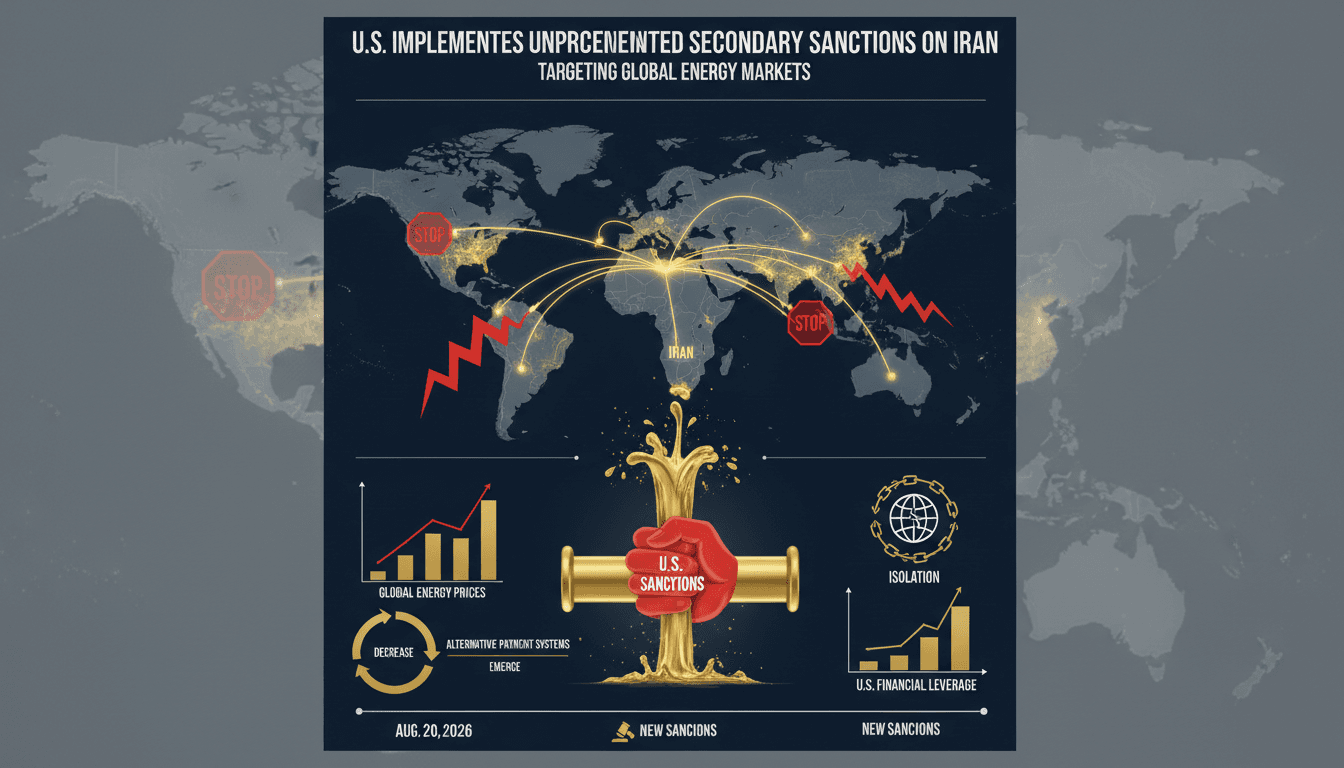
Here's what it means for you.
If you rely on global energy markets, be prepared for potential price increases as sanctions on Iran escalate.
Why it matters
The new sanctions could significantly disrupt global oil supply chains, impacting energy prices worldwide.
What happened (in 30 seconds)
- On August 20, 2026, President Trump announced secondary sanctions targeting foreign entities involved in Iranian oil exports.
- China, which imported over 80% of Iranian oil in 2025, faces compliance challenges under these new measures.
- Oil futures for Brent and WTI rose immediately following the announcement, reflecting market fears of supply disruptions.
The context you actually need
- U.S.-Iran tensions have been escalating for decades, with sanctions intensifying under various administrations.
- The current conflict began in February 2026, leading to direct military actions and extensive sanctions on over 1,000 Iranian entities.
- Secondary sanctions are aimed at foreign facilitators, particularly in China, to further isolate Iran economically without directly targeting major Chinese banks.
What's really happening
The U.S. has long employed sanctions as a tool to exert pressure on Iran, particularly focusing on its energy sector, which is vital for the Iranian economy. The recent announcement of secondary sanctions marks a significant escalation in this strategy, as it aims to penalize not just Iran but also foreign entities that engage in trade with it. This approach is designed to create a ripple effect, discouraging countries and companies from purchasing Iranian oil, which is crucial for Tehran's revenue.
The Trump administration's declaration of an "economic D-Day" signals a shift towards more aggressive tactics, particularly targeting China, which has been the primary importer of Iranian oil. In 2025, over 80% of Iranian oil exports were sent to China, making it a critical player in this geopolitical chess game. The U.S. Treasury Department's Office of Foreign Assets Control (OFAC) is now focusing on shadow fleets and intermediaries that facilitate these transactions, aiming to cut off Iran's access to international markets.
However, this strategy comes with risks. Analysts warn that while the U.S. seeks to tighten its grip on Iran's economy, it may inadvertently push China and other nations to develop alternative payment systems that bypass U.S. financial influence. This could lead to a long-term erosion of U.S. leverage in global finance, as countries like China and Russia explore ways to circumvent sanctions.
The immediate impact of these sanctions is already being felt in the energy markets. Following the announcement, oil futures for Brent and WTI surged, reflecting fears of tighter Iranian exports and potential supply chain disruptions. The market's reaction underscores the interconnectedness of global energy prices and geopolitical developments. As tensions rise, the risk of supply disruptions, particularly through critical chokepoints like the Strait of Hormuz, becomes a pressing concern for energy-dependent economies.
In summary, the U.S. is intensifying its economic warfare against Iran, targeting not just the Iranian government but also the global entities that support its oil exports. This strategy aims to isolate Iran further but carries the risk of destabilizing global energy markets and diminishing U.S. financial power in the long run.
Who feels it first (and how)
- Energy consumers: Individuals and businesses relying on oil and gas may face higher prices.
- Chinese companies: Firms involved in importing Iranian oil will need to navigate compliance challenges.
- Global markets: Investors and traders in energy sectors will experience volatility and uncertainty.
What to watch next
- Oil price fluctuations: Monitor Brent and WTI prices for signs of sustained increases due to supply concerns.
- China's response: Watch for any shifts in Chinese policy regarding Iranian oil imports and compliance with U.S. sanctions.
- Geopolitical developments: Keep an eye on tensions in the Strait of Hormuz, as military actions could further impact oil supply.
The U.S. has implemented secondary sanctions targeting foreign entities involved with Iran.
Global energy prices will rise due to fears of supply disruptions.
The long-term impact on U.S. financial leverage and alternative payment systems being developed by other nations.
Frequently Asked Questions
- Why it matters?
- The new sanctions could significantly disrupt global oil supply chains, impacting energy prices worldwide.
- What happened (in 30 seconds)?
- On August 20, 2026, President Trump announced secondary sanctions targeting foreign entities involved in Iranian oil exports. China, which imported over 80% of Iranian oil in 2025, faces compliance challenges under these new measures. Oil futures for Brent and WTI rose immediately following the announcement, reflecting market fears of supply disruptions.
- What's really happening?
- The U.S. has long employed sanctions as a tool to exert pressure on Iran, particularly focusing on its energy sector, which is vital for the Iranian economy. The recent announcement of secondary sanctions marks a significant escalation in this strategy, as it aims to penalize not just Iran but also foreign entities that engage in trade with it. This approach is designed to create a ripple effect, discouraging countries and companies from purchasing Iranian oil, which is crucial for Tehran's reve
- Who feels it first (and how)?
- Energy consumers: Individuals and businesses relying on oil and gas may face higher prices. Chinese companies: Firms involved in importing Iranian oil will need to navigate compliance challenges. Global markets: Investors and traders in energy sectors will experience volatility and uncertainty.
- What to watch next?
- Oil price fluctuations: Monitor Brent and WTI prices for signs of sustained increases due to supply concerns. China's response: Watch for any shifts in Chinese policy regarding Iranian oil imports and compliance with U.S. sanctions. Geopolitical developments: Keep an eye on tensions in the Strait of Hormuz, as military actions could further impact oil supply.
Jordanian news and regional updates.
"Roya News is a Jordanian outlet focused on breaking news and local affairs."
— A47 Editor
عقوبات واشنطن على طهران .. هل ترفع إجراءات ترمب أسعار الطاقة عالمياً؟
President Donald Trump announced the launch of an economic war and unprecedented isolation against Tehran, raising concerns about the potential impact on global energy prices. The sanctions imposed by Washington are expected to affect Iran's oil expo...
Global business headlines with AI angles.
"General business outlet that frequently covers AI."
— A47 Editor
Trump Announces Increased Economic Pressure Against Iran. Oil Prices Jump.
President Donald Trump has announced an increase in economic pressure against Iran, leading to a rise in oil prices, with Brent crude and West Texas Intermediate both climbing approximately 3%. This move is part of a broader strategy to isolate Iran ...
Sports reporting with a focus on Saudi and regional competitions.
"Okaz sports coverage is broad and audience-friendly, with strong attention to Saudi teams and leagues."
— A47 Editor
تصعيد واشنطن يُلهب سوق النفط.. هل يقترب برنت من حاجز 100 دولار؟
Oil prices have continued to rise for the fifth consecutive day, driven by escalating political and economic tensions between the United States and Iran. President Donald Trump announced a series of measures described as a 'comprehensive economic war...
English-language digital publication covering business, politics, technology, and current affairs.
"The Arabian Post mixes original and syndicated-style coverage with a broad regional and global business-news orientation."
— A47 Editor
Oil prices climb as Iran tensions deepen
Oil prices have risen as tensions surrounding Iran escalate, with Brent crude reaching $91.28 a barrel and US West Texas Intermediate at $85.31. The increase is attributed to diminishing prospects for a resolution in the Iran conflict, particularly a...