
Putin Warns Ukraine of Retaliation for Economic Strikes Amid Escalating Conflict
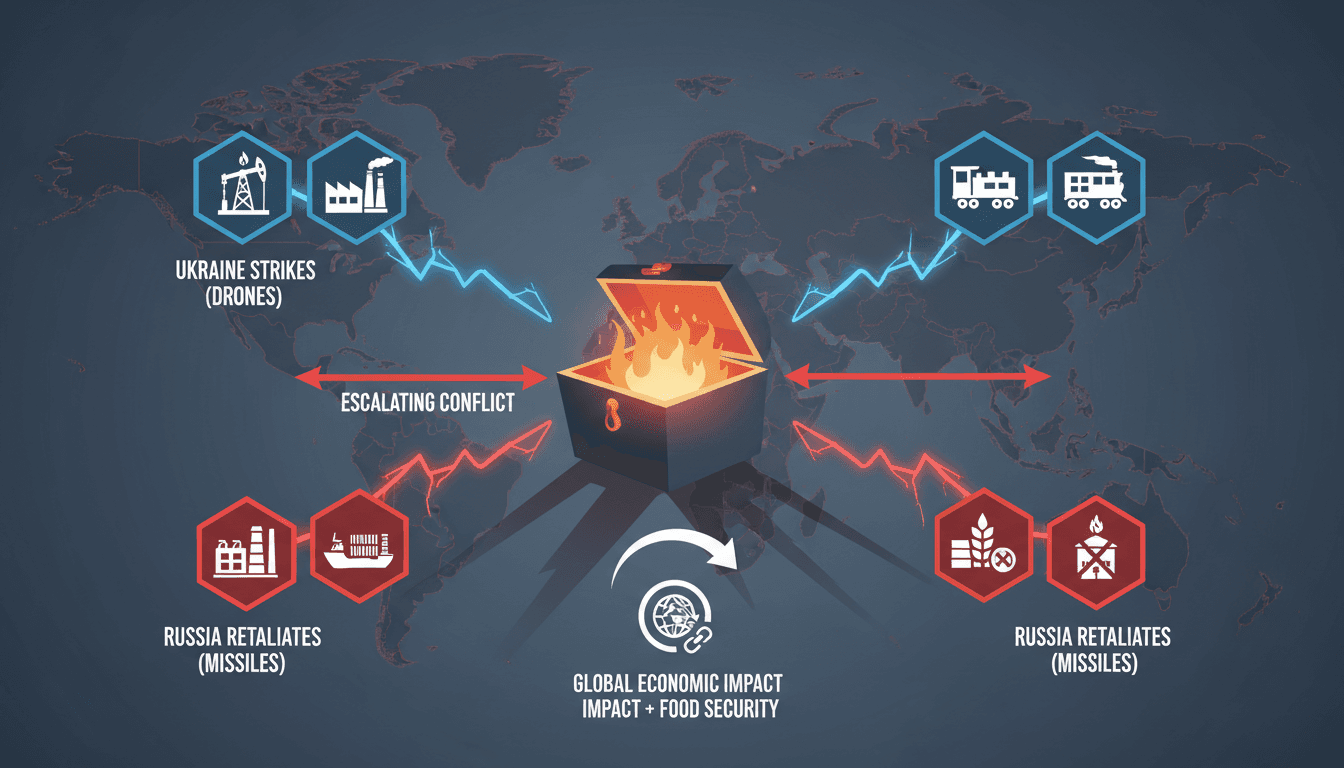
Here's what it means for you.
The escalating conflict between Russia and Ukraine could disrupt global supply chains, impacting food and energy prices worldwide.
Why it matters
The ongoing strikes on economic infrastructure signal a dangerous escalation in the Russia-Ukraine conflict, with potential ripple effects on global markets.
What happened (in 30 seconds)
- Putin accused Ukraine of opening a 'Pandora’s box' by targeting Russian economic infrastructure, warning of retaliatory strikes.
- Ukrainian drone attacks have intensified, focusing on Russian oil refineries and logistics hubs, prompting a cycle of counterstrikes.
- Peace proposals conveyed through intermediaries were dismissed by Putin as 'exotic' and unacceptable, indicating a hardening stance.
The context you actually need
- The Russia-Ukraine war has been ongoing since 2022, with significant military and economic implications for both nations.
- Ukraine's strategy has involved targeting Russian economic assets to disrupt its war efforts, particularly in the agricultural sector.
- Russia's exit from the Black Sea grain deal in 2023 has led to reciprocal strikes on agricultural infrastructure, exacerbating tensions.
What's really happening
In a televised interview on August 22, 2026, Russian President Vladimir Putin characterized Ukraine's recent drone strikes on Russian economic targets as a reckless move that has 'opened this Pandora’s box itself.' This statement reflects a significant escalation in rhetoric and military action, as both nations engage in a tit-for-tat strategy aimed at crippling each other's economic capabilities.
Putin's warning of retaliatory strikes on Ukraine's most sensitive economic sectors, particularly agriculture and grain exports, underscores the strategic importance of these industries for Ukraine's economy. Agriculture has been a cornerstone of Ukraine's revenue, and any disruption could have dire consequences for its economic stability. Putin asserted that Russia could compensate for any loss of Ukrainian grain exports, despite facing its own logistical challenges. This claim suggests a confidence in Russia's ability to navigate the complexities of global food supply chains, even as it faces sanctions and operational hurdles.
The backdrop of this conflict is marked by intensified Ukrainian drone campaigns targeting Russian oil refineries and logistics centers. These strikes are part of a broader Ukrainian strategy to undermine Russia's military capabilities by disrupting its supply lines and economic resources. The Ukrainian government reportedly pursued a 40-day plan aimed at damaging the Russian economy, which expired on August 5, 2026, without achieving its objectives. This failure may have prompted Ukraine to escalate its attacks, leading to Putin's strong response.
Putin's dismissal of peace proposals as 'exotic' indicates a reluctance to engage in negotiations that do not align with Russia's strategic interests. This hardline stance suggests that both sides are entrenched in their positions, making diplomatic resolutions increasingly difficult. The ongoing conflict is likely to continue, with both nations targeting each other's economic infrastructures as a means of exerting pressure.
As the situation unfolds, the implications for global markets are significant. Disruptions to grain exports from the Black Sea region could lead to increased food prices and supply shortages, particularly in regions dependent on these imports. Additionally, the volatility in energy markets, driven by the conflict, could have far-reaching effects on global economies.
Who feels it first (and how)
- Agricultural sectors in Ukraine and Russia, facing direct impacts from strikes on infrastructure.
- Global food importers, particularly in regions reliant on Black Sea grain exports, may experience price increases and supply shortages.
- Energy markets, which could see volatility due to retaliatory strikes on oil infrastructure.
What to watch next
- Ukrainian drone activity: Increased attacks on Russian economic targets could escalate tensions further, impacting global supply chains.
- Russian retaliatory strikes: Monitoring the scale and targets of Russian counterstrikes will provide insight into the conflict's trajectory.
- Diplomatic efforts: Any developments in peace talks or international mediation could signal shifts in the conflict dynamics.
Both Russia and Ukraine are engaged in a cycle of economic strikes against each other.
The conflict will continue to escalate, with significant implications for global markets.
The potential for diplomatic resolutions or shifts in strategy from either side remains uncertain.
Frequently Asked Questions
- Why it matters?
- The ongoing strikes on economic infrastructure signal a dangerous escalation in the Russia-Ukraine conflict, with potential ripple effects on global markets.
- What happened (in 30 seconds)?
- Putin accused Ukraine of opening a 'Pandora’s box' by targeting Russian economic infrastructure, warning of retaliatory strikes. Ukrainian drone attacks have intensified, focusing on Russian oil refineries and logistics hubs, prompting a cycle of counterstrikes. Peace proposals conveyed through intermediaries were dismissed by Putin as 'exotic' and unacceptable, indicating a hardening stance.
- What's really happening?
- In a televised interview on August 22, 2026, Russian President Vladimir Putin characterized Ukraine's recent drone strikes on Russian economic targets as a reckless move that has 'opened this Pandora’s box itself.' This statement reflects a significant escalation in rhetoric and military action, as both nations engage in a tit-for-tat strategy aimed at crippling each other's economic capabilities. Putin's warning of retaliatory strikes on Ukraine's most sensitive economic sectors, particularly
- Who feels it first (and how)?
- Agricultural sectors in Ukraine and Russia, facing direct impacts from strikes on infrastructure. Global food importers, particularly in regions reliant on Black Sea grain exports, may experience price increases and supply shortages. Energy markets, which could see volatility due to retaliatory strikes on oil infrastructure.
- What to watch next?
- Ukrainian drone activity: Increased attacks on Russian economic targets could escalate tensions further, impacting global supply chains. Russian retaliatory strikes: Monitoring the scale and targets of Russian counterstrikes will provide insight into the conflict's trajectory. Diplomatic efforts: Any developments in peace talks or international mediation could signal shifts in the conflict dynamics.
Global news coverage with extensive reporting on Middle Eastern conflicts and geopolitics.
"Al Jazeera is a Qatar-based broadcaster known for wide regional coverage and alternative perspectives."
— A47 Editor
Putin warns Ukraine has opened ‘Pandora’s box’, rejects peace proposals
In a recent interview with Vesti, Russian President Vladimir Putin warned that Ukraine has opened a 'Pandora's box' by escalating its military actions, particularly targeting Russia's economic sectors. He dismissed peace proposals, indicating a firm ...
Comprehensive coverage of Middle Eastern and global issues.
"Al Jazeera is a prominent voice from the Global South, especially the Middle East, with an emphasis on underreported stories."
— A47 Editor
Putin warns Ukraine has opened ‘Pandora’s box’, rejects peace proposals
In a recent interview with Vesti, Russian President Vladimir Putin warned that Ukraine has opened a 'Pandora's box' by escalating its military actions, particularly targeting Russia's economic sectors. He dismissed peace proposals, indicating a firm ...
Oil, metals, and agriculture: supply/demand headlines, OPEC chatter, inventories, and price action.
"Solid tape for energy and metals traders tracking macro and micro catalysts."
— A47 Editor
Putin says Ukraine opened ’Pandora’s box’ with strikes on economic targets
Russian President Vladimir Putin stated that Ukraine has opened a 'Pandora's box' by targeting economic sites within Russia, a move he claims will escalate the ongoing conflict. This statement comes amid intensified drone strikes by Ukraine on Russia...
Regional and international reporting focused on Middle Eastern politics, diplomacy, and economics.
"Asharq Al-Awsat is a Saudi-owned international newspaper reflecting mainstream Gulf political perspectives."
— A47 Editor
Putin Says Ukraine Opened ‘Pandora’s Box’ with Strikes on Economic Targets
Russian President Vladimir Putin has stated that Ukraine has opened a 'Pandora's box' by intensifying military strikes on economic targets, particularly affecting Russian infrastructure. This escalation comes amid a backdrop of increasing violence an...