
US Imposes Toughest Sanctions in History on Iran to Enforce Economic Isolation
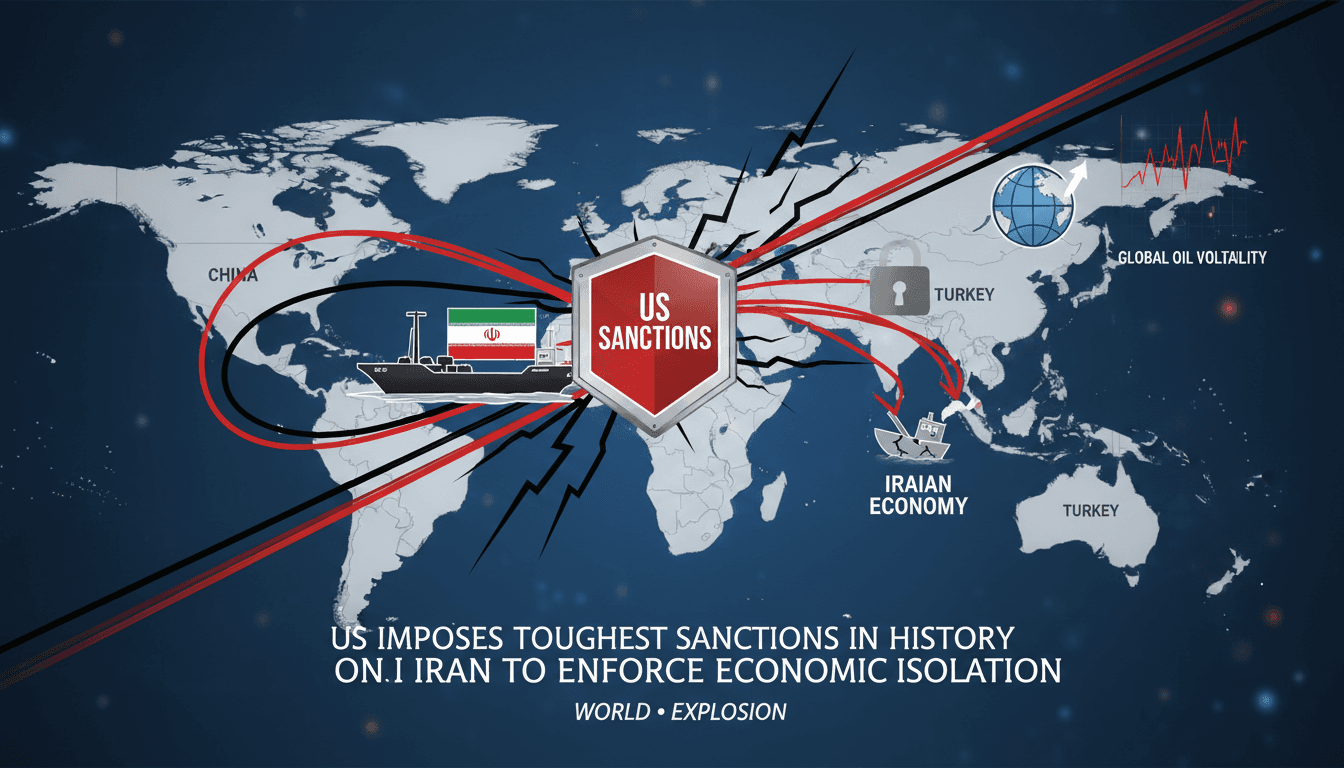
Here's what it means for you.
If you’re in the Gulf region, expect rising fuel prices and potential disruptions in trade.
Why it matters
The sanctions could significantly impact global oil markets and regional economic stability.
What happened (in 30 seconds)
- US Treasury Secretary Scott Bessent announced the toughest sanctions in history against Iran on August 20, 2026.
- A naval blockade will accompany these sanctions, targeting third countries, especially China, to halt Iranian oil exports.
- Iran condemned the sanctions as extraterritorial overreach and vowed a strong response.
The context you actually need
- The sanctions follow a failed memorandum of understanding between the US and Iran that expired on August 21, 2026, after temporary easing of oil sanctions.
- Iran has been under sanctions since 1979, leading to economic strain, inflation, and civil unrest, which the new measures aim to exacerbate.
- China purchased 80% of Iran's shipped oil in 2025, making it a critical player in the sanctions' effectiveness and the broader geopolitical landscape.
What's really happening
The US's renewed maximum pressure campaign against Iran is a strategic maneuver aimed at economically isolating Tehran to induce political change. Following the expiration of a June 2026 memorandum of understanding, which temporarily eased some sanctions, the US has pivoted back to a hardline approach. Treasury Secretary Bessent's declaration of "the toughest sanctions in history" signals a shift towards a more aggressive stance, with the intention of collapsing Iran's regime through economic means.
The sanctions package includes a naval blockade designed to restrict Iranian oil exports, which are vital to its economy. The US is particularly focused on pressuring third-party countries, especially China, which has been a significant buyer of Iranian oil. In 2025, China accounted for 80% of Iran's oil shipments, making it a crucial target for US diplomatic efforts. The US aims to leverage its economic influence to compel China and other nations to cease their support for Iran, thereby tightening the noose around Tehran's economy.
Iran's response has been one of defiance, labeling the sanctions as extraterritorial overreach. The Iranian government has vowed to retaliate, indicating that it will not succumb to external pressures. This creates a precarious situation where the potential for conflict escalates, as both sides dig in their heels. The US's strategy is predicated on the belief that economic hardship will lead to internal dissent within Iran, ultimately resulting in regime change.
The implications of these sanctions extend beyond Iran. The Gulf region, including Dubai, is likely to experience increased fuel prices and economic volatility due to disrupted oil flows. The sanctions could also affect trade and logistics sectors tied to Iranian networks, creating ripple effects throughout the UAE and beyond. As the situation unfolds, the interconnectedness of global markets means that stakeholders in various sectors must remain vigilant.
Who feels it first (and how)
- Oil traders: Expect volatility in oil prices as sanctions impact supply chains.
- Businesses in the Gulf: Increased operational costs due to rising fuel prices and potential trade disruptions.
- Consumers: Higher prices at the pump and for goods reliant on oil transportation.
- Investors: Market fluctuations in response to geopolitical tensions and economic forecasts.
What to watch next
- Details of the sanctions package: Scheduled for release on August 24, 2026, will clarify the extent and enforcement mechanisms.
- China's response: How China reacts to US pressure could shape the effectiveness of the sanctions and influence global oil markets.
- Iran's internal stability: Monitoring protests or civil unrest in Iran could indicate the sanctions' impact on the regime's resilience.
The US has imposed new sanctions targeting Iran's economy.
Increased fuel prices and economic volatility in the Gulf region.
The long-term effectiveness of sanctions in achieving regime change in Iran.
Frequently Asked Questions
- Why it matters?
- The sanctions could significantly impact global oil markets and regional economic stability.
- What happened (in 30 seconds)?
- US Treasury Secretary Scott Bessent announced the toughest sanctions in history against Iran on August 20, 2026. A naval blockade will accompany these sanctions, targeting third countries, especially China, to halt Iranian oil exports. Iran condemned the sanctions as extraterritorial overreach and vowed a strong response.
- What's really happening?
- The US's renewed maximum pressure campaign against Iran is a strategic maneuver aimed at economically isolating Tehran to induce political change. Following the expiration of a June 2026 memorandum of understanding, which temporarily eased some sanctions, the US has pivoted back to a hardline approach. Treasury Secretary Bessent's declaration of "the toughest sanctions in history" signals a shift towards a more aggressive stance, with the intention of collapsing Iran's regime through economic me
- Who feels it first (and how)?
- Oil traders: Expect volatility in oil prices as sanctions impact supply chains. Businesses in the Gulf: Increased operational costs due to rising fuel prices and potential trade disruptions. Consumers: Higher prices at the pump and for goods reliant on oil transportation. Investors: Market fluctuations in response to geopolitical tensions and economic forecasts.
- What to watch next?
- Details of the sanctions package: Scheduled for release on August 24, 2026, will clarify the extent and enforcement mechanisms. China's response: How China reacts to US pressure could shape the effectiveness of the sanctions and influence global oil markets. Iran's internal stability: Monitoring protests or civil unrest in Iran could indicate the sanctions' impact on the regime's resilience.
Arabic-language coverage of international news and geopolitics.
"RT Arabic is a Russian state-funded outlet often criticized for promoting Kremlin-aligned narratives."
— A47 Editor
رهان أمريكي على الضغط الاقتصادي
The United States is intensifying its financial pressure on Tehran, focusing on the potential impact of new sanctions that may lead to a political shift beyond their economic effects. This situation represents a critical test of the limits of pressur...
Pan-Arab news coverage spanning politics, business, sports, and regional affairs.
"Asharq Al-Awsat reflects a broad Arab editorial perspective with strong attention to regional geopolitics."
— A47 Editor
واشنطن وطهران تتبادلان التحدي قبل عقوبات أميركية جديدة
The United States and Iran continue to exchange challenging messages ahead of Washington's announcement of a new package of economic sanctions, described as the most severe in history, set to be revealed on Monday.
Arabic-language coverage of political affairs and current events.
"Okaz political coverage typically follows mainstream Saudi framing on national and regional affairs."
— A47 Editor
قبل «أقسى العقوبات»..أمريكا تهدد بإسقاط النظام الإيراني
The United States and Iran continue to exchange escalating threats as Washington prepares to announce new economic sanctions on Tehran, which President Donald Trump has described as among the harshest in history. Trump asserted that while Iran seeks ...
Regional coverage and analysis focused on politics, diplomacy, and business across the Middle East.
"Al-Monitor is known for analytical reporting on Middle East politics and policy developments."
— A47 Editor
US, Iran keep up hostile rhetoric ahead of new sanctions
The United States and Iran have intensified their hostile rhetoric as the U.S. prepares to announce new economic sanctions that could significantly affect Iran and its key trading partners, particularly China. This escalation follows a series of thre...
Arabic-language coverage of international news and geopolitics.
"RT Arabic is a Russian state-funded outlet often criticized for promoting Kremlin-aligned narratives."
— A47 Editor
الولايات المتحدة تفرض عقوبات جديدة على إيران
The U.S. Department of the Treasury announced on Thursday the imposition of new sanctions on Iran. This decision reflects ongoing tensions between the two nations and highlights the U.S. government's continued efforts to address concerns regarding Ir...