
U.S. Treasury Expands Sanctions Against Iran Targeting 48 Entities and 24 Individuals
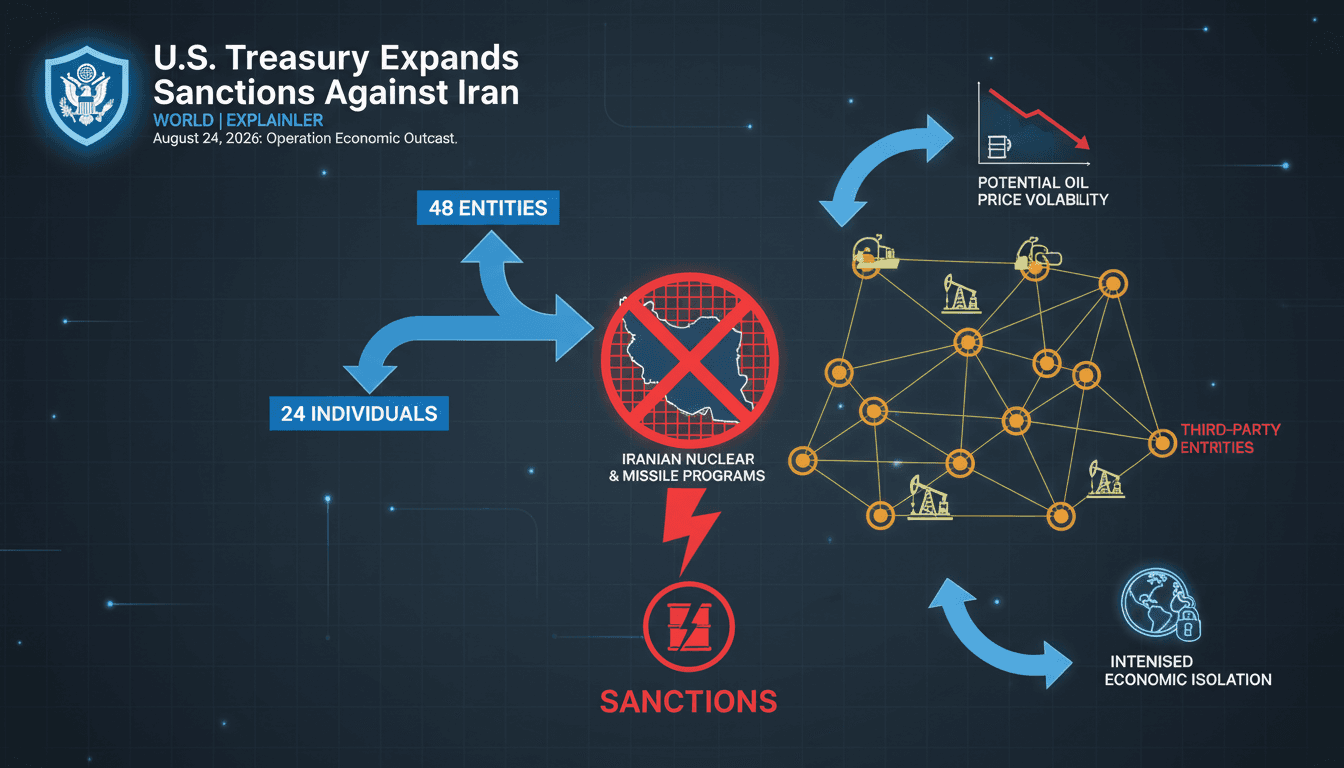
Here's what it means for you.
If you’re involved in international trade or energy markets, these sanctions could reshape your operational landscape.
Why it matters
The sanctions are part of a broader strategy to economically isolate Iran, which could lead to significant shifts in global oil supply and pricing.
What happened (in 30 seconds)
- On August 24, 2026, the U.S. Treasury designated 48 entities, 24 individuals, and 6 vessels under expanded sanctions against Iran.
- Operation Economic Outcast aims to disrupt financing for Iran's nuclear and missile programs, cyber operations, and illicit oil trade.
- The sanctions target networks across multiple countries, including Azerbaijan, China, and the UAE, increasing secondary sanctions exposure.
The context you actually need
- Heightened U.S.-Iran tensions have led to a series of sanctions aimed at crippling Iran's economic capabilities, particularly in oil and military procurement.
- The Islamic Revolutionary Guard Corps (IRGC) is a primary focus, as it plays a crucial role in Iran's military and nuclear ambitions.
- The sanctions are designed to impact not just Iran but also third-party entities that engage in trade with Iranian networks, creating a ripple effect in global markets.
What's really happening
The U.S. Treasury's recent sanctions are a continuation of a long-standing strategy to exert maximum economic pressure on Iran. By targeting a wide array of entities and individuals, the U.S. aims to disrupt the financial networks that support the IRGC and its associated activities. This includes not only military and nuclear programs but also cyber operations that pose threats to U.S. interests and allies.
The sanctions specifically target networks involved in the procurement of sensitive technologies and the illicit oil trade, which are vital for Iran's economy. The inclusion of entities from various countries, including the UAE and China, indicates a coordinated effort to isolate Iran on multiple fronts. This is significant because it expands the scope of U.S. sanctions, potentially affecting global supply chains and trade relationships.
The operational framework of Operation Economic Outcast is designed to create a comprehensive economic isolation of Iran. By sanctioning entities involved in oil logistics and military procurement, the U.S. is sending a clear message: engaging with Iran could lead to severe economic repercussions. This not only affects Iran but also third-party countries and companies that may inadvertently become entangled in these networks.
The sanctions also come at a time when global oil markets are already sensitive to geopolitical tensions. As the U.S. intensifies its economic pressure, there could be a tightening of oil supplies, leading to increased prices. This is particularly relevant for countries and companies that rely on stable oil prices for their operations.
Moreover, the sanctions are likely to provoke retaliatory measures from Iran, which could further escalate tensions in the region. The potential for increased military activity or cyber threats from Iran could create additional risks for businesses operating in or with ties to the Middle East.
In summary, the U.S. sanctions are not just a punitive measure against Iran; they are a strategic move designed to reshape the geopolitical landscape, with far-reaching implications for global trade and energy markets.
Who feels it first (and how)
- Energy companies: Increased operational costs and potential supply chain disruptions.
- International traders: Heightened risks in dealing with Iranian entities or those linked to them.
- Investors in oil markets: Volatility in oil prices could impact investment strategies.
- Countries reliant on Iranian oil: Potential shortages and increased prices could affect economic stability.
What to watch next
- Global oil prices: Monitor fluctuations as sanctions take effect, which could indicate market reactions.
- Responses from Iran: Watch for any retaliatory actions or changes in Iran's military posture that could escalate tensions.
- Secondary sanctions: Keep an eye on how other countries respond to U.S. sanctions and whether they comply or resist.
The U.S. has sanctioned nearly 60 entities, individuals, and vessels linked to Iran.
Global oil prices will experience volatility as markets react to the sanctions.
The long-term effectiveness of these sanctions in curbing Iran's nuclear ambitions and military activities.
Frequently Asked Questions
- Why it matters?
- The sanctions are part of a broader strategy to economically isolate Iran, which could lead to significant shifts in global oil supply and pricing.
- What happened (in 30 seconds)?
- On August 24, 2026, the U.S. Treasury designated 48 entities, 24 individuals, and 6 vessels under expanded sanctions against Iran. Operation Economic Outcast aims to disrupt financing for Iran's nuclear and missile programs, cyber operations, and illicit oil trade. The sanctions target networks across multiple countries, including Azerbaijan, China, and the UAE, increasing secondary sanctions exposure.
- What's really happening?
- The U.S. Treasury's recent sanctions are a continuation of a long-standing strategy to exert maximum economic pressure on Iran. By targeting a wide array of entities and individuals, the U.S. aims to disrupt the financial networks that support the IRGC and its associated activities. This includes not only military and nuclear programs but also cyber operations that pose threats to U.S. interests and allies. The sanctions specifically target networks involved in the procurement of sensitive tech
- Who feels it first (and how)?
- Energy companies: Increased operational costs and potential supply chain disruptions. International traders: Heightened risks in dealing with Iranian entities or those linked to them. Investors in oil markets: Volatility in oil prices could impact investment strategies. Countries reliant on Iranian oil: Potential shortages and increased prices could affect economic stability.
- What to watch next?
- Global oil prices: Monitor fluctuations as sanctions take effect, which could indicate market reactions. Responses from Iran: Watch for any retaliatory actions or changes in Iran's military posture that could escalate tensions. Secondary sanctions: Keep an eye on how other countries respond to U.S. sanctions and whether they comply or resist.
Arabic-language coverage of international news and geopolitics.
"RT Arabic is a Russian state-funded outlet often criticized for promoting Kremlin-aligned narratives."
— A47 Editor
واشنطن تدرج 48 كيانا قانونيا و24 شخصا في قائمة العقوبات ضد إيران
The U.S. Treasury Department, under President Donald Trump, has added 48 legal entities, 24 individuals, and 6 oil tankers to its sanctions list against Iran. This action reflects ongoing tensions between the U.S. and Iran, particularly regarding Ira...
Arabic-language coverage of international news and geopolitics.
"RT Arabic is a Russian state-funded outlet often criticized for promoting Kremlin-aligned narratives."
— A47 Editor
وزير الخزانة الأمريكي يوضح ما يفعله ترامب لفرض "أقسى عقوبات في التاريخ" على إيران
U.S. Treasury Secretary Steven Mnuchin stated that President Donald Trump is actively contacting world leaders, urging them to cease all forms of communication with Iran as part of his strategy to impose what he describes as the 'toughest sanctions i...
Arabic-language coverage of political affairs and current events.
"Okaz political coverage typically follows mainstream Saudi framing on national and regional affairs."
— A47 Editor
واشنطن تفرض عقوبات على 60 كياناً وشخصاً وسفينة مرتبطين بإيران
The U.S. Treasury Secretary, Scott Pisent, announced the imposition of sanctions on 60 entities, individuals, and a vessel linked to Iran, focusing on sectors such as nuclear energy, missiles, and oil. This action is part of a broader strategy direct...
Arabic-language coverage of international news and geopolitics.
"RT Arabic is a Russian state-funded outlet often criticized for promoting Kremlin-aligned narratives."
— A47 Editor
وزير الخزانة الأمريكي: يوم الحساب الاقتصادي لإيران قادم ونشن هجوما ماليا هو الأضخم على الإطلاق
U.S. Treasury Secretary Scott Pisent announced that the United States will launch the largest financial assault on Iran ever at dawn on Monday. This move signals a significant escalation in economic pressure on Iran amid ongoing tensions between the ...
Pan-Arab news coverage spanning politics, business, sports, and regional affairs.
"Asharq Al-Awsat reflects a broad Arab editorial perspective with strong attention to regional geopolitics."
— A47 Editor
«اليوم الاقتصادي» لترمب ضد إيران... ما الخيارات المتاحة؟
The Trump administration is preparing to intensify economic pressure on Iran, with Treasury Secretary Scott Pruitt announcing that he will reveal new measures against Tehran on Monday. This move indicates a significant escalation in the U.S. stance t...