
Cargo Ship Transits in Strait of Hormuz Plummet Amid US-Iran Blockade
Here's what it means for you.
If you rely on global energy markets, the ongoing blockade in the Strait of Hormuz could lead to higher prices and supply chain disruptions.
Why it matters
The Strait of Hormuz is a critical maritime corridor, with approximately 20% of global oil and LNG exports passing through it.
What happened (in 30 seconds)
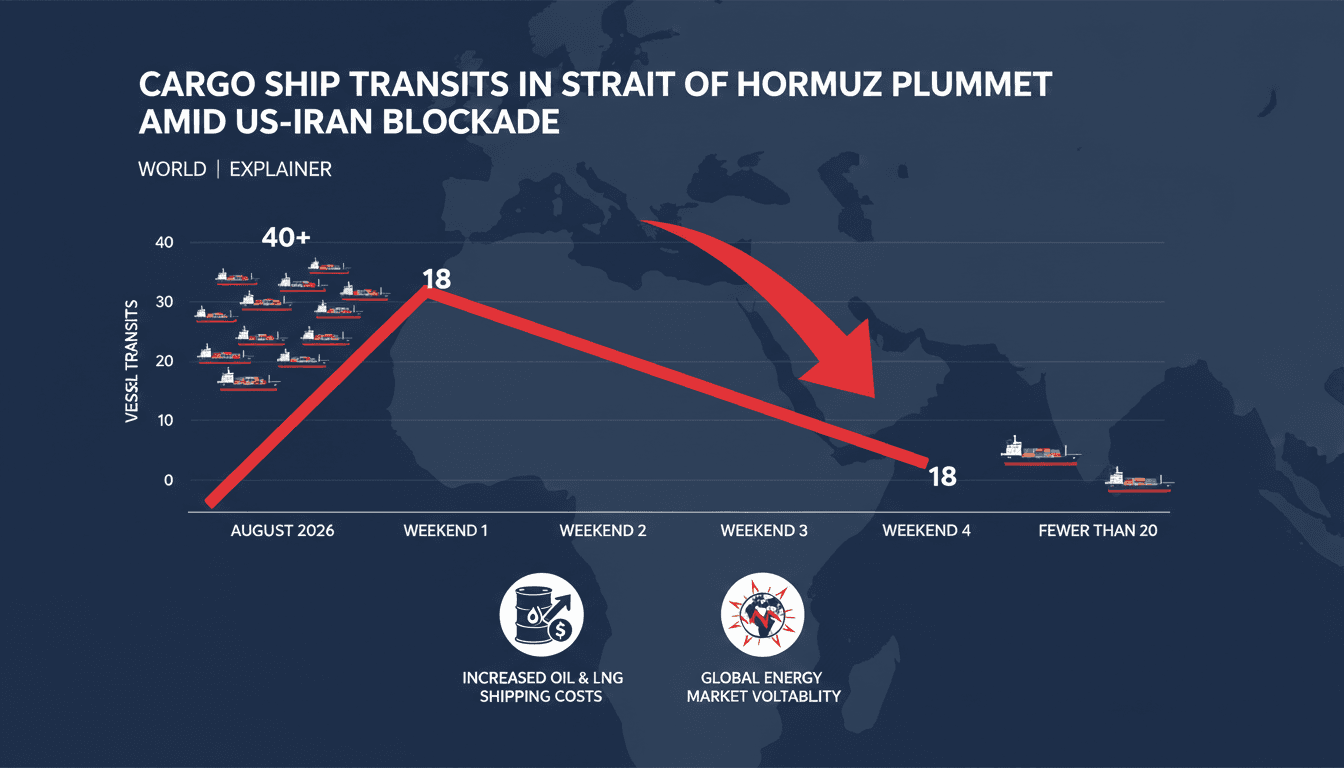
- Cargo vessel transits dropped to fewer than 20 over the weekend of August 22-23, 2026, due to a blockade.
- Traffic volumes are down approximately 90% compared to pre-conflict levels, with only 13 vessels on Saturday and 4 on Sunday.
- Geopolitical tensions have escalated since February 2026, leading to projectile attacks and rerouted shipping operations.
The context you actually need
- The Strait of Hormuz is essential for global energy shipments, making its stability crucial for international markets.
- Ongoing US-Iran conflict has resulted in mutual blockades and heightened security measures, deterring shipping operators.
- Shipping operators are increasingly rerouting or aborting transits, leading to significant disruptions in energy supply chains.
What's really happening
The Strait of Hormuz serves as a vital artery for global energy, with around 20% of the world's oil and liquefied natural gas (LNG) exports passing through this narrow waterway. The recent blockade, initiated amid escalating tensions between the US and Iran, has led to a dramatic decline in maritime traffic. Data from Kpler indicates that only 13 vessels transited the strait on Saturday, August 22, and a mere 4 on Sunday, August 23, 2026. This stark reduction is a significant drop from the typical pre-conflict volumes, which often exceeded 130 daily transits.
The blockade is a direct response to ongoing geopolitical tensions that have intensified since February 2026. The conflict has seen tit-for-tat strikes and attacks on vessels, prompting both Iranian and US naval forces to impose restrictions on maritime traffic. As a result, shipping operators are faced with heightened risks, leading many to reroute their vessels or disable their Automatic Identification System (AIS) transponders to avoid detection. This has resulted in a sustained suppression of traffic volumes, with UK Maritime Trade Operations (UKMTO) reporting a 90% reduction in detected transits for the week ending August 21, 2026.
The implications of this blockade extend beyond immediate shipping disruptions. Energy traders and logistics firms based in Dubai are experiencing extended delays and increased insurance premiums for Gulf shipments. Regional ports are reporting reduced throughput as operators divert cargoes or await safer conditions. The volatility in oil prices is also notable, with downward pressure observed in related market reports, reflecting the uncertainty surrounding energy supply.
As the situation evolves, the risk of further escalation remains high. Iranian authorities have announced penalties for non-compliant transits, indicating a hardening of their stance. Meanwhile, UKMTO continues to monitor the situation and advise on risk avoidance, but no immediate easing of restrictions is anticipated. The combination of geopolitical tensions and operational challenges is likely to keep traffic volumes suppressed for the foreseeable future.
Who feels it first (and how)
- Energy traders: Facing increased costs and delays in shipments.
- Logistics firms: Experiencing reduced throughput and operational challenges.
- Consumers: Potentially facing higher energy prices as supply chains tighten.
- Investors: Monitoring volatility in oil markets and related assets.
What to watch next
- Shipping routes: Monitor changes in vessel traffic patterns as operators seek safer alternatives.
- Oil prices: Watch for fluctuations as market reactions to the blockade unfold.
- Geopolitical developments: Keep an eye on US-Iran relations and any potential diplomatic resolutions.
Traffic volumes are approximately 90% below pre-conflict levels.
Continued risk avoidance by shipping operators will suppress maritime traffic.
The duration of the blockade and its long-term impact on global energy markets.
Frequently Asked Questions
- Why it matters?
- The Strait of Hormuz is a critical maritime corridor, with approximately 20% of global oil and LNG exports passing through it.
- What happened (in 30 seconds)?
- Cargo vessel transits dropped to fewer than 20 over the weekend of August 22-23, 2026, due to a blockade. Traffic volumes are down approximately 90% compared to pre-conflict levels, with only 13 vessels on Saturday and 4 on Sunday. Geopolitical tensions have escalated since February 2026, leading to projectile attacks and rerouted shipping operations.
- What's really happening?
- The Strait of Hormuz serves as a vital artery for global energy, with around 20% of the world's oil and liquefied natural gas (LNG) exports passing through this narrow waterway. The recent blockade, initiated amid escalating tensions between the US and Iran, has led to a dramatic decline in maritime traffic. Data from Kpler indicates that only 13 vessels transited the strait on Saturday, August 22, and a mere 4 on Sunday, August 23, 2026. This stark reduction is a significant drop from the typic
- Who feels it first (and how)?
- Energy traders: Facing increased costs and delays in shipments. Logistics firms: Experiencing reduced throughput and operational challenges. Consumers: Potentially facing higher energy prices as supply chains tighten. Investors: Monitoring volatility in oil markets and related assets.
- What to watch next?
- Shipping routes: Monitor changes in vessel traffic patterns as operators seek safer alternatives. Oil prices: Watch for fluctuations as market reactions to the blockade unfold. Geopolitical developments: Keep an eye on US-Iran relations and any potential diplomatic resolutions.
Pan-Arab news coverage spanning politics, business, sports, and regional affairs.
"Asharq Al-Awsat reflects a broad Arab editorial perspective with strong attention to regional geopolitics."
— A47 Editor
أقل من 20 سفينة شحن عبرت مضيق هرمز مطلع الأسبوع
Shipping data revealed that fewer than 20 cargo ships transited the Strait of Hormuz at the beginning of this week, attributed to the Iranian and American blockade that restricts navigation in the strait.
Pan-Arab political news and analysis.
"Al-Quds Al-Arabi is a London-based Arabic newspaper known for political coverage."
— A47 Editor
أقل من 20 سفينة شحن عبرت مضيق هرمز مطلع الأسبوع
Recent shipping data indicates that fewer than 20 cargo ships transited the Strait of Hormuz at the beginning of this week, attributed to Iranian and American restrictions impacting navigation through this vital energy shipping route. Initial data fr...
Arabic-language coverage of international news and geopolitics.
"RT Arabic is a Russian state-funded outlet often criticized for promoting Kremlin-aligned narratives."
— A47 Editor
تراجع عبور السفن عبر مضيق هرمز إلى أقل من 20 سفينة خلال عطلة نهاية الأسبوع
Recent data indicates that fewer than 20 commercial ships transited the Strait of Hormuz over the weekend, amid ongoing maritime restrictions and military tensions between the United States and Iran.
Jordanian news and regional updates.
"Roya News is a Jordanian outlet focused on breaking news and local affairs."
— A47 Editor
سي إن إن: تراجع نفوذ إيران في مضيق هرمز مع ارتفاع حركة الملاحة عبر المسار العماني
Iran's influence in the Strait of Hormuz is experiencing a notable decline, coinciding with an increase in maritime traffic through the Omani route. This shift indicates a changing dynamic in regional navigation patterns, potentially reducing Iran's ...