
GCC and EU Condemn Iranian Attacks on Commercial Vessels in Strait of Hormuz
Here's what it means for you.
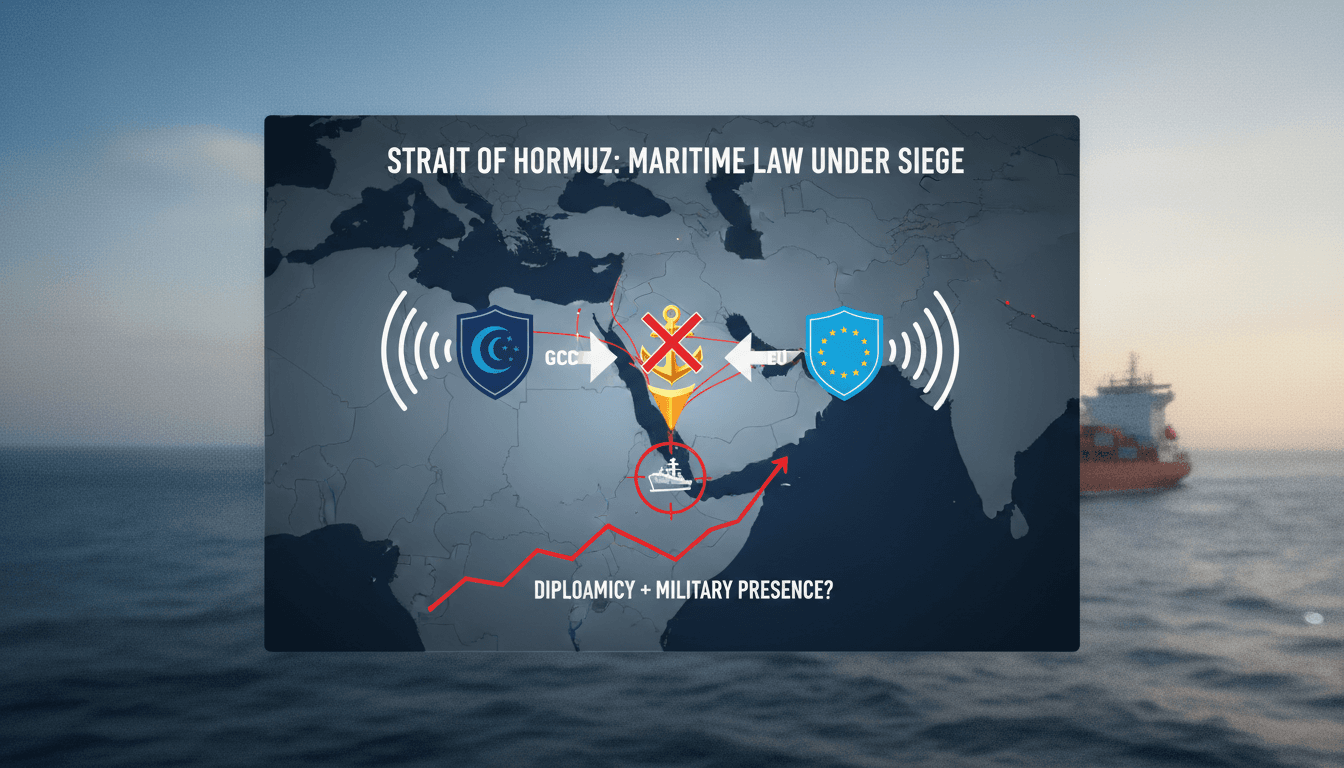
The joint condemnation by the Gulf Cooperation Council (GCC) and the European Union (EU) signals a significant escalation in diplomatic efforts to ensure maritime security in the Strait of Hormuz. This region is crucial for global oil shipments, and any disruption could have far-reaching implications for international trade and energy markets. Stakeholders should prepare for potential increases in military presence and heightened diplomatic engagements aimed at stabilizing the area. The GCC and EU's strong stance against Iranian aggression underscores the importance of international law in maintaining freedom of navigation. As tensions rise, affected nations may seek collaborative strategies to safeguard their maritime interests.
What happened
The Gulf Cooperation Council and the European Union have issued a joint statement condemning recent Iranian attacks on commercial vessels in the Strait of Hormuz. This statement emphasizes the critical need for freedom of navigation in the region and calls for an immediate halt to such hostilities. The attacks have raised alarms regarding the safety of maritime operations in one of the world's most vital shipping lanes.
The joint condemnation was articulated during the High-Level Forum on Regional Security and Cooperation held in Brussels on July 13, 2026. The GCC and EU reaffirmed that the rights to navigate freely are protected under international law, specifically referencing UN Security Council Resolution 2817, which the attacks violated.
The Context
The Strait of Hormuz is a pivotal maritime route for global oil shipments, making it a focal point for international trade and security. The recent Iranian attacks have not only threatened the safety of commercial shipping but have also raised concerns among affected nations and seafarers about regional stability. The GCC and EU's solidarity reflects a broader commitment to uphold international maritime law and protect the interests of all nations reliant on this critical passage.
The timing of this condemnation is significant, as it comes amid escalating tensions in the region. The GCC and EU have rejected any claims of sovereignty over the Strait of Hormuz by any state, emphasizing that it must remain open to international traffic without restrictions or fees. This stance is crucial for maintaining the flow of commerce and ensuring that maritime security is prioritized.
Takeaway
The GCC and EU's unified response to Iranian attacks indicates a strong commitment to maintaining maritime security in the Strait of Hormuz. This could lead to increased diplomatic efforts aimed at addressing the underlying tensions in the region. Stakeholders should monitor potential escalations, including the possibility of enhanced military presence by affected nations to safeguard their maritime interests.
Future diplomatic engagements between the GCC, EU, and Iran will be critical in shaping the security landscape of the Strait of Hormuz. As the situation evolves, the international community will likely remain focused on ensuring that freedom of navigation is upheld and that maritime safety is prioritized.
English-language reporting on Saudi politics, policy, and society.
"Saudi Gazette reflects mainstream Saudi institutional perspectives."
— A47 Editor
EU, GCC reject any restrictions on navigation through Strait of Hormuz
The European Union and the Gulf Cooperation Council (GCC) have jointly reaffirmed the importance of freedom of navigation through the Strait of Hormuz, condemning any attempts to impose restrictions on international shipping and denouncing Iran's rec...
International news coverage curated for readers in the UAE and Gulf region.
"Emirates 24|7 world coverage presents global developments through a UAE-facing and Gulf-relevant editorial lens."
— A47 Editor
GCC, EU condemn attacks in Strait of Hormuz, reaffirm freedom of navigation
The Gulf Cooperation Council (GCC) and the European Union (EU) have condemned recent attacks in the Strait of Hormuz targeting regional countries and commercial vessels, emphasizing the necessity of maintaining freedom of navigation as protected unde...
Arabic-language coverage of international news and geopolitics.
"RT Arabic is a Russian state-funded outlet often criticized for promoting Kremlin-aligned narratives."
— A47 Editor
بيان أوروبي خليجي: ندين هجمات إيران على السفن التجارية ودول المنطقة ونرفض ادعاءات السيادة على هرمز
The European Union and the Gulf Cooperation Council condemned Iran's attacks on commercial vessels and regional countries, asserting that freedom of navigation in the Strait of Hormuz is guaranteed under international law. They emphasized that ships ...
Pan-Arab news coverage spanning politics, business, sports, and regional affairs.
"Asharq Al-Awsat reflects a broad Arab editorial perspective with strong attention to regional geopolitics."
— A47 Editor
رفض أوروبي - خليجي لأي ادعاءات بالسيادة على مضيق هرمز
The European Union and the Gulf Cooperation Council issued a joint statement reaffirming the importance of freedom of navigation, including the right of passage through the Strait of Hormuz. This statement comes amid ongoing tensions in the region re...
Arabic-language coverage of political affairs and current events.
"Okaz political coverage typically follows mainstream Saudi framing on national and regional affairs."
— A47 Editor
«الاتحاد الأوروبي» و«الخليجي»: لا سيادة لأحد على مضيق هرمز.. وعلى إيران وقف هجماتها
The European Union and the Gulf Cooperation Council have jointly rejected any attempts to assert control over the Strait of Hormuz, emphasizing the need for Iran to immediately cease its attacks on commercial vessels and regional countries. This stat...
Arabic-language political and world news coverage for UAE readers.
"Emarat Al Youm world coverage usually presents international developments through a UAE and Arab audience lens."
— A47 Editor
مجلس التعاون والاتحاد الأوروبي يدينان الهجمات الإيرانية ويطالبان بوقفها في مضيق هرمز مجلس التعاون والاتحاد الأوروبي يدينان الهجمات الإيرانية ويطالبان بوقفها في مضيق هرمز
The Gulf Cooperation Council (GCC) and the European Union (EU) have strongly condemned the Iranian attacks on commercial vessels in the Strait of Hormuz, calling for an immediate cessation of such actions. This condemnation highlights the ongoing ten...