
US Treasury Initiates Operation Economic Outcast Against Iran
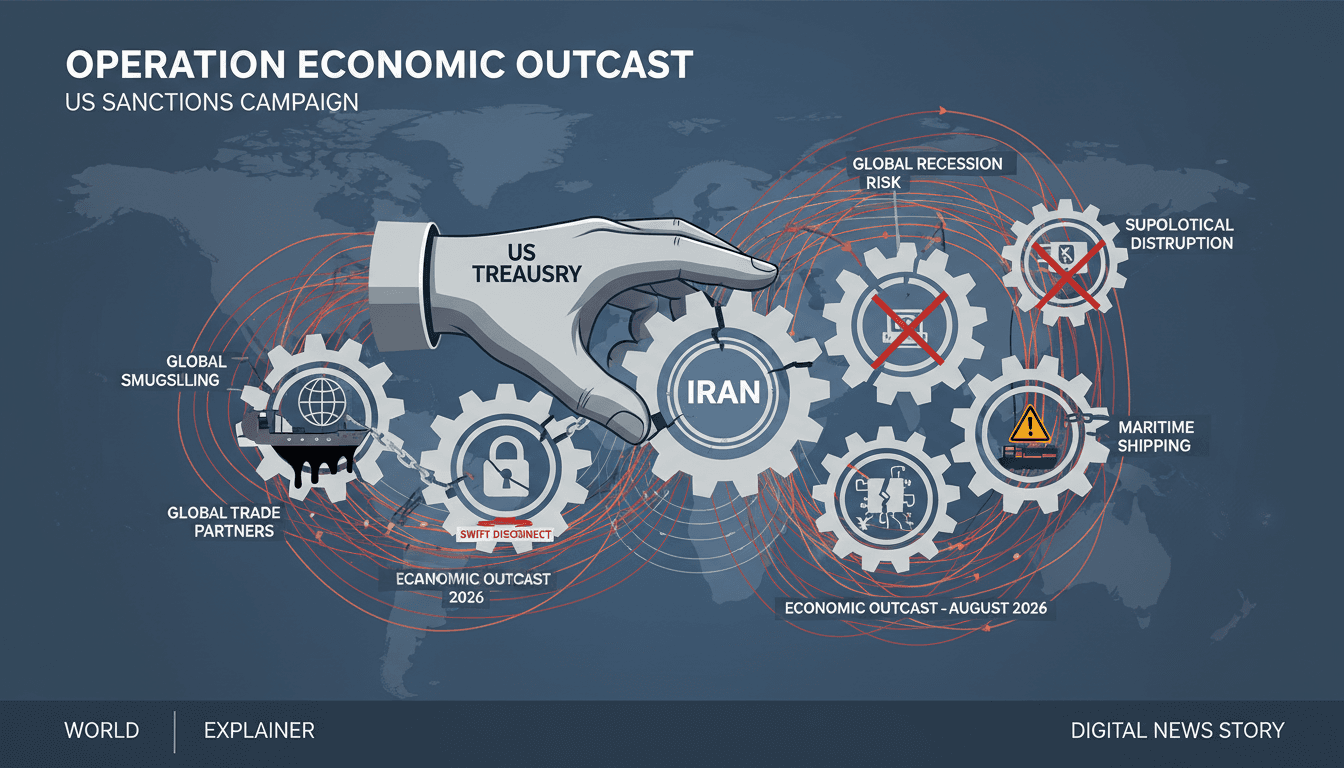
Here's what it means for you.
If you engage in trade or finance with the UAE or China, expect increased scrutiny and potential compliance costs.
Why it matters
This sanctions campaign could reshape global trade dynamics, particularly for countries and companies involved with Iran.
What happened (in 30 seconds)
- On August 24, 2026, the US launched Operation Economic Outcast, targeting Iran's economic networks.
- The US Treasury sanctioned over 60 entities, including individuals and vessels, involved in Iran's oil revenue and nuclear procurement.
- Secondary sanctions threaten foreign partners, particularly in the UAE and China, who continue business with Iran.
The context you actually need
- Previous sanctions had limited effectiveness, as Iran continued oil smuggling and trade with key partners despite existing pressures.
- The US-Israel conflict with Iran has stalled diplomatic negotiations, prompting a shift to economic isolation as a strategy.
- Treasury Secretary Scott Bessent described the operation as an "economic D-Day," emphasizing a "zero-leakage" approach to cut off revenue streams.
What's really happening
Operation Economic Outcast represents a significant escalation in the US's economic strategy against Iran, aiming to isolate the regime and compel it to negotiate on nuclear issues and regional security. The sanctions target five critical sectors: digital assets, technology, gold, aviation, and shipping. By expanding secondary sanctions, the US is sending a clear message to foreign entities—engage with Iran, and you risk losing access to the US market.
The sanctions are not merely punitive; they are designed to disrupt Iran's ability to finance its military and nuclear ambitions. The US Treasury's focus on a "zero-leakage" strategy indicates a commitment to enforcing these measures rigorously. This means that any foreign entity, particularly those in the UAE and China, must weigh the risks of continued engagement with Iran against the benefits of maintaining access to the US economy.
The immediate impact is already visible, with the Iranian rial hitting record lows following the announcement. Iranian officials, including Economy Minister Ali Madanizadeh, have publicly stated their readiness to withstand these pressures, but the reality is that the Iranian economy is already strained. The sanctions could exacerbate existing economic challenges, leading to increased inflation and further devaluation of the rial.
For businesses in Dubai and the UAE, the implications are significant. As key intermediaries in trade and finance, UAE-based entities face heightened scrutiny. This could lead to increased compliance costs and risks for local businesses engaged in regional energy or logistics sectors. The sanctions may disrupt local commerce, particularly in shipping and gold trade, which are vital to the UAE's economy.
Moreover, the operation's success hinges on the cooperation of international partners. China, as Iran's top oil buyer, is under pressure to comply with US demands. The potential for secondary sanctions could lead to a reevaluation of trade relationships, impacting global supply chains and energy markets.
In summary, Operation Economic Outcast is not just about isolating Iran; it is a strategic maneuver that could reshape economic relationships across the globe, particularly for countries and companies that have historically engaged with Iran.
Who feels it first (and how)
- Businesses in Dubai and the UAE: Increased compliance costs and risks in trade and finance.
- Foreign entities in China: Potential loss of access to US markets if they continue dealings with Iran.
- Iranian citizens: Economic strain from currency devaluation and inflation due to sanctions.
- Energy sector stakeholders: Disruption in oil supply chains and pricing volatility.
What to watch next
- Compliance measures: Monitor how UAE and Chinese businesses adapt to the new sanctions and their compliance strategies.
- Iran's economic response: Watch for shifts in Iran's economic policies or alliances as it seeks to mitigate the impact of sanctions.
- International diplomatic efforts: Observe any renewed negotiations or diplomatic overtures from the US or its allies regarding Iran's nuclear program.
The US has sanctioned over 60 entities as part of Operation Economic Outcast.
Increased scrutiny and compliance costs for businesses in the UAE and China.
The long-term effectiveness of these sanctions in compelling Iran to negotiate.
Frequently Asked Questions
- Why it matters?
- This sanctions campaign could reshape global trade dynamics, particularly for countries and companies involved with Iran.
- What happened (in 30 seconds)?
- On August 24, 2026, the US launched Operation Economic Outcast, targeting Iran's economic networks. The US Treasury sanctioned over 60 entities, including individuals and vessels, involved in Iran's oil revenue and nuclear procurement. Secondary sanctions threaten foreign partners, particularly in the UAE and China, who continue business with Iran.
- What's really happening?
- Operation Economic Outcast represents a significant escalation in the US's economic strategy against Iran, aiming to isolate the regime and compel it to negotiate on nuclear issues and regional security. The sanctions target five critical sectors: digital assets, technology, gold, aviation, and shipping. By expanding secondary sanctions, the US is sending a clear message to foreign entities—engage with Iran, and you risk losing access to the US market. The sanctions are not merely punitive; the
- Who feels it first (and how)?
- Businesses in Dubai and the UAE: Increased compliance costs and risks in trade and finance. Foreign entities in China: Potential loss of access to US markets if they continue dealings with Iran. Iranian citizens: Economic strain from currency devaluation and inflation due to sanctions. Energy sector stakeholders: Disruption in oil supply chains and pricing volatility.
- What to watch next?
- Compliance measures: Monitor how UAE and Chinese businesses adapt to the new sanctions and their compliance strategies. Iran's economic response: Watch for shifts in Iran's economic policies or alliances as it seeks to mitigate the impact of sanctions. International diplomatic efforts: Observe any renewed negotiations or diplomatic overtures from the US or its allies regarding Iran's nuclear program.
Global news coverage with extensive reporting on Middle Eastern conflicts and geopolitics.
"Al Jazeera is a Qatar-based broadcaster known for wide regional coverage and alternative perspectives."
— A47 Editor
US launches Economic war on Iran
The United States has initiated 'Operation Economic Outcast,' expanding sanctions against Iran in a bid to isolate the country economically. This move is characterized by warnings to nations engaging in business with Iran, urging them to sever ties o...
Comprehensive coverage of Middle Eastern and global issues.
"Al Jazeera is a prominent voice from the Global South, especially the Middle East, with an emphasis on underreported stories."
— A47 Editor
US launches Economic war on Iran
The United States has initiated 'Operation Economic Outcast,' expanding sanctions against Iran in a bid to isolate the country economically. This move is characterized by warnings to nations engaging in business with Iran, urging them to sever ties o...
Regional and international reporting focused on Middle Eastern politics, diplomacy, and economics.
"Asharq Al-Awsat is a Saudi-owned international newspaper reflecting mainstream Gulf political perspectives."
— A47 Editor
US Launches ‘Economic Onslaught’ Against Iran’s Financial Connections
The United States has initiated a significant economic offensive against Iran, described as an 'economic onslaught,' aimed at crippling its financial connections amid rising tensions. This move follows Iran's threats to halt all oil exports, promptin...
UAE-based English-language newspaper covering regional politics, economics, and global affairs.
"The National reflects Emirati policy perspectives while maintaining international editorial standards."
— A47 Editor
Iran war latest: US announces sweeping new set of sanctions against Iran
The United States has announced a comprehensive set of new sanctions against Iran, described as an 'economic D-Day,' in response to Tehran's threats to halt all oil exports. This escalation in economic measures follows a period of heightened military...