
Indonesia faces severe wildfire haze crisis affecting multiple provinces and neighboring countries
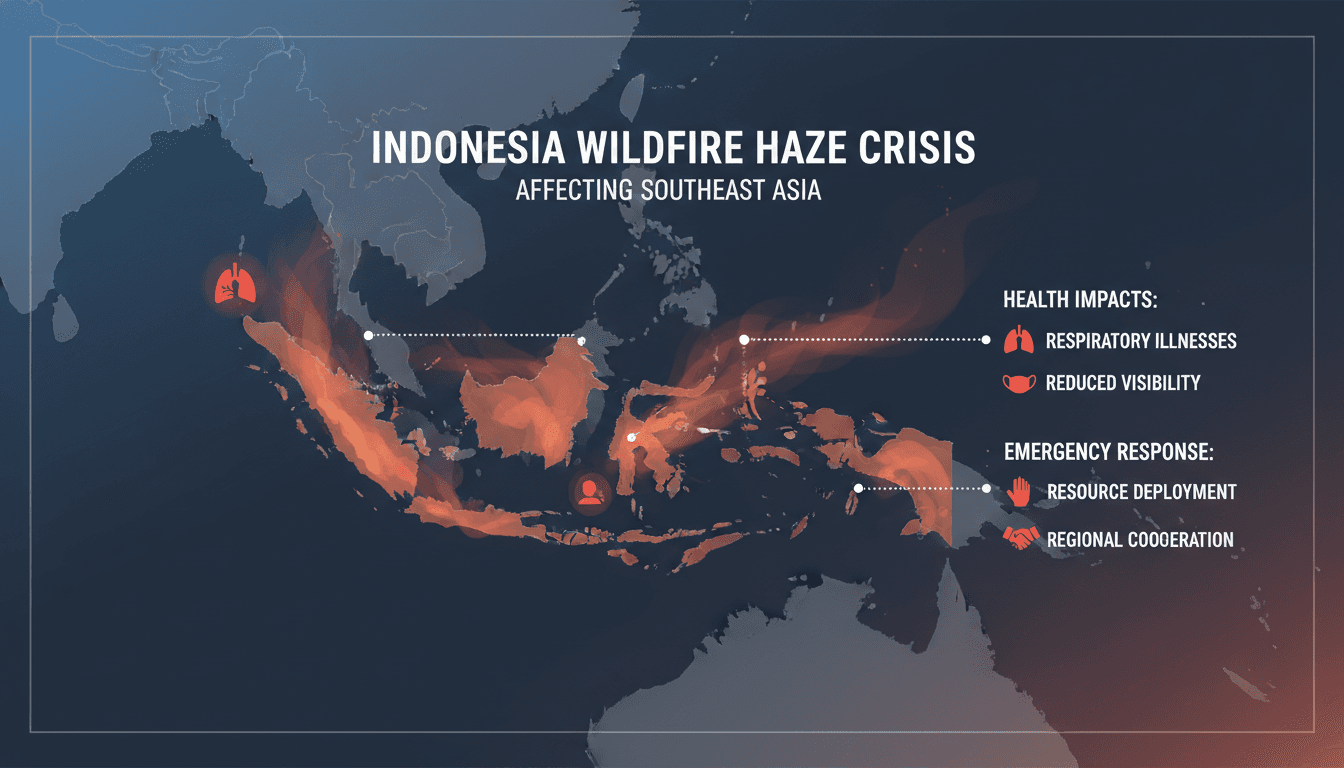
Here's what it means for you.
If you work in sectors reliant on Southeast Asian supply chains, be prepared for potential disruptions due to health and environmental crises.
Why it matters
The wildfire haze crisis in Indonesia is a significant environmental disaster that can disrupt regional economies and public health.
What happened (in 30 seconds)
- Wildfires intensified in Indonesia's Kalimantan and Sumatra provinces, affecting air quality and health across 10 provinces.
- Health services overwhelmed with over 5,000 weekly emergency room visits for respiratory issues, a tenfold increase since earlier this year.
- Regional haze impacts extend to Malaysia and Brunei, prompting cross-border health alerts and emergency responses.
The context you actually need
- Annual dry-season fires in Indonesia are exacerbated by El Niño cycles, which prolong drought conditions and increase fire risks.
- Land-clearing practices using slash-and-burn methods contribute significantly to the frequency and intensity of these wildfires.
- The 2026 'super El Niño' has intensified conditions, leading to a dramatic increase in burned areas compared to non-El Niño years.
What's really happening
The wildfire haze crisis in Indonesia is a complex interplay of environmental factors, human activities, and systemic challenges. The ongoing El Niño phenomenon has created prolonged dry conditions, which are ideal for wildfires. This year's 'super El Niño' has intensified these conditions, leading to a significant increase in fire hotspots across the archipelago.
Land-clearing practices, particularly for palm oil plantations, have long been a contentious issue in Indonesia. Farmers often resort to slash-and-burn techniques to clear land quickly and cheaply. However, these methods not only contribute to the immediate outbreak of fires but also create long-term environmental degradation, particularly in peatland areas that are highly susceptible to burning.
As fires spread, they have burned tens of thousands of hectares, with over 286,000 hectares reported as burned since January 2026. The Indonesian government, under President Prabowo Subianto, has responded by revoking permits and arresting individuals linked to arson. Despite these efforts, the scale of the crisis has overwhelmed local firefighting resources, leading to the deployment of aerial firefighting operations and cloud-seeding initiatives to induce rain.
The health impacts are severe. Residents in affected areas are experiencing respiratory issues, with emergency room visits for respiratory symptoms skyrocketing from 500 per week to over 5,000 in West Kalimantan alone since July. Schools have shifted to online learning to protect children from hazardous air quality, which has dropped visibility to as low as 10 meters in some regions.
The crisis has also prompted regional responses, with Malaysia coordinating cloud-seeding operations to mitigate the haze's effects. However, the long-term implications of these wildfires extend beyond immediate health concerns; they threaten regional stability and economic resilience, particularly for sectors reliant on agriculture and natural resources.
Who feels it first (and how)
- Local residents in affected provinces face immediate health risks and disruptions to daily life.
- Healthcare providers are overwhelmed with increased patient loads due to respiratory issues.
- Agricultural sectors may experience disruptions in productivity and supply chains due to health impacts and environmental degradation.
- Regional governments in Malaysia and Brunei are forced to respond to cross-border haze impacts, straining resources.
What to watch next
- Weather patterns: Monitor rainfall forecasts and El Niño developments, as these will influence fire risks and haze conditions.
- Government actions: Watch for further regulatory changes in land-clearing practices and enforcement actions against illegal burning.
- Health data: Keep an eye on emergency room visit trends and public health responses in Indonesia and neighboring countries.
The crisis is ongoing, with significant health impacts reported in Indonesia and neighboring countries.
Continued health service strain and potential economic disruptions in agriculture and related sectors.
The long-term effectiveness of government interventions and the potential for future El Niño events to exacerbate conditions.
Frequently Asked Questions
- Why it matters?
- The wildfire haze crisis in Indonesia is a significant environmental disaster that can disrupt regional economies and public health.
- What happened (in 30 seconds)?
- Wildfires intensified in Indonesia's Kalimantan and Sumatra provinces, affecting air quality and health across 10 provinces. Health services overwhelmed with over 5,000 weekly emergency room visits for respiratory issues, a tenfold increase since earlier this year. Regional haze impacts extend to Malaysia and Brunei, prompting cross-border health alerts and emergency responses.
- What's really happening?
- The wildfire haze crisis in Indonesia is a complex interplay of environmental factors, human activities, and systemic challenges. The ongoing El Niño phenomenon has created prolonged dry conditions, which are ideal for wildfires. This year's 'super El Niño' has intensified these conditions, leading to a significant increase in fire hotspots across the archipelago. Land-clearing practices, particularly for palm oil plantations, have long been a contentious issue in Indonesia. Farmers often reso
- Who feels it first (and how)?
- Local residents in affected provinces face immediate health risks and disruptions to daily life. Healthcare providers are overwhelmed with increased patient loads due to respiratory issues. Agricultural sectors may experience disruptions in productivity and supply chains due to health impacts and environmental degradation. Regional governments in Malaysia and Brunei are forced to respond to cross-border haze impacts, straining resources.
- What to watch next?
- Weather patterns: Monitor rainfall forecasts and El Niño developments, as these will influence fire risks and haze conditions. Government actions: Watch for further regulatory changes in land-clearing practices and enforcement actions against illegal burning. Health data: Keep an eye on emergency room visit trends and public health responses in Indonesia and neighboring countries.
Global news coverage with extensive reporting on Middle Eastern conflicts and geopolitics.
"Al Jazeera is a Qatar-based broadcaster known for wide regional coverage and alternative perspectives."
— A47 Editor
‘We can’t breathe’: Indonesians battle wildfire haze
Wildfires are currently raging across Indonesia, affecting at least 10 provinces and creating hazardous haze that poses serious health risks to local communities. The situation has prompted emergency measures as residents struggle with deteriorating ...
Comprehensive coverage of Middle Eastern and global issues.
"Al Jazeera is a prominent voice from the Global South, especially the Middle East, with an emphasis on underreported stories."
— A47 Editor
‘We can’t breathe’: Indonesians battle wildfire haze
Wildfires are currently raging across Indonesia, affecting at least 10 provinces and creating hazardous haze that poses serious health risks to local communities. The situation has prompted emergency measures as residents struggle with deteriorating ...
Regional and international reporting focused on Middle Eastern politics, diplomacy, and economics.
"Asharq Al-Awsat is a Saudi-owned international newspaper reflecting mainstream Gulf political perspectives."
— A47 Editor
Indonesians Brave Choking Smoke to Pray for Rain as Country Battles Wildfires
Indonesians are gathering to pray for rain as the country faces severe wildfires exacerbated by the El Niño phenomenon, which has led to choking smoke and hazardous air quality across multiple provinces. Thousands of firefighters and aerial resources...
International stories from NPR’s global desk.
"NPR is an American public media organization known for thoughtful reporting and a slightly left-leaning editorial tone."
— A47 Editor
Indonesians brave choking smoke to pray for rain as country battles wildfires
Indonesians are facing severe air quality issues as wildfires in central and western regions of the country have created a choking haze, prompting many to gather and pray for rain. The blazes have devastated vast areas of forests and peatlands, exace...