
Iran Declares Full Military Control Over Strait of Hormuz Amid Ongoing Tensions
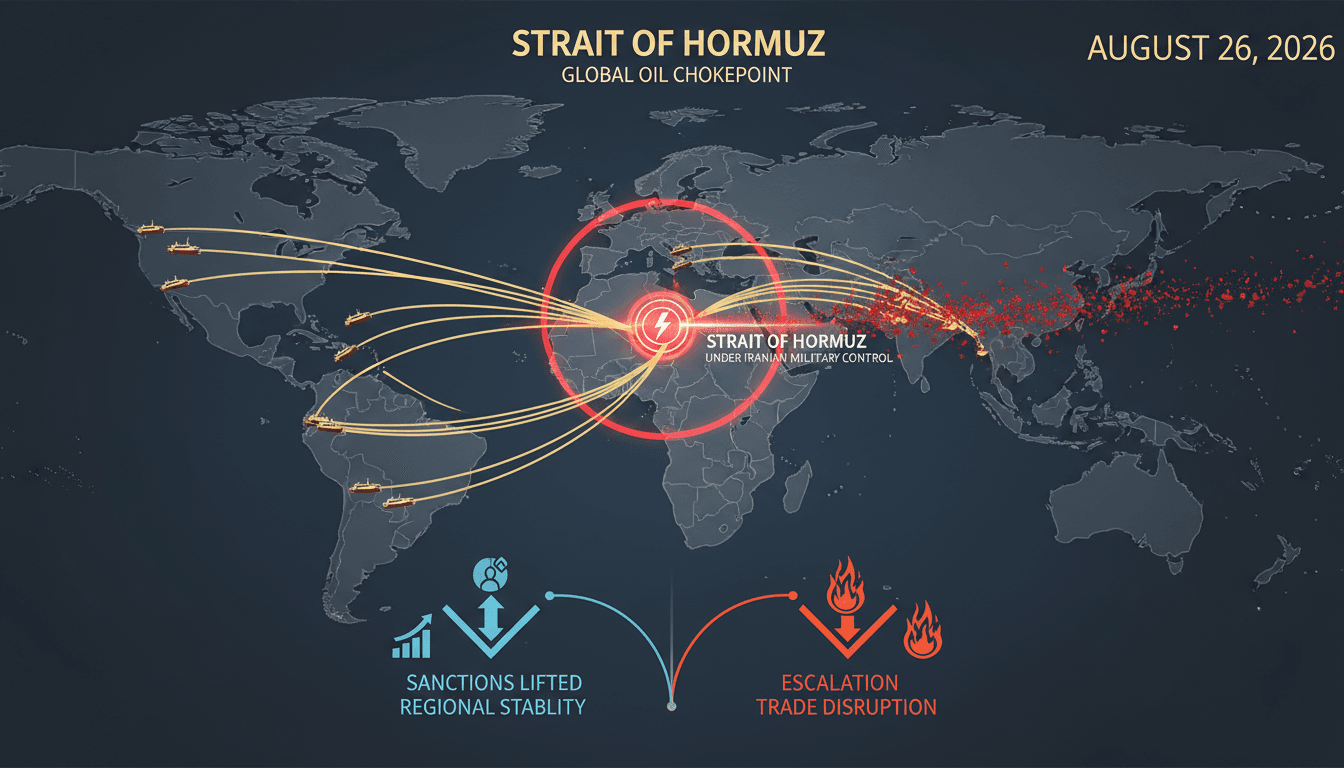
Here's what it means for you.
If you rely on oil or goods transported through the Strait of Hormuz, expect rising prices and potential supply disruptions.
Why it matters
The Strait of Hormuz is a critical chokepoint for approximately 20% of global oil trade, making its closure a significant threat to energy markets worldwide.
What happened (in 30 seconds)
- Iran declared the Strait of Hormuz is fully closed and under military control as of August 26, 2026.
- U.S. claims of mine clearance were dismissed by Iranian officials, who set conditions for reopening.
- Temporary navigation arrangements with Oman are in place, but permanent solutions depend on further negotiations.
The context you actually need
- The Strait of Hormuz is vital for global oil transit, with about 20% of the world's oil passing through it.
- Iran's military actions are a response to ongoing U.S. sanctions and regional conflicts, particularly in Yemen and Lebanon.
- Negotiations involving Oman and Pakistan are underway to mediate the situation, but Iran's conditions for reopening the strait complicate matters.
What's really happening
On August 26, 2026, Iranian Deputy Foreign Minister Kazem Gharibabadi made a definitive statement regarding the Strait of Hormuz, asserting that it remains closed and under Iranian military control. This declaration comes amid heightened tensions between the U.S. and Iran, with the latter rejecting U.S. claims of mine clearance as mere propaganda. Gharibabadi emphasized that any potential reopening of the strait hinges on several conditions: the full lifting of economic sanctions, a sustainable cessation of conflicts in the region, particularly in Yemen and Lebanon, and the resolution of the Yemen blockade.
The Strait of Hormuz has been a focal point of geopolitical strife, especially since early 2026, when Iran began imposing restrictions in response to perceived violations of international agreements. The U.S. has maintained a naval presence in the region, asserting its commitment to ensuring safe passage for commercial vessels. However, Iran's military assertion complicates these efforts, as it signals a willingness to escalate tensions further if its demands are not met.
The implications of this closure are profound. With approximately 20% of global oil trade passing through the strait, any disruption can lead to significant price volatility in oil markets. The U.S. and its allies are likely to respond with increased naval operations, but the effectiveness of these measures remains uncertain. Meanwhile, regional mediators like Oman and Pakistan are attempting to facilitate dialogue, yet Iran's firm stance suggests that negotiations may be protracted and fraught with challenges.
As the situation evolves, the potential for further military escalation looms large. Iran's insistence on maintaining control over the strait until its conditions are met indicates a strategic maneuver to leverage its position in the ongoing geopolitical landscape. This could lead to a prolonged period of instability in the region, affecting not only oil prices but also broader economic conditions globally.
Who feels it first (and how)
- Oil companies: Increased operational costs and potential supply chain disruptions.
- Consumers: Higher fuel prices and costs for goods reliant on oil transport.
- Logistics firms: Elevated shipping costs and delays in delivery schedules.
- Governments: Pressure to manage economic impacts and maintain energy security.
What to watch next
- Negotiation outcomes: Watch for developments in talks between Iran, Oman, and Pakistan, as these will determine the future of the Strait's accessibility.
- Oil price fluctuations: Monitor global oil prices for signs of volatility as markets react to the ongoing situation.
- Military movements: Keep an eye on U.S. naval deployments in the region, which may indicate escalating tensions or efforts to secure shipping lanes.
The Strait of Hormuz is currently closed, impacting global oil trade.
Continued negotiations will be necessary, but Iran's conditions may prolong the closure.
The potential for military escalation and its impact on global markets remains uncertain.
Frequently Asked Questions
- Why it matters?
- The Strait of Hormuz is a critical chokepoint for approximately 20% of global oil trade, making its closure a significant threat to energy markets worldwide.
- What happened (in 30 seconds)?
- Iran declared the Strait of Hormuz is fully closed and under military control as of August 26, 2026. U.S. claims of mine clearance were dismissed by Iranian officials, who set conditions for reopening. Temporary navigation arrangements with Oman are in place, but permanent solutions depend on further negotiations.
- What's really happening?
- On August 26, 2026, Iranian Deputy Foreign Minister Kazem Gharibabadi made a definitive statement regarding the Strait of Hormuz, asserting that it remains closed and under Iranian military control. This declaration comes amid heightened tensions between the U.S. and Iran, with the latter rejecting U.S. claims of mine clearance as mere propaganda. Gharibabadi emphasized that any potential reopening of the strait hinges on several conditions: the full lifting of economic sanctions, a sustainable
- Who feels it first (and how)?
- Oil companies: Increased operational costs and potential supply chain disruptions. Consumers: Higher fuel prices and costs for goods reliant on oil transport. Logistics firms: Elevated shipping costs and delays in delivery schedules. Governments: Pressure to manage economic impacts and maintain energy security.
- What to watch next?
- Negotiation outcomes: Watch for developments in talks between Iran, Oman, and Pakistan, as these will determine the future of the Strait's accessibility. Oil price fluctuations: Monitor global oil prices for signs of volatility as markets react to the ongoing situation. Military movements: Keep an eye on U.S. naval deployments in the region, which may indicate escalating tensions or efforts to secure shipping lanes.
Pan-Arab news coverage spanning politics, business, sports, and regional affairs.
"Asharq Al-Awsat reflects a broad Arab editorial perspective with strong attention to regional geopolitics."
— A47 Editor
إيران: مضيق هرمز لا يزال مغلقا بالكامل وتحت سيطرتنا العسكرية
Iranian Deputy Foreign Minister Kazem Gharibabadi stated that the Strait of Hormuz remains completely closed and under Iranian military control, denying claims regarding the removal of mines from the area.
Arabic-language coverage of international news and geopolitics.
"RT Arabic is a Russian state-funded outlet often criticized for promoting Kremlin-aligned narratives."
— A47 Editor
إيران: فتح هرمز مرتبط بإنهاء الحرب على كافة الجبهات ونحذر من قدرات جديدة على الرد وإجراءات استباقية
Iranian Deputy Foreign Minister for Legal and International Affairs, Kazem Gharibabadi, stated that the reopening of the Strait of Hormuz is contingent upon the cessation of war on all fronts, lifting the blockade, and resolving the situation in Yeme...
Arabic-language coverage of international news and geopolitics.
"RT Arabic is a Russian state-funded outlet often criticized for promoting Kremlin-aligned narratives."
— A47 Editor
مسؤول إيراني يوضح تفاصيل التفاهم بين إيران وعمان بشأن إنشاء ممر ملاحي عبر مضيق هرمز
Iranian Deputy Foreign Minister Kazem Gharibabadi provided details on the agreement reached between Iran and Oman regarding the establishment of a temporary maritime corridor through the Strait of Hormuz. This development was announced on Tuesday eve...