
Indonesia Faces Severe Wildfire Haze Crisis Amid Intensified El Niño Conditions
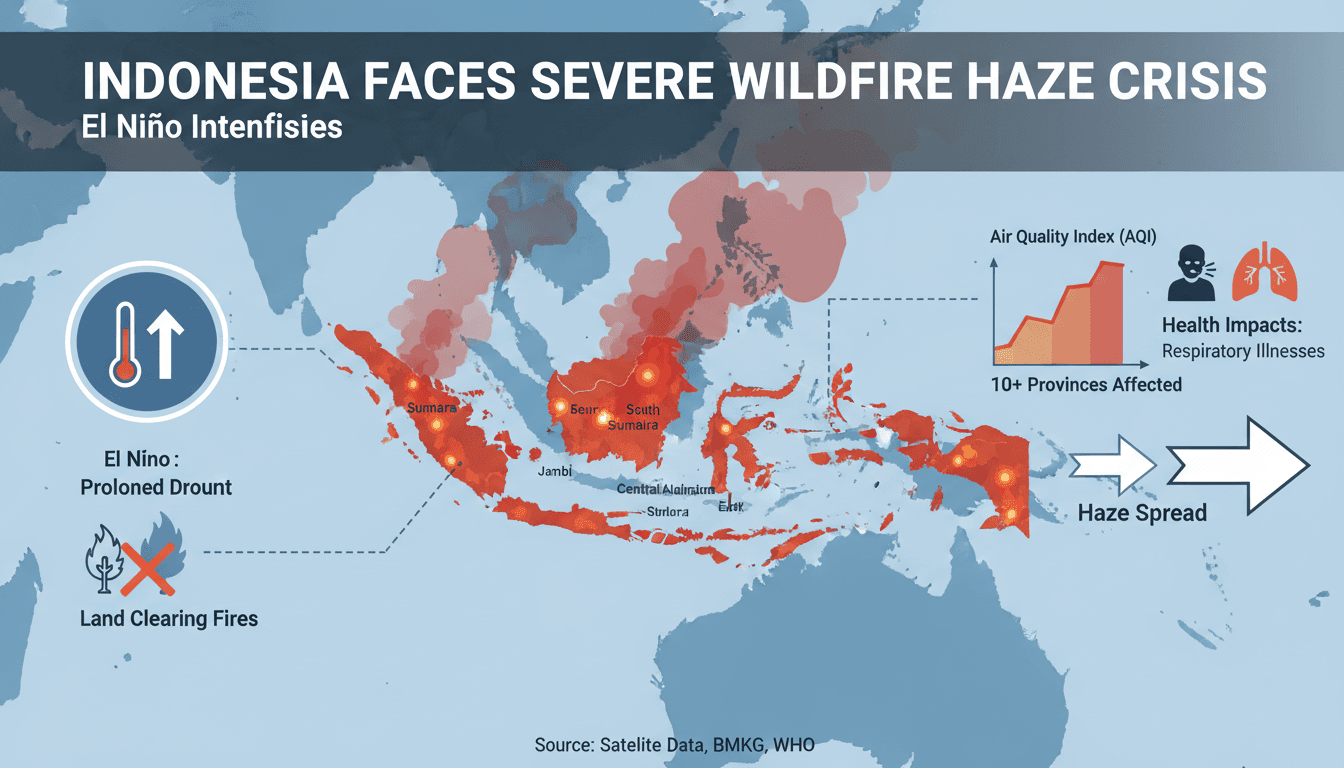
Here's what it means for you.
The ongoing wildfire crisis in Indonesia could impact air quality and health across Southeast Asia, affecting travel and trade.
Why it matters
The crisis highlights the vulnerability of regional air quality to climate phenomena and land-use practices, with potential economic repercussions.
What happened (in 30 seconds)
- Wildfires erupted across at least 10 provinces in Indonesia, primarily in Kalimantan and Sumatra, exacerbated by a powerful El Niño.
- Health impacts surged, with over 5,000 weekly emergency room visits for respiratory issues reported in West Kalimantan.
- Authorities responded with aerial firefighting efforts, arrests of suspected arsonists, and regional cooperation with Malaysia on cloud-seeding.
The context you actually need
- Recurring fire seasons in Indonesia are intensified by El Niño, which causes prolonged droughts and increases the flammability of peatlands.
- Land-clearing practices for agriculture have historically contributed to these crises, with similar patterns observed in previous El Niño years.
- The 2026 El Niño is classified as a 'super' event, leading to earlier and more severe dry conditions, which has resulted in extensive wildfire outbreaks.
What's really happening
The wildfire crisis in Indonesia is a complex interplay of climatic, environmental, and socio-economic factors. The current El Niño phenomenon, characterized by warmer ocean temperatures, has significantly altered weather patterns, leading to an extended dry season. This has dried out peatlands, making them highly susceptible to ignition. As a result, fires have spread rapidly across key provinces, with authorities reporting over 286,000 hectares affected since January 2026.
The Indonesian government has been proactive in its response, deploying both aerial and ground firefighting resources. However, the scale of the fires has overwhelmed local capacities. By mid-August, over 64,000 hectares had burned, with only partial containment achieved. The situation has prompted President Prabowo Subianto to visit affected areas, where he ordered the revocation of permits for land-clearing practices that contribute to the fires.
In addition to firefighting efforts, the government has arrested 72 individuals suspected of deliberately starting fires for land-clearing purposes. This crackdown reflects a broader strategy to address the root causes of the crisis, which include unsustainable agricultural practices and insufficient enforcement of environmental regulations.
The health impacts of the haze have been severe, with hospitals in West Kalimantan reporting a staggering increase in respiratory-related emergency room visits—5,000 per week compared to just 500 earlier in the year. The haze has reduced visibility to as low as 10 meters in some areas, leading to school closures and public health emergencies. Neighboring countries, including Malaysia and Brunei, have also felt the effects, prompting Malaysia to seek cross-border cloud-seeding assistance to mitigate the haze.
As the crisis unfolds, local communities are mobilizing to support firefighting efforts, with volunteers stepping in to assist. Many residents are praying for rain, which is seen as the most immediate solution to alleviate the ongoing crisis. The situation remains dynamic, with ongoing firefighting operations and health responses being prioritized as the government seeks to regain control over the situation.
Who feels it first (and how)
- Local residents: Experiencing health issues and disruptions to daily life due to poor air quality.
- Healthcare providers: Facing increased patient loads and resource strain from respiratory illnesses.
- Agricultural sectors: Potential crop damage and loss of productivity due to fires and haze.
- Regional governments: Managing cross-border health and environmental impacts, particularly in Malaysia and Brunei.
What to watch next
- Weather patterns: Monitor rainfall forecasts and El Niño developments, as these will influence fire conditions and air quality.
- Government policies: Watch for changes in land-use regulations and enforcement actions against illegal burning practices.
- Health statistics: Keep an eye on respiratory illness trends in affected regions, as they will indicate the ongoing public health impact.
The fires are exacerbated by a strong El Niño and have led to significant health impacts in Indonesia.
Continued firefighting efforts will be necessary, and regional cooperation will increase as neighboring countries seek to mitigate haze effects.
The long-term economic impacts on agriculture and trade in the region remain to be seen.
Frequently Asked Questions
- Why it matters?
- The crisis highlights the vulnerability of regional air quality to climate phenomena and land-use practices, with potential economic repercussions.
- What happened (in 30 seconds)?
- Wildfires erupted across at least 10 provinces in Indonesia, primarily in Kalimantan and Sumatra, exacerbated by a powerful El Niño. Health impacts surged, with over 5,000 weekly emergency room visits for respiratory issues reported in West Kalimantan. Authorities responded with aerial firefighting efforts, arrests of suspected arsonists, and regional cooperation with Malaysia on cloud-seeding.
- What's really happening?
- The wildfire crisis in Indonesia is a complex interplay of climatic, environmental, and socio-economic factors. The current El Niño phenomenon, characterized by warmer ocean temperatures, has significantly altered weather patterns, leading to an extended dry season. This has dried out peatlands, making them highly susceptible to ignition. As a result, fires have spread rapidly across key provinces, with authorities reporting over 286,000 hectares affected since January 2026. The Indonesian gove
- Who feels it first (and how)?
- Local residents: Experiencing health issues and disruptions to daily life due to poor air quality. Healthcare providers: Facing increased patient loads and resource strain from respiratory illnesses. Agricultural sectors: Potential crop damage and loss of productivity due to fires and haze. Regional governments: Managing cross-border health and environmental impacts, particularly in Malaysia and Brunei.
- What to watch next?
- Weather patterns: Monitor rainfall forecasts and El Niño developments, as these will influence fire conditions and air quality. Government policies: Watch for changes in land-use regulations and enforcement actions against illegal burning practices. Health statistics: Keep an eye on respiratory illness trends in affected regions, as they will indicate the ongoing public health impact.
Global news coverage with extensive reporting on Middle Eastern conflicts and geopolitics.
"Al Jazeera is a Qatar-based broadcaster known for wide regional coverage and alternative perspectives."
— A47 Editor
‘We can’t breathe’: Indonesians battle wildfire haze
Wildfires are currently raging across Indonesia, affecting at least 10 provinces and creating hazardous haze that poses serious health risks to local communities. The situation has prompted emergency measures as residents struggle with deteriorating ...
Comprehensive coverage of Middle Eastern and global issues.
"Al Jazeera is a prominent voice from the Global South, especially the Middle East, with an emphasis on underreported stories."
— A47 Editor
‘We can’t breathe’: Indonesians battle wildfire haze
Wildfires are currently raging across Indonesia, affecting at least 10 provinces and creating hazardous haze that poses serious health risks to local communities. The situation has prompted emergency measures as residents struggle with deteriorating ...
Regional and international reporting focused on Middle Eastern politics, diplomacy, and economics.
"Asharq Al-Awsat is a Saudi-owned international newspaper reflecting mainstream Gulf political perspectives."
— A47 Editor
Indonesians Brave Choking Smoke to Pray for Rain as Country Battles Wildfires
Indonesians are enduring hazardous conditions as they gather to pray for rain amidst ongoing wildfires that have engulfed parts of the country, exacerbating air quality issues and public health concerns. The smoke has created a choking environment, p...
International stories from NPR’s global desk.
"NPR is an American public media organization known for thoughtful reporting and a slightly left-leaning editorial tone."
— A47 Editor
Indonesians brave choking smoke to pray for rain as country battles wildfires
Indonesians are facing severe air quality issues as wildfires in central and western regions of the country have created a choking haze, prompting many to gather and pray for rain. The blazes have devastated vast areas of forests and peatlands, exace...