
Trump Administration Sanctions Chinese and Hong Kong Entities Over Iran Support
Here's what it means for you.
If you’re involved in international trade or finance, these sanctions could complicate your operations and increase compliance costs.
Why it matters
The sanctions intensify economic pressure on Iran while reshaping global supply chains, particularly in the oil and technology sectors.
What happened (in 30 seconds)
- On August 25, 2026, the Trump administration imposed sanctions on dozens of Chinese and Hong Kong entities linked to Iran's military procurement.
- Operation Economic Outcast targeted companies facilitating weapons components and oil shipments, while avoiding major Chinese banks.
- The U.S. Treasury Department aims to disrupt Iran's oil revenue and military supply chains, escalating tensions in U.S.-China relations.
The context you actually need
- The sanctions are part of a broader U.S. strategy to apply maximum economic pressure on Iran, which has been ongoing since the Trump administration's first term.
- Hong Kong's role as a financial hub makes it a focal point for sanctions, as many companies use it to facilitate trade with Iran.
- Previous sanctions in 2026 targeted various entities, indicating a sustained effort to disrupt Iran's military capabilities and oil exports.
What's really happening
The recent sanctions under Operation Economic Outcast mark a significant escalation in the U.S. strategy to isolate Iran economically. By targeting nearly 60 entities, primarily in China and Hong Kong, the U.S. aims to disrupt the financial networks that support Iran's Islamic Revolutionary Guard Corps (IRGC) and its Ministry of Defense and Armed Forces Logistics (MODAFL).
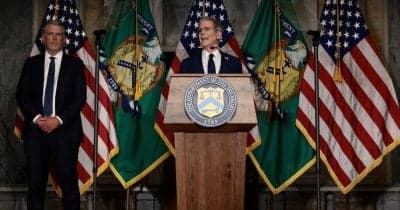
The U.S. Treasury Department, led by Secretary Scott Bessent, has strategically avoided sanctioning major Chinese banks, which indicates a calculated approach to maintain a fragile truce in U.S.-China relations while still applying pressure on Iran. This nuanced strategy allows the U.S. to target specific companies, such as Sweet Ocean Industrial Limited, which were identified as intermediaries in the procurement of military technology and oil shipments to Iran.
The sanctions are not just punitive; they are designed to create a ripple effect throughout the supply chain. By blocking entities that facilitate the transfer of technology and resources to Iran, the U.S. hopes to hinder Iran's military capabilities and its ability to generate oil revenue. This is particularly relevant given that oil exports are a critical lifeline for Iran's economy, and disrupting these flows can have significant implications for Tehran's financial stability.
Moreover, the sanctions come at a time when the global landscape is increasingly complex, with rising tensions between the U.S. and China. The targeted sanctions against Chinese and Hong Kong entities could lead to increased scrutiny of businesses operating in these regions, particularly those involved in trade with Iran. Companies may face heightened compliance burdens, forcing them to reassess their supply chains and partnerships to avoid potential secondary sanctions.
As the U.S. continues to apply pressure, the implications extend beyond just the targeted entities. The broader market may experience shifts as businesses adapt to the new regulatory environment, potentially leading to increased costs and operational challenges for those involved in international trade.
Who feels it first (and how)
- International traders: Increased compliance costs and operational complexities.
- Financial institutions: Heightened scrutiny and potential risks associated with transactions involving sanctioned entities.
- Shipping companies: Greater challenges in navigating the logistics of oil shipments and compliance with sanctions.
- UAE-based firms: Increased due diligence required to avoid secondary sanctions exposure.
What to watch next
- Compliance trends: Monitor how businesses adapt to increased scrutiny and regulatory changes in trade with China and Iran.
- Market reactions: Watch for shifts in oil prices and supply chain dynamics as companies reassess their sourcing strategies.
- Geopolitical developments: Keep an eye on U.S.-China relations and any potential retaliatory measures from Beijing.
The U.S. has imposed sanctions on multiple Chinese and Hong Kong entities linked to Iran.
Increased compliance burdens for businesses involved in international trade with China and Iran.
The long-term impact on U.S.-China relations and how it may affect global trade dynamics.
Frequently Asked Questions
- Why it matters?
- The sanctions intensify economic pressure on Iran while reshaping global supply chains, particularly in the oil and technology sectors.
- What happened (in 30 seconds)?
- On August 25, 2026, the Trump administration imposed sanctions on dozens of Chinese and Hong Kong entities linked to Iran's military procurement. Operation Economic Outcast targeted companies facilitating weapons components and oil shipments, while avoiding major Chinese banks. The U.S. Treasury Department aims to disrupt Iran's oil revenue and military supply chains, escalating tensions in U.S.-China relations.
- What's really happening?
- The recent sanctions under Operation Economic Outcast mark a significant escalation in the U.S. strategy to isolate Iran economically. By targeting nearly 60 entities, primarily in China and Hong Kong, the U.S. aims to disrupt the financial networks that support Iran's Islamic Revolutionary Guard Corps (IRGC) and its Ministry of Defense and Armed Forces Logistics (MODAFL). The U.S. Treasury Department, led by Secretary Scott Bessent, has strategically avoided sanctioning major Chinese banks, w
- Who feels it first (and how)?
- International traders: Increased compliance costs and operational complexities. Financial institutions: Heightened scrutiny and potential risks associated with transactions involving sanctioned entities. Shipping companies: Greater challenges in navigating the logistics of oil shipments and compliance with sanctions. UAE-based firms: Increased due diligence required to avoid secondary sanctions exposure.
- What to watch next?
- Compliance trends: Monitor how businesses adapt to increased scrutiny and regulatory changes in trade with China and Iran. Market reactions: Watch for shifts in oil prices and supply chain dynamics as companies reassess their sourcing strategies. Geopolitical developments: Keep an eye on U.S.-China relations and any potential retaliatory measures from Beijing.
Global news coverage with extensive reporting on Middle Eastern conflicts and geopolitics.
"Al Jazeera is a Qatar-based broadcaster known for wide regional coverage and alternative perspectives."
— A47 Editor
How the US sanctions on Iran impact China
The United States has imposed new sanctions targeting Chinese firms linked to Iran, while notably exempting major banks from these restrictions. This move comes as President Trump intensifies efforts to isolate Iran economically amid rising geopoliti...
Comprehensive coverage of Middle Eastern and global issues.
"Al Jazeera is a prominent voice from the Global South, especially the Middle East, with an emphasis on underreported stories."
— A47 Editor
How the US sanctions on Iran impact China
The United States has imposed new sanctions targeting Chinese firms linked to Iran, while notably exempting major banks from these restrictions. This move comes as President Trump intensifies efforts to isolate Iran economically amid rising geopoliti...
Research, news, and analysis on blockchain startups, DeFi, and regulations.
"Crypto Briefing provides research, news, and analysis on blockchain startups, DeFi, and crypto regulations with investor-focused coverage."
— A47 Editor
Trump administration targets Chinese and Hong Kong businesses with Iran sanctions
The Trump administration has imposed sanctions targeting Chinese and Hong Kong businesses linked to Iran, a move that could exacerbate tensions between the U.S. and China while disrupting global supply chains and financial systems.
Research, news, and analysis on blockchain startups, DeFi, and regulations.
"Crypto Briefing provides research, news, and analysis on blockchain startups, DeFi, and crypto regulations with investor-focused coverage."
— A47 Editor
Trump administration sanctions China, Hong Kong firms over Iran ties
The Trump administration has imposed sanctions on Chinese and Hong Kong firms due to their connections with Iran, marking a significant escalation in U.S. efforts to curb Iranian influence and activities. This move reflects ongoing tensions in U.S.-C...