
Global Sea Surface Temperatures Hit Record High Amid Intensifying El Niño
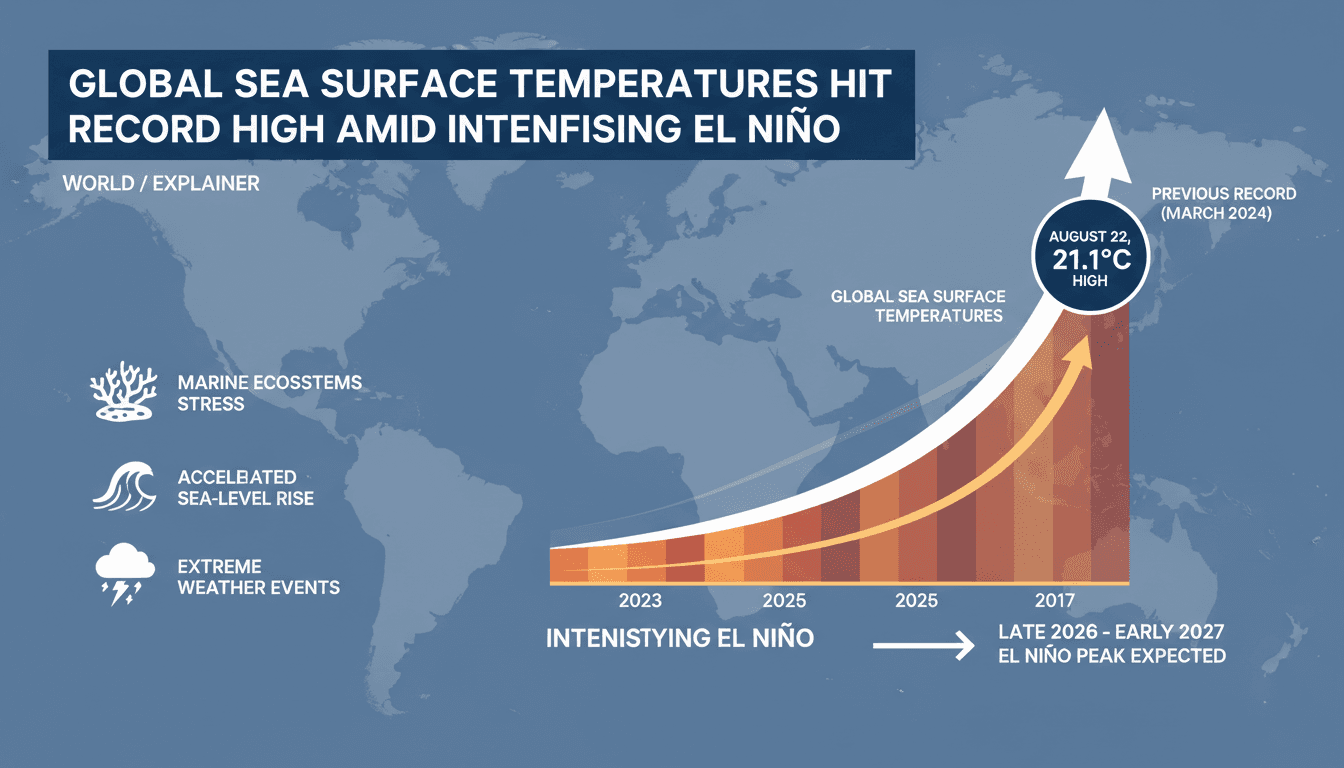
Here's what it means for you.
Rising ocean temperatures could lead to more extreme weather patterns affecting global supply chains and local economies.
Why it matters
The unprecedented rise in sea surface temperatures signals significant disruptions to marine ecosystems and climate stability.
What happened (in 30 seconds)
- Global ocean temperatures reached a record high of 21.1°C on August 22, 2026, surpassing the previous record set in March 2024.
- El Niño conditions are intensifying, contributing to this anomaly and expected to peak between November 2026 and January 2027.
- Experts warn of potential disruptions to marine life, increased extreme weather events, and reduced carbon absorption capacity.
The context you actually need
- Long-term climate change has already raised ocean temperatures by approximately 0.8°C due to fossil fuel emissions.
- El Niño is a natural climate phenomenon that can amplify global temperatures, and current forecasts suggest it may reach unprecedented levels.
- The timing of the record in August, rather than the typical March-April peak, indicates unusual oceanic stress and potential long-term impacts.
What's really happening
On August 22, 2026, global sea surface temperatures soared to an unprecedented 21.1°C, as reported by the Copernicus Climate Change Service. This record-breaking temperature is attributed to a combination of long-term climate change and a rapidly intensifying El Niño event in the tropical Pacific. Historically, ocean temperatures peak during the Southern Hemisphere summer months of March and April, but this year’s August peak signals a concerning shift in oceanic behavior.
The Copernicus data indicates that daily global sea surface temperatures have been climbing steadily throughout mid-2026, coinciding with the emergence of El Niño conditions declared by NOAA and WMO in June. As the El Niño phenomenon strengthens, it is expected to exacerbate global warming trends, leading to further increases in ocean temperatures until it peaks in late 2026 or early 2027.
The implications of this record temperature are profound. Marine ecosystems are already under stress, with rising temperatures disrupting habitats and food chains. Additionally, warmer oceans absorb less carbon dioxide, which could accelerate climate change. The potential for increased extreme weather events, such as hurricanes and heatwaves, poses risks not only to coastal communities but also to global supply chains reliant on stable weather patterns.
Multiple agencies, including the BBC, Guardian, and AP, have corroborated the findings from Copernicus, emphasizing the need for ongoing monitoring and research. As the world grapples with these changes, the focus will likely shift toward adaptation strategies and mitigation efforts to address the impacts of rising ocean temperatures.
Who feels it first (and how)
- Fishermen and marine industries: Increased temperatures can disrupt fish populations and migration patterns, affecting livelihoods.
- Coastal communities: Higher sea levels and extreme weather can lead to flooding and property damage.
- Agricultural sectors: Changes in weather patterns can impact crop yields and food supply chains.
- Insurance companies: Increased claims from weather-related damages may lead to higher premiums and risk assessments.
What to watch next
- El Niño developments: Monitor forecasts for the intensity and duration of the current El Niño, as it will influence global weather patterns.
- Marine ecosystem reports: Keep an eye on studies assessing the health of marine life and fisheries, which will indicate broader ecological impacts.
- Policy responses: Watch for governmental and international policy announcements aimed at addressing climate change and its effects on marine environments.
Global sea surface temperatures have reached a record high of 21.1°C.
The ongoing El Niño will exacerbate extreme weather events and further disrupt marine ecosystems.
The long-term economic impacts on industries reliant on stable weather and marine resources remain to be fully assessed.
Frequently Asked Questions
- Why it matters?
- The unprecedented rise in sea surface temperatures signals significant disruptions to marine ecosystems and climate stability.
- What happened (in 30 seconds)?
- Global ocean temperatures reached a record high of 21.1°C on August 22, 2026, surpassing the previous record set in March 2024. El Niño conditions are intensifying, contributing to this anomaly and expected to peak between November 2026 and January 2027. Experts warn of potential disruptions to marine life, increased extreme weather events, and reduced carbon absorption capacity.
- What's really happening?
- On August 22, 2026, global sea surface temperatures soared to an unprecedented 21.1°C, as reported by the Copernicus Climate Change Service. This record-breaking temperature is attributed to a combination of long-term climate change and a rapidly intensifying El Niño event in the tropical Pacific. Historically, ocean temperatures peak during the Southern Hemisphere summer months of March and April, but this year’s August peak signals a concerning shift in oceanic behavior. The Copernicus data i
- Who feels it first (and how)?
- Fishermen and marine industries: Increased temperatures can disrupt fish populations and migration patterns, affecting livelihoods. Coastal communities: Higher sea levels and extreme weather can lead to flooding and property damage. Agricultural sectors: Changes in weather patterns can impact crop yields and food supply chains. Insurance companies: Increased claims from weather-related damages may lead to higher premiums and risk assessments.
- What to watch next?
- El Niño developments: Monitor forecasts for the intensity and duration of the current El Niño, as it will influence global weather patterns. Marine ecosystem reports: Keep an eye on studies assessing the health of marine life and fisheries, which will indicate broader ecological impacts. Policy responses: Watch for governmental and international policy announcements aimed at addressing climate change and its effects on marine environments.
Comprehensive coverage of Middle Eastern and global issues.
"Al Jazeera is a prominent voice from the Global South, especially the Middle East, with an emphasis on underreported stories."
— A47 Editor
Global ocean temperatures hit record high as El Nino intensifies
Global ocean temperatures have reached a record high, driven by the intensification of the El Niño phenomenon and ongoing climate change, according to the Copernicus Climate Change Service. This unprecedented rise in sea temperatures poses significan...
Scientific discoveries, health, technology, and natural phenomena.
"Live Science reports on scientific discoveries, health, technology, and natural phenomena with a popular science tone."
— A47 Editor
Ocean 'under unprecedented strain' as El Niño helps supercharge warming to record levels
The Copernicus Climate Change Service has reported that the daily global sea surface temperature has reached its highest level since records began, indicating that the ocean is under unprecedented strain, exacerbated by the El Niño phenomenon.
Arabic-language coverage of international news and geopolitics.
"RT Arabic is a Russian state-funded outlet often criticized for promoting Kremlin-aligned narratives."
— A47 Editor
حرارة سطح المحيطات تُسجل رقما قياسيا غير مسبوق
The European Copernicus Observatory announced that the global average sea surface temperature reached a record high of 21.1 degrees Celsius on Saturday, attributed to climate change and the El Niño phenomenon. This unprecedented daily record highligh...