
Iran and Oman Establish Temporary Shipping Corridor Through Strait of Hormuz
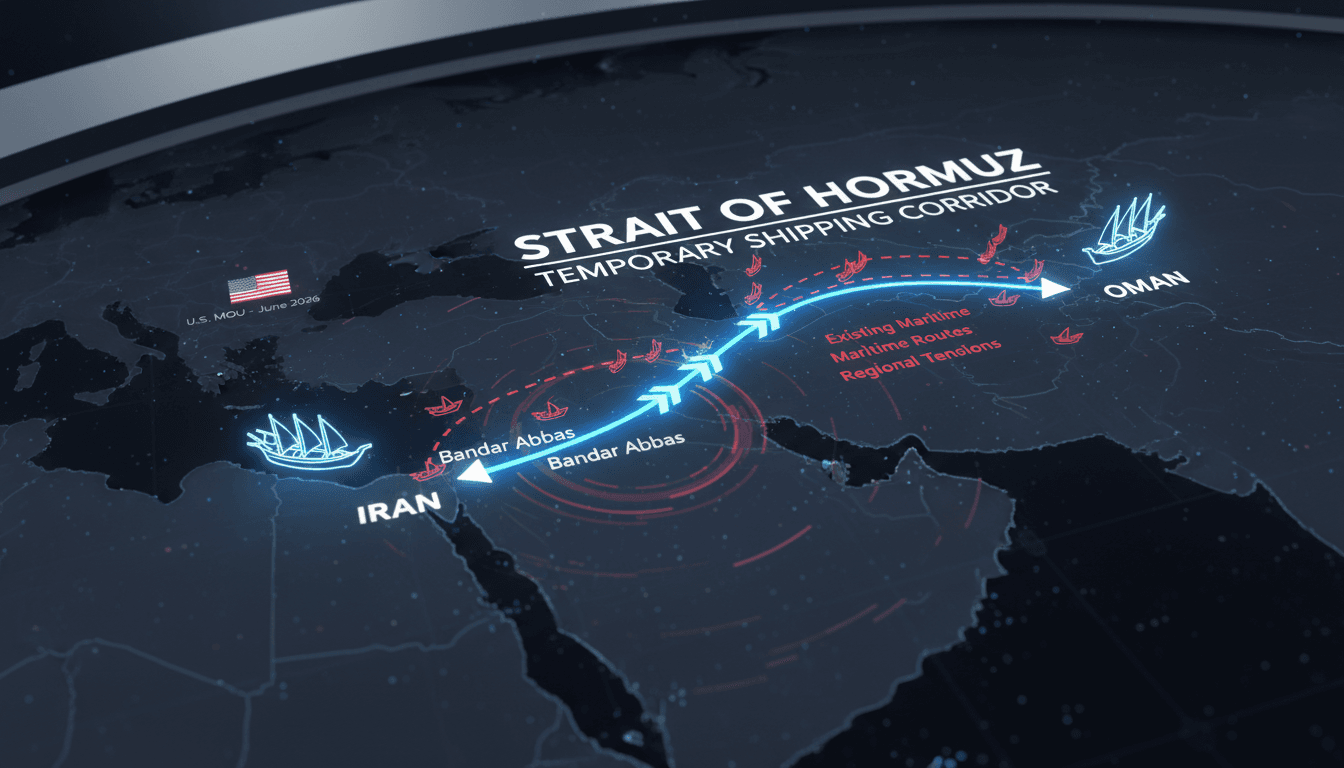
Here's what it means for you.
If you rely on global energy markets, the stability of the Strait of Hormuz directly impacts your costs and logistics.
Why it matters
The Strait of Hormuz is a critical energy chokepoint, with one-fifth of global oil and LNG shipments passing through it.
What happened (in 30 seconds)
- Iran and Oman held high-level talks in Tehran on August 25-26, 2026, to establish a temporary shipping corridor through the Strait of Hormuz.
- Key discussions included mine-clearing operations and safe navigation arrangements amid ongoing regional tensions.
- No permanent agreement has been reached yet, but a framework for a temporary corridor is under finalization.
The context you actually need
- The Strait of Hormuz is vital for global energy supply, with approximately 20% of oil and LNG shipments transiting through it.
- Regional tensions escalated following the U.S.-Israel conflict with Iran, leading to Iran's closure of the waterway and claims over alternative routes.
- The June 2026 U.S.-Iran MoU initiated talks between Iran and Oman, aiming to stabilize maritime transit and address competing route claims.
What's really happening
The recent talks between Iran and Oman represent a significant step toward stabilizing one of the world's most critical maritime routes. The Strait of Hormuz has been a focal point of geopolitical tension, particularly following the U.S.-Israel conflict with Iran that began in February 2026. This conflict led to Iran's closure of the waterway and the establishment of its own northern route, which has complicated maritime logistics and increased insurance costs for shipping operators.
The June 2026 memorandum of understanding (MoU) between the U.S. and Iran set the stage for these discussions, emphasizing the need for safe passage and future route management. However, disputes over route claims, potential fees, and mine clearance have persisted, resulting in heightened risks for vessels transiting the area. The ongoing negotiations between Iran and Oman are focused on practical arrangements, including a mine-clearing operation, which is crucial for ensuring safe navigation through the Strait.
The proposed temporary corridor is framed as a short-term solution, pending the establishment of permanent arrangements. This corridor would involve Iranian territorial waters and span approximately seven miles wide, allowing for a more secure passage for vessels. The discussions have been described as constructive, with both parties expressing optimism about reaching an agreement soon.
However, the geopolitical landscape remains complex. U.S. officials have expressed skepticism regarding Iran's commitments, particularly concerning mine clearance and the fulfillment of MoU obligations. The Iranian government has conditioned the full reopening of the Strait on U.S. compliance with sanctions relief, adding another layer of uncertainty to the situation.
For Dubai-based shipping operators and traders, the ongoing uncertainty surrounding the Strait of Hormuz has resulted in elevated insurance premiums and potential rerouting of vessels, which can add significant time and costs to shipping logistics. A stabilization of the corridor could alleviate these pressures, supporting the recovery of regional energy logistics hubs and reducing the need for longer routes, such as those around the Cape of Good Hope.
Who feels it first (and how)
- Shipping operators: Increased insurance costs and potential rerouting due to heightened risks in the Strait.
- Energy traders: Fluctuations in logistics costs directly impacting pricing strategies.
- Regional businesses: Companies reliant on stable energy supplies may face disruptions or increased costs.
What to watch next
- Finalization of the temporary corridor: An announcement could signal a shift in shipping dynamics and insurance costs.
- U.S. response to Iran's commitments: Any changes in U.S. sanctions policy could impact the feasibility of the corridor.
- Market reactions: Watch for shifts in oil prices and shipping rates as the situation evolves.
The Strait of Hormuz is crucial for global oil and LNG shipments.
The temporary corridor will be established, but its long-term viability remains uncertain.
The extent of U.S. involvement and its impact on Iran's compliance with the MoU.
Frequently Asked Questions
- Why it matters?
- The Strait of Hormuz is a critical energy chokepoint, with one-fifth of global oil and LNG shipments passing through it.
- What happened (in 30 seconds)?
- Iran and Oman held high-level talks in Tehran on August 25-26, 2026, to establish a temporary shipping corridor through the Strait of Hormuz. Key discussions included mine-clearing operations and safe navigation arrangements amid ongoing regional tensions. No permanent agreement has been reached yet, but a framework for a temporary corridor is under finalization.
- What's really happening?
- The recent talks between Iran and Oman represent a significant step toward stabilizing one of the world's most critical maritime routes. The Strait of Hormuz has been a focal point of geopolitical tension, particularly following the U.S.-Israel conflict with Iran that began in February 2026. This conflict led to Iran's closure of the waterway and the establishment of its own northern route, which has complicated maritime logistics and increased insurance costs for shipping operators. The June 2
- Who feels it first (and how)?
- Shipping operators: Increased insurance costs and potential rerouting due to heightened risks in the Strait. Energy traders: Fluctuations in logistics costs directly impacting pricing strategies. Regional businesses: Companies reliant on stable energy supplies may face disruptions or increased costs.
- What to watch next?
- Finalization of the temporary corridor: An announcement could signal a shift in shipping dynamics and insurance costs. U.S. response to Iran's commitments: Any changes in U.S. sanctions policy could impact the feasibility of the corridor. Market reactions: Watch for shifts in oil prices and shipping rates as the situation evolves.
Global business headlines with AI angles.
"General business outlet that frequently covers AI."
— A47 Editor
Iran and Oman Take Steps Towards Establishing a Shipping Route Through The Hormuz Strait
Oman's Foreign Minister Sayyid Badr bin Hamad Albusaidi announced that discussions in Tehran with Iranian Foreign Minister Abbas Araghchi regarding the establishment of a shipping route through the strategically important Hormuz Strait have been cons...
Arabic-language coverage of political affairs and current events.
"Okaz political coverage typically follows mainstream Saudi framing on national and regional affairs."
— A47 Editor
إيران تعلن ممراً مؤقتاً عبر هرمز.. ومفاوضات لمسار دائم
Iranian Foreign Minister Abbas Araghchi announced a temporary corridor through the Strait of Hormuz, following discussions with Pakistani and Omani officials about regional solutions. The proposed corridor, in partnership with Oman, aims to enhance s...
Arabic-language coverage of international news and geopolitics.
"RT Arabic is a Russian state-funded outlet often criticized for promoting Kremlin-aligned narratives."
— A47 Editor
عُمان وإيران تتفقان على إنشاء ممر ملاحي مؤقت مشترك في مضيق هرمز
Oman and Iran have agreed to establish a temporary joint maritime corridor in the Strait of Hormuz, following a meeting between Omani Foreign Minister Badr bin Hamad al-Busaidi and Iranian counterpart Abbas Araghchi in Tehran. This agreement aims to ...