
Canada Secures $11.3 Billion Icebreaker Contract Amid US Trade Tensions
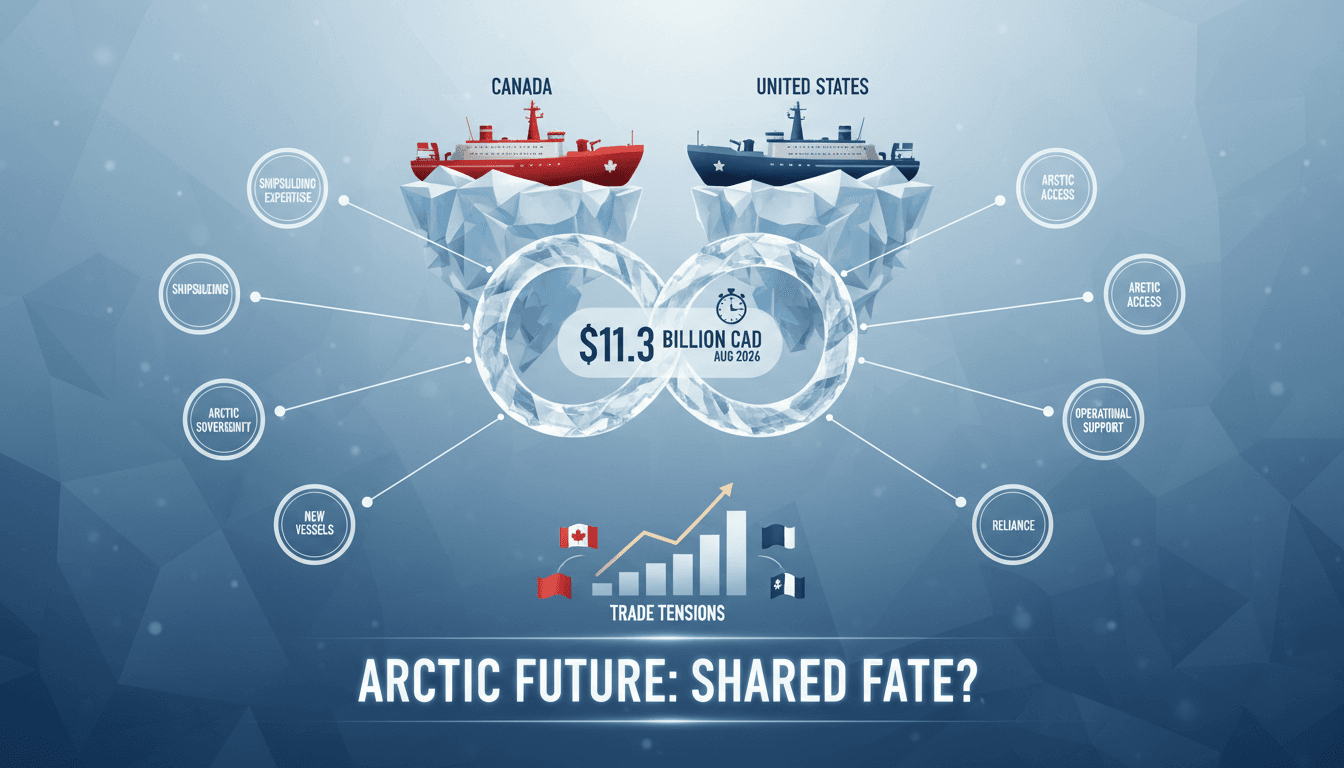
Here's what it means for you.
If you’re in global shipping or energy markets, this development could reshape logistics and trade routes.
Why it matters
The escalating trade dispute between the US and Canada highlights the strategic importance of Arctic capabilities and interdependence in North American trade.
What happened (in 30 seconds)
- On August 25, 2026, Canadian Prime Minister Mark Carney announced an 11.3 billion CAD contract for six new icebreakers.
- The announcement coincided with rising US tariffs on Canadian goods, emphasizing Canada’s critical role in Arctic operations.
- Carney framed the contract as a demonstration of mutual reliance, contrasting Canada’s icebreaker fleet with the US Coast Guard's limited capabilities.
The context you actually need
- Melting Arctic ice has intensified competition for shipping routes and resources among global powers, including Russia and China.
- Canada's icebreaker fleet is the second-largest in the world, crucial for maintaining Arctic sovereignty and supporting international shipping.
- The US Coast Guard operates only three polar icebreakers, relying on Canadian expertise and shipyards for fleet expansion under the ICE Pact.
What's really happening
The recent announcement by Prime Minister Mark Carney marks a significant investment in Canada's maritime capabilities, particularly in the Arctic region. The 11.3 billion CAD contract for six new Polar Class 3 icebreakers is not just a routine procurement; it is a strategic maneuver amid escalating trade tensions with the United States. As the US imposes tariffs on approximately $20 billion of Canadian imports, Carney's remarks underscore a critical point: Canada possesses the specialized expertise and resources that the US lacks in Arctic operations.
The icebreaker program is part of Canada's broader National Shipbuilding Strategy, aimed at revitalizing domestic shipbuilding while enhancing national security and sovereignty in the Arctic. The new vessels will replace aging units and are expected to create nearly 5,000 jobs, contributing approximately $650 million annually to the Canadian GDP. This investment is particularly timely, given the geopolitical landscape where melting Arctic ice is opening new shipping routes and access to untapped resources, intensifying competition among nations.
The announcement also serves as a reminder of the interdependence between the US and Canada. While the US has been expanding its Arctic capabilities through the Arctic Security Cutter program, it still relies heavily on Canadian icebreakers for operational support. The ICE Pact, a trilateral collaboration involving Canada, the US, and Finland, aims to enhance icebreaker design and construction capabilities, further illustrating the necessity of cooperation in this domain.
However, the backdrop of trade disputes complicates this relationship. The collapse of US-Canada trade negotiations and the imposition of tariffs have created a tense atmosphere, prompting Canada to leverage its industrial capacity as a bargaining chip. By showcasing its icebreaker program, Canada not only asserts its sovereignty but also positions itself as an indispensable partner in Arctic operations, potentially influencing future negotiations and trade dynamics.
As the construction of these icebreakers is set to begin in 2027, with deliveries expected through the 2030s, the implications of this contract will unfold over the coming years. The focus on domestic shipbuilding and Arctic capabilities reflects a strategic pivot that could redefine North American maritime operations and trade relationships.
Who feels it first (and how)
- Canadian shipbuilding industry: Directly benefits from the contract, creating jobs and boosting local economies.
- US Coast Guard: Faces operational limitations due to its small icebreaker fleet, increasing reliance on Canadian vessels.
- Global shipping companies: May experience shifts in logistics and route planning as Arctic access evolves.
- Energy sector stakeholders: Could see changes in resource extraction and transportation dynamics in the Arctic region.
What to watch next
- Construction timelines: Monitor the progress of the icebreaker construction, as delays could impact Arctic operations and trade.
- US-Canada trade negotiations: Watch for developments in trade talks, particularly any retaliatory measures from Canada that could affect bilateral relations.
- Arctic shipping routes: Keep an eye on how the opening of new routes influences global shipping economics and energy markets.
The contract for six icebreakers has been awarded, with construction set to begin in 2027.
Increased reliance on Canadian icebreakers by the US will continue amid ongoing trade tensions.
The long-term impact of these developments on US-Canada relations and Arctic geopolitics remains uncertain.
Frequently Asked Questions
- Why it matters?
- The escalating trade dispute between the US and Canada highlights the strategic importance of Arctic capabilities and interdependence in North American trade.
- What happened (in 30 seconds)?
- On August 25, 2026, Canadian Prime Minister Mark Carney announced an 11.3 billion CAD contract for six new icebreakers. The announcement coincided with rising US tariffs on Canadian goods, emphasizing Canada’s critical role in Arctic operations. Carney framed the contract as a demonstration of mutual reliance, contrasting Canada’s icebreaker fleet with the US Coast Guard's limited capabilities.
- What's really happening?
- The recent announcement by Prime Minister Mark Carney marks a significant investment in Canada's maritime capabilities, particularly in the Arctic region. The 11.3 billion CAD contract for six new Polar Class 3 icebreakers is not just a routine procurement; it is a strategic maneuver amid escalating trade tensions with the United States. As the US imposes tariffs on approximately $20 billion of Canadian imports, Carney's remarks underscore a critical point: Canada possesses the specialized exper
- Who feels it first (and how)?
- Canadian shipbuilding industry: Directly benefits from the contract, creating jobs and boosting local economies. US Coast Guard: Faces operational limitations due to its small icebreaker fleet, increasing reliance on Canadian vessels. Global shipping companies: May experience shifts in logistics and route planning as Arctic access evolves. Energy sector stakeholders: Could see changes in resource extraction and transportation dynamics in the Arctic region.
- What to watch next?
- Construction timelines: Monitor the progress of the icebreaker construction, as delays could impact Arctic operations and trade. US-Canada trade negotiations: Watch for developments in trade talks, particularly any retaliatory measures from Canada that could affect bilateral relations. Arctic shipping routes: Keep an eye on how the opening of new routes influences global shipping economics and energy markets.
Business and tech news excluding paywalled content.
"High-volume business/tech outlet with frequent AI coverage."
— A47 Editor
Mark Carney says there are many things the US needs from Canada — and a very special kind of boat is one of them
The United States is actively working to enhance its polar icebreaker fleet, collaborating with Canada and Finland to bolster its Arctic capabilities. This initiative is underscored by the need for specialized vessels to navigate the increasingly acc...
Macro commentary, policy analysis, growth/inflation themes, and global outlooks.
"Contextual macro coverage that complements day-to-day market headlines."
— A47 Editor
Canada to invest C$11 billion in six new Coast Guard icebreakers
The Canadian government has announced a significant investment of C$11 billion to acquire six new icebreakers for the Coast Guard, aimed at enhancing maritime operations and ensuring safe navigation in icy waters. This initiative reflects Canada's co...
Canadian and international political developments and policy debates.
"Global News is a mainstream Canadian outlet with a centrist editorial stance, focusing on factual reporting."
— A47 Editor
Carney commits $11B to build 6 icebreakers in Quebec
Prime Minister Mark Carney has announced a commitment of $11 billion to construct six new icebreakers in Quebec, aimed at replacing the aging fleet of the Canadian Coast Guard. This initiative fulfills a promise made in 2019 to enhance Canada's marit...