
OpenAI Disrupts Russian Influence Operation Utilizing ChatGPT for Misinformation
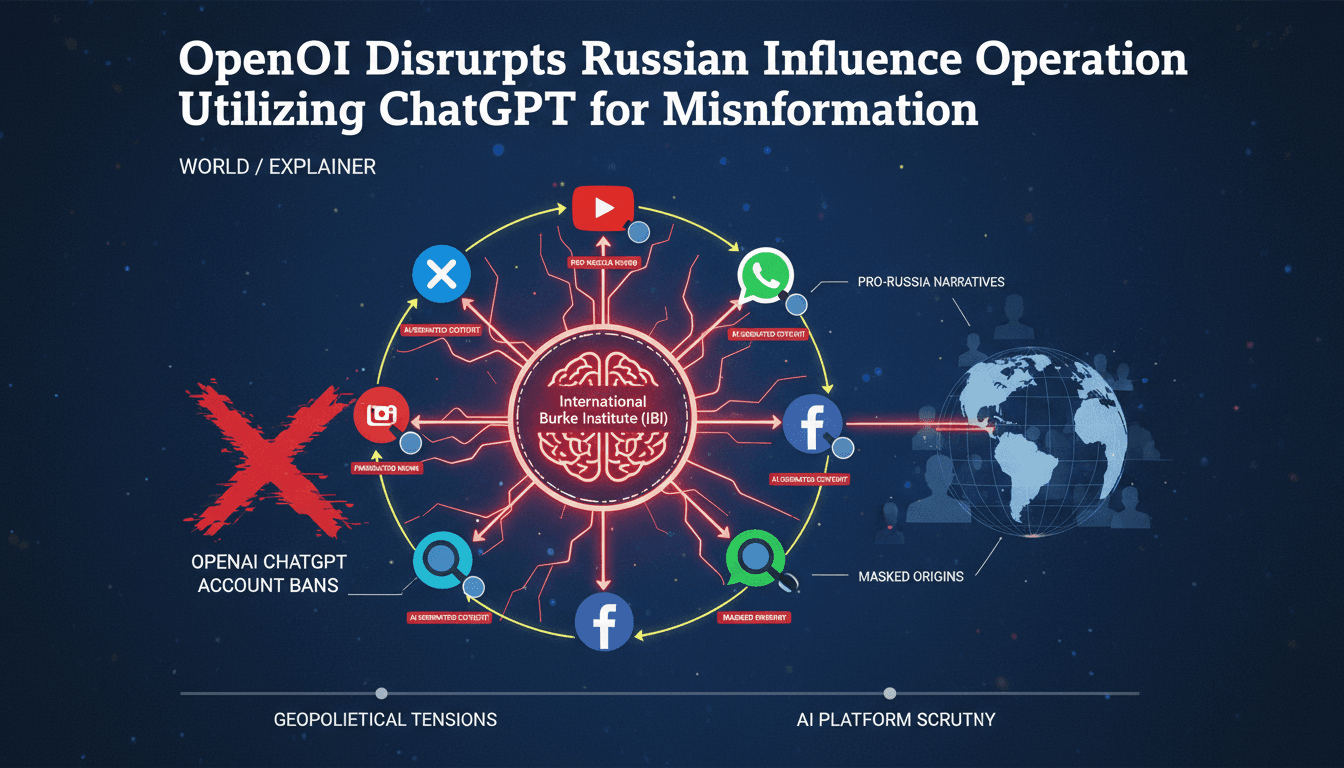
Here's what it means for you.
The integrity of online information sources is crucial for professionals navigating a complex global landscape.
Why it matters
This incident highlights the ongoing battle against misinformation and the role of AI in shaping public discourse.
What happened (in 30 seconds)
- OpenAI banned multiple ChatGPT accounts linked to a Russian influence operation promoting a fake think tank.
- The International Burke Institute (IBI) was created to disseminate pro-Russia narratives and undermine Western support for Ukraine.
- The operation's reach was limited, with content generated in English while masking its Russian origins.
The context you actually need
- Geopolitical tensions: The campaign emerged amid ongoing conflicts following Russia's invasion of Ukraine, with previous documented influence operations.
- Fabricated legitimacy: The IBI claimed an Israeli base and used copied academic content to project credibility while promoting a biased sovereignty index.
- Sophisticated infrastructure: OpenAI's investigation revealed a complex operation designed to manipulate narratives across various social media platforms.
What's really happening
On August 25, 2026, OpenAI took decisive action against a cluster of ChatGPT accounts originating from Russia, which were part of a covert influence operation aimed at promoting the International Burke Institute (IBI). This fabricated think tank was designed to disseminate pro-Russia narratives and undermine Western support for Ukraine. The operation involved generating social media content across platforms such as X, LinkedIn, Facebook, Substack, and Telegram, with operators using VPNs to conceal their identities and linguistic origins.
The IBI was registered in February 2025, claiming to be based in Israel, which was a strategic move to mask its Russian connections. The think tank's website featured a 'Burke Sovereignty Index' that ranked Russia favorably against Western nations, alongside 34 of 36 articles that were copied from legitimate sources but misattributed. This tactic aimed to lend credibility to the operation by presenting stolen content as legitimate academic work.
OpenAI's investigation began with the detection of AI-generated social media posts that raised red flags. The accounts were generating promotional content and replies in English while effectively hiding any traces of their Russian origins. The sophisticated infrastructure of the operation was distinctive compared to previous Russian efforts, but OpenAI assessed its overall influence as contained following the account bans.
Despite the operation's complexity, its reach was limited, with Telegram channels having follower counts between 10,000 and 20,000. This resulted in minimal documented governmental responses or market shifts. OpenAI's actions disrupted the campaign, but the broader implications of such influence operations remain a concern, particularly as geopolitical tensions continue to evolve.
Who feels it first (and how)
- Social media users: Increased exposure to misinformation and manipulated narratives.
- Policy makers: Need to address the implications of AI in influence operations.
- Academics and researchers: Potential challenges in distinguishing legitimate research from fabricated content.
What to watch next
- Future AI regulations: Watch for developments in policies governing AI use in content generation, as governments may respond to the risks of misinformation.
- Emerging influence operations: Monitor for new tactics and strategies employed by state and non-state actors in the realm of digital influence.
- Public awareness campaigns: Look for initiatives aimed at educating the public about misinformation and the importance of verifying sources.
OpenAI has successfully disrupted a Russian-linked influence operation.
Other platforms may face similar challenges from sophisticated misinformation campaigns.
The long-term effectiveness of measures taken against such operations remains to be seen.
Frequently Asked Questions
- Why it matters?
- This incident highlights the ongoing battle against misinformation and the role of AI in shaping public discourse.
- What happened (in 30 seconds)?
- OpenAI banned multiple ChatGPT accounts linked to a Russian influence operation promoting a fake think tank. The International Burke Institute (IBI) was created to disseminate pro-Russia narratives and undermine Western support for Ukraine. The operation's reach was limited, with content generated in English while masking its Russian origins.
- What's really happening?
- On August 25, 2026, OpenAI took decisive action against a cluster of ChatGPT accounts originating from Russia, which were part of a covert influence operation aimed at promoting the International Burke Institute (IBI). This fabricated think tank was designed to disseminate pro-Russia narratives and undermine Western support for Ukraine. The operation involved generating social media content across platforms such as X, LinkedIn, Facebook, Substack, and Telegram, with operators using VPNs to conce
- Who feels it first (and how)?
- Social media users: Increased exposure to misinformation and manipulated narratives. Policy makers: Need to address the implications of AI in influence operations. Academics and researchers: Potential challenges in distinguishing legitimate research from fabricated content.
- What to watch next?
- Future AI regulations: Watch for developments in policies governing AI use in content generation, as governments may respond to the risks of misinformation. Emerging influence operations: Monitor for new tactics and strategies employed by state and non-state actors in the realm of digital influence. Public awareness campaigns: Look for initiatives aimed at educating the public about misinformation and the importance of verifying sources.
Consumer tech news, reviews, and buying guides for gadgets and electronics.
"TechRadar is known for comprehensive buying advice, hardware reviews, and consumer tech news targeted at mainstream audiences."
— A47 Editor
OpenAI says it took down a malicious Russian plan to spread misinformation on ChatGPT
OpenAI has reported the dismantling of a malicious Russian campaign aimed at disseminating misinformation through ChatGPT, with the International Burke Institute identified as a key player in this operation. This initiative sought to enhance Russia's...
Global business headlines with AI angles.
"General business outlet that frequently covers AI."
— A47 Editor
OpenAI Uncovered A Russia-Linked Influence Campaign. Operators Used ChatGPT To Look Less Russian.
OpenAI has uncovered a covert influence campaign linked to Russia, where operators utilized ChatGPT to create pro-Kremlin narratives and promote a fictitious Israeli think tank filled with plagiarized academic work. This operation involved the use of...
Daily AI news: models, tools, and policy.
"Independent outlet tracking the fast pace of AI."
— A47 Editor
Russia used ChatGPT to run a covert influence campaign pushing pro-Kremlin narratives across the West
OpenAI has disrupted a covert Russian influence campaign that utilized ChatGPT to generate pro-Kremlin social media posts, including content from a fictitious organization called the International Burke Institute. The campaign, which involved operato...
Curated tech headlines including AI stories.
"Influential aggregator surfacing the day’s top tech/AI links."
— A47 Editor
OpenAI bans a cluster of Russian ChatGPT accounts that used VPNs to evade restrictions and run an influence operation, including creating social media comments (Kai Nicol-Schwarz/CNBC)
OpenAI has banned a group of ChatGPT accounts linked to Russia, which were reportedly using VPNs to bypass restrictions and engage in a covert influence operation aimed at spreading misinformation online. This action highlights the ongoing challenges...