
Flash floods from glacier collapse at Nepal-China border kill over 500 and threaten further disaster
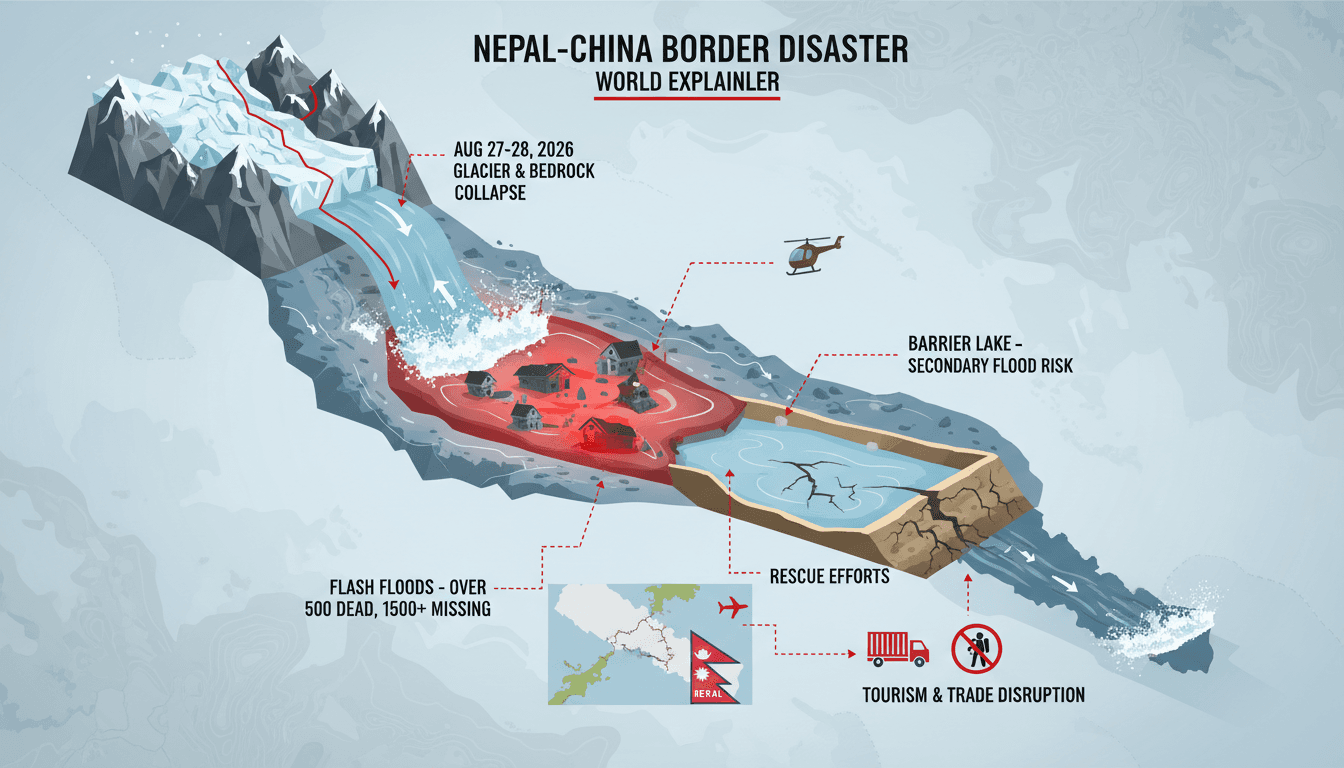
Here's what it means for you.
The catastrophic flooding at the Nepal-China border could disrupt global supply chains and tourism, impacting economies far beyond the region.
Why it matters
This disaster highlights the increasing vulnerability of mountainous regions to climate-induced events, which can have ripple effects on international trade and tourism.
What happened (in 30 seconds)
- Flash floods triggered by a glacier collapse on August 27-28, 2026, killed over 500 people and left more than 1,500 missing.
- Rescue operations are ongoing, with helicopters and drones deployed, while a barrier lake poses a secondary flood risk.
- International response includes aid offers and military mobilization from Nepal and China, with the U.S. also extending assistance.
The context you actually need
- Frequent glacial instability in the Himalayas is exacerbated by climate change, increasing the risk of such disasters.
- The region is crucial for trekking, pilgrimage, and trade, making it economically significant for both Nepal and Tibet.
- Seismic activity in the area, including a recent 5.2 magnitude event, can trigger catastrophic geological changes, leading to flooding.
What's really happening
The flash floods at the Nepal-China border stem from a sudden collapse of bedrock beneath a glacier, which unleashed a torrent of debris, ice, and water into the river systems. This event was not merely a random occurrence; it reflects a broader trend of increasing glacial instability in the Himalayas, driven by climate change. As temperatures rise, glaciers are melting at unprecedented rates, destabilizing the geological structures that hold them in place.
The initial seismic event, registering at a magnitude of 5.2, acted as a catalyst for the collapse, demonstrating how interconnected geological and climatic factors can lead to catastrophic outcomes. The resulting debris flow swept through remote valleys, obliterating villages and infrastructure, and leaving thousands in peril.
Rescue operations are complicated by the formation of a barrier lake on the Chinese side, which poses a significant risk of overflow and secondary flooding. Authorities are on high alert, as the potential breach of this lake could exacerbate the already dire situation. Eyewitness accounts describe a chaotic scene, with ground shaking followed by a "black storm" of mud and water, emphasizing the suddenness and ferocity of the disaster.
The implications of this event extend beyond immediate rescue efforts. The economic impact is likely to be felt in sectors such as tourism and cross-border trade, both vital for the local economies of Nepal and Tibet. The region is popular for trekking and pilgrimage, particularly to Mount Kailash, and disruptions could deter visitors, affecting livelihoods.
Moreover, the international response, including offers of assistance from the U.S. and mobilization of military resources from both Nepal and China, underscores the global significance of this disaster. As nations grapple with the realities of climate change, events like this serve as stark reminders of the vulnerabilities faced by mountainous regions and the potential for cascading effects on global supply chains and tourism.
Who feels it first (and how)
- Local communities in Nepal and Tibet, facing loss of life and displacement.
- Tourism operators reliant on trekking and pilgrimage traffic, likely to see a decline in visitors.
- Emergency responders and military personnel engaged in rescue and recovery efforts, facing resource constraints.
- International aid organizations mobilizing to provide assistance and support to affected areas.
What to watch next
- Rescue and recovery updates: Monitoring the effectiveness of ongoing operations will indicate the scale of the disaster's impact.
- Economic assessments: Watch for reports on how tourism and local economies are affected in the aftermath.
- Climate policy discussions: Increased focus on climate resilience strategies may emerge as governments respond to the implications of such disasters.
Over 500 confirmed deaths and significant infrastructure damage in the affected regions.
Continued risks from the barrier lake and potential for further flooding, complicating rescue efforts.
The long-term economic impact on tourism and local economies in Nepal and Tibet.
Frequently Asked Questions
- Why it matters?
- This disaster highlights the increasing vulnerability of mountainous regions to climate-induced events, which can have ripple effects on international trade and tourism.
- What happened (in 30 seconds)?
- Flash floods triggered by a glacier collapse on August 27-28, 2026, killed over 500 people and left more than 1,500 missing. Rescue operations are ongoing, with helicopters and drones deployed, while a barrier lake poses a secondary flood risk. International response includes aid offers and military mobilization from Nepal and China, with the U.S. also extending assistance.
- What's really happening?
- The flash floods at the Nepal-China border stem from a sudden collapse of bedrock beneath a glacier, which unleashed a torrent of debris, ice, and water into the river systems. This event was not merely a random occurrence; it reflects a broader trend of increasing glacial instability in the Himalayas, driven by climate change. As temperatures rise, glaciers are melting at unprecedented rates, destabilizing the geological structures that hold them in place. The initial seismic event, registeri
- Who feels it first (and how)?
- Local communities in Nepal and Tibet, facing loss of life and displacement. Tourism operators reliant on trekking and pilgrimage traffic, likely to see a decline in visitors. Emergency responders and military personnel engaged in rescue and recovery efforts, facing resource constraints. International aid organizations mobilizing to provide assistance and support to affected areas.
- What to watch next?
- Rescue and recovery updates: Monitoring the effectiveness of ongoing operations will indicate the scale of the disaster's impact. Economic assessments: Watch for reports on how tourism and local economies are affected in the aftermath. Climate policy discussions: Increased focus on climate resilience strategies may emerge as governments respond to the implications of such disasters.
Breaking news, politics, business, and entertainment from the U.S. and around the world.
"The New York Post is a tabloid-format newspaper known for its sensationalist headlines and conservative-leaning editorial tone."
— A47 Editor
Nepal flash floods disaster kill more than 500 as a lake poses a new threat
Catastrophic flash floods along the Nepal-China border have resulted in over 500 fatalities and left approximately 1,500 individuals missing, as authorities warn of a potential dam burst that could exacerbate the crisis. The floods were triggered by ...
Comprehensive coverage of Middle Eastern and global issues.
"Al Jazeera is a prominent voice from the Global South, especially the Middle East, with an emphasis on underreported stories."
— A47 Editor
Is Nepal facing another devastating flood from a new lake?
A recent glacier collapse in Nepal has triggered catastrophic flash floods and mudslides, creating a barrier lake that threatens further flooding in the region. The disaster has resulted in significant loss of life, with reports indicating over 470 c...
Global news coverage with extensive reporting on Middle Eastern conflicts and geopolitics.
"Al Jazeera is a Qatar-based broadcaster known for wide regional coverage and alternative perspectives."
— A47 Editor
Why Nepal faces another flood threat from a new lake on China border
A recent glacier collapse in Nepal has triggered catastrophic flash floods and mudslides, creating a barrier lake that threatens further flooding in the region. The disaster has resulted in significant loss of life, with reports indicating over 470 c...
International stories from NPR’s global desk.
"NPR is an American public media organization known for thoughtful reporting and a slightly left-leaning editorial tone."
— A47 Editor
Experts warn more flooding might hit Nepal. And, Fed chairman to give key address
Catastrophic flooding has struck the Nepal-Tibet border, resulting in a rising death toll that has reached nearly 400 confirmed deaths and over 1,400 individuals reported missing. The floods were triggered by a glacier collapse, leading to widespread...
International stories from NPR’s global desk.
"NPR is an American public media organization known for thoughtful reporting and a slightly left-leaning editorial tone."
— A47 Editor
Hundreds killed, over 1,000 missing after flash floods in Nepal and Tibet
Catastrophic flash floods have struck the Nepal-Tibet border, resulting in hundreds of confirmed deaths and over 1,000 individuals reported missing. The disaster, triggered by a glacier collapse, has caused widespread destruction, sweeping away roads...
RT is a Russian state-funded network covering global events from a Russian perspective.
"RT is widely criticized for promoting pro-Kremlin narratives and is considered by many to be a state propaganda outlet."
— A47 Editor
Nepal resumes rescue ops after another flood scare
Nepali authorities have resumed rescue operations following a flood scare caused by the breaching of a barrier lake in Tibet. This comes amidst ongoing efforts to locate hundreds of individuals reported missing after catastrophic floods struck the Ne...
Comprehensive coverage of Middle Eastern and global issues.
"Al Jazeera is a prominent voice from the Global South, especially the Middle East, with an emphasis on underreported stories."
— A47 Editor
Nepal and China halt rescue efforts as border barrier lake overflows
A catastrophic flood has struck the Nepal-Tibet border, resulting in over 470 confirmed deaths and more than 1,500 individuals reported missing. The disaster was triggered by a glacier collapse, leading to significant destruction and prompting Nepal ...
Global news coverage with extensive reporting on Middle Eastern conflicts and geopolitics.
"Al Jazeera is a Qatar-based broadcaster known for wide regional coverage and alternative perspectives."
— A47 Editor
Nepal and China halt rescue efforts as border barrier lake overflows
A catastrophic flood has struck the Nepal-Tibet border, resulting in over 470 confirmed deaths and more than 1,500 individuals reported missing. The disaster was triggered by a glacier collapse, leading to significant destruction and prompting Nepal ...
Comprehensive coverage of Middle Eastern and global issues.
"Al Jazeera is a prominent voice from the Global South, especially the Middle East, with an emphasis on underreported stories."
— A47 Editor
Nearly 470 killed in Nepal floods: What we know about rescue efforts
A catastrophic flood struck the Nepal-Tibet border region, resulting in nearly 470 confirmed deaths and over 1,500 individuals reported missing. The disaster, triggered by a glacier collapse, has led to widespread destruction, particularly affecting ...
Global news coverage with extensive reporting on Middle Eastern conflicts and geopolitics.
"Al Jazeera is a Qatar-based broadcaster known for wide regional coverage and alternative perspectives."
— A47 Editor
Nearly 470 killed in Nepal floods: What we know about rescue efforts
A catastrophic flood struck the Nepal-Tibet border region, resulting in nearly 470 confirmed deaths and over 1,500 individuals reported missing. The disaster was triggered by a glacier collapse, leading to widespread destruction and prompting urgent ...