
Flash floods from glacial collapse in Nepal-Tibet border result in over 550 deaths
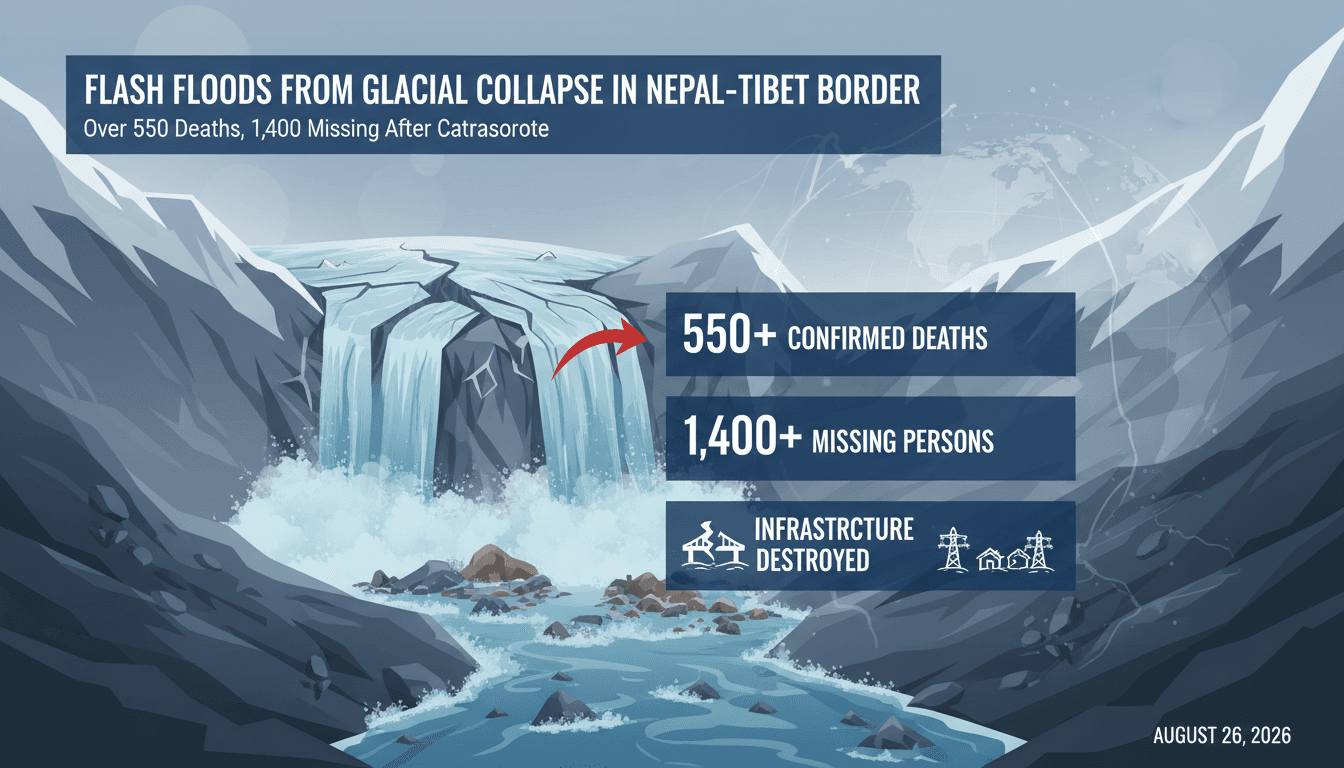
Here's what it means for you.
If you’re traveling internationally, especially to regions prone to natural disasters, this event underscores the importance of emergency preparedness.
Why it matters
The flash floods highlight the increasing vulnerability of mountainous regions to climate-induced disasters, affecting global travel and humanitarian aid dynamics.
What happened (in 30 seconds)
- On August 26, 2026, a glacial collapse in Tibet triggered catastrophic flash floods along the Nepal-Tibet border.
- Over 550 confirmed deaths have been reported, with more than 1,400 individuals still missing, including foreign tourists.
- Rescue operations are ongoing, complicated by secondary flood risks from newly formed lakes.
The context you actually need
- Climate change is increasing the frequency of glacial lake outburst floods, making regions like the Himalayas more susceptible to such disasters.
- The affected area is a popular route for trekkers and pilgrims, linking Kathmandu and Lhasa, which raises concerns for international travelers.
- Previous seismic activity, such as the 2015 earthquake, has contributed to geological instability in the region, exacerbating the impact of natural disasters.
What's really happening
On August 26, 2026, a significant glacial collapse in Tibet unleashed a torrent of water, ice, and debris that cascaded into Nepal, creating a tsunami-like effect. This disaster has devastated communities along the border, particularly in Nuwakot district and Gyirong County. The initial impact was catastrophic, with entire villages buried under mud and debris, infrastructure destroyed, and vehicles swept away.
As of August 28, the death toll has risen to over 550, with reports indicating that 3-5 fatalities occurred in Tibet. The Nepali police and Chinese authorities are engaged in ongoing rescue operations, which are complicated by the risk of secondary flooding from newly formed lakes created by the glacial melt. The urgency of the situation is underscored by the fact that over 1,400 people remain unaccounted for, many of whom are foreign tourists and pilgrims who were in the area at the time of the disaster.
The humanitarian response has mobilized significant resources, with Nepal deploying over 7,400 security personnel for rescue and evacuation efforts. China has also been involved, initially suspending operations due to safety concerns but later resuming them with support from Premier Li Qiang, who visited the affected areas. International aid has begun to flow in, with rescue teams and medical supplies arriving from various countries to assist in the recovery efforts.
The broader implications of this disaster extend beyond immediate rescue operations. The event serves as a stark reminder of the vulnerabilities faced by regions impacted by climate change. As glacial lakes continue to form and expand due to rising temperatures, the risk of similar disasters will likely increase, affecting not only local populations but also international travelers and the global tourism industry.
Who feels it first (and how)
- Travelers and Tourists: Those planning trips to Nepal or Tibet may face disruptions and heightened risks.
- Local Communities: Residents in affected areas are directly impacted by loss of life, homes, and infrastructure.
- Humanitarian Organizations: NGOs and international aid agencies will be mobilizing resources and personnel to assist in recovery efforts.
What to watch next
- Rescue Operations: Monitor the progress of ongoing search and rescue efforts, particularly regarding the missing individuals.
- International Aid Response: Watch for the scale and speed of international aid mobilization, which could set precedents for future disaster responses.
- Climate Policy Discussions: Increased attention to climate change impacts may lead to renewed discussions on global climate policies and disaster preparedness strategies.
Over 550 confirmed deaths and more than 1,400 missing individuals.
Increased international aid and support for recovery efforts in the affected regions.
The long-term impact on tourism and travel safety perceptions in the Himalayas.
Frequently Asked Questions
- Why it matters?
- The flash floods highlight the increasing vulnerability of mountainous regions to climate-induced disasters, affecting global travel and humanitarian aid dynamics.
- What happened (in 30 seconds)?
- On August 26, 2026, a glacial collapse in Tibet triggered catastrophic flash floods along the Nepal-Tibet border. Over 550 confirmed deaths have been reported, with more than 1,400 individuals still missing, including foreign tourists. Rescue operations are ongoing, complicated by secondary flood risks from newly formed lakes.
- What's really happening?
- On August 26, 2026, a significant glacial collapse in Tibet unleashed a torrent of water, ice, and debris that cascaded into Nepal, creating a tsunami-like effect. This disaster has devastated communities along the border, particularly in Nuwakot district and Gyirong County. The initial impact was catastrophic, with entire villages buried under mud and debris, infrastructure destroyed, and vehicles swept away. As of August 28, the death toll has risen to over 550, with reports indicating that
- Who feels it first (and how)?
- Travelers and Tourists: Those planning trips to Nepal or Tibet may face disruptions and heightened risks. Local Communities: Residents in affected areas are directly impacted by loss of life, homes, and infrastructure. Humanitarian Organizations: NGOs and international aid agencies will be mobilizing resources and personnel to assist in recovery efforts.
- What to watch next?
- Rescue Operations: Monitor the progress of ongoing search and rescue efforts, particularly regarding the missing individuals. International Aid Response: Watch for the scale and speed of international aid mobilization, which could set precedents for future disaster responses. Climate Policy Discussions: Increased attention to climate change impacts may lead to renewed discussions on global climate policies and disaster preparedness strategies.
Arabic-language coverage of Saudi, regional, and international affairs.
"Al Bilad offers mainstream Saudi newspaper coverage across domestic and broader Arab topics."
— A47 Editor
ارتفاع ضحايا فيضانات “نيبال” إلى أكثر من 550 قتيلًا
The death toll from the floods in Nepal has risen to over 550, as confirmed by Nepalese police, who also warned of potential new floods following the collapse of a lake in the neighboring Tibet region of China. Rescue teams continue to search for sur...
International coverage of politics, security, and social issues.
"Global News is a mainstream Canadian outlet with a centrist editorial stance, focusing on factual reporting."
— A47 Editor
Anand to provide update as Nepal, China flood death toll crosses 500
A catastrophic flood has struck the Nepal-Tibet border, resulting in over 500 confirmed deaths and thousands reported missing. The disaster was triggered by a glacier collapse, leading to significant destruction in both Nepal and China, prompting the...
Global news coverage with extensive reporting on Middle Eastern conflicts and geopolitics.
"Al Jazeera is a Qatar-based broadcaster known for wide regional coverage and alternative perspectives."
— A47 Editor
Nepal-Tibet flood: Families of missing people endure agonising wait
A catastrophic flood has struck the Nepal-Tibet border, resulting in over 470 confirmed deaths and more than 1,500 individuals reported missing. Families are enduring an agonizing wait for news of their loved ones as rescue teams race to reach surviv...
Comprehensive coverage of Middle Eastern and global issues.
"Al Jazeera is a prominent voice from the Global South, especially the Middle East, with an emphasis on underreported stories."
— A47 Editor
Nepal-Tibet flood: Families of missing people endure agonising wait
A catastrophic flood has struck the Nepal-Tibet border, resulting in over 470 confirmed deaths and more than 1,500 individuals reported missing. Families are enduring an agonizing wait for news of their loved ones as rescue teams race to reach surviv...