
European Central Bankers Express Concerns Over US Financial Cooperation at Jackson Hole Symposium
Here's what it means for you.
If you’re involved in international finance or trade, shifts in US-Europe financial cooperation could impact your operations and market stability.
Why it matters
The evolving dynamics between US and European financial policies could reshape global market stability and liquidity.
What happened (in 30 seconds)
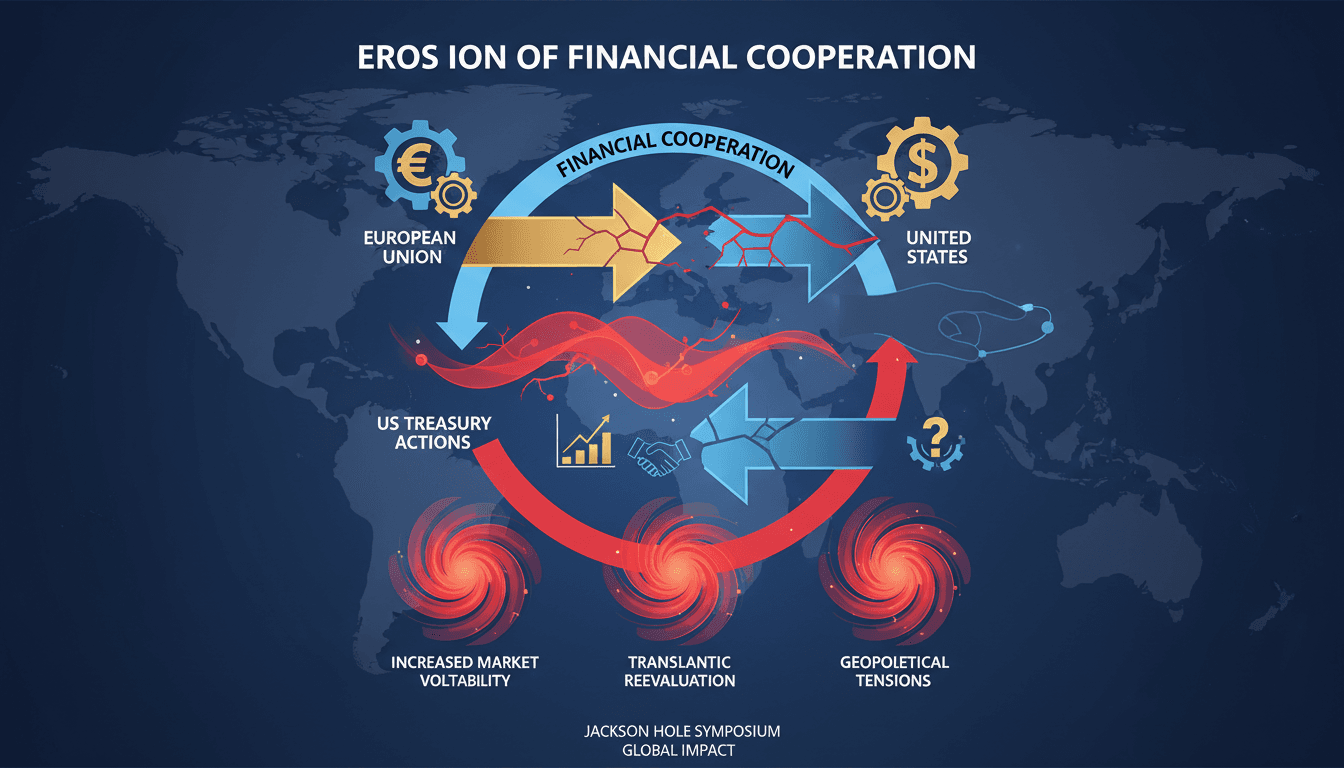
- European central bankers expressed concerns at the Jackson Hole Economic Symposium about US Treasury interventions disrupting financial cooperation.
- Discussions highlighted a lack of customary notifications regarding US currency market actions, raising alarms over potential risks to dollar swap lines.
- Federal Reserve officials reassured that they would maintain independence but acknowledged limitations due to political pressures.
The context you actually need
- Tensions have escalated between the US and Europe under the Trump administration, marked by trade disputes and tariff threats.
- Recent US Treasury actions, including yen support operations and bond buybacks, have deviated from established international coordination norms.
- Political pressures on the Federal Reserve's independence are growing, complicating the landscape for global financial stability mechanisms.
What's really happening
At the Jackson Hole Economic Symposium, European central bankers voiced significant apprehensions regarding the US Treasury's recent actions, which they perceive as a departure from established protocols of financial cooperation. The discussions, held on the sidelines of the event, revealed frustrations over the US Treasury's failure to provide advance notice on euro sales during a yen intervention. This lack of communication is seen as a break from the customary practices that have historically characterized US-Europe financial relations.
The Federal Reserve officials present at the symposium attempted to reassure their European counterparts by emphasizing their commitment to maintaining independence from the administration's political maneuvers. However, they also acknowledged the limitations imposed by the current political climate, which has seen increasing pressures on the Fed's autonomy. This situation raises concerns about the potential for further interventions in financial markets, particularly regarding bond buyback strategies that could signal a shift in US monetary policy.
The backdrop to these discussions is a broader context of geopolitical frictions and trade disputes that have strained transatlantic relations. The Trump administration's approach to international trade and finance has led to a series of tariff threats and interventions that have unsettled established norms. The US Treasury's recent actions, including the yen support operation on August 1, 2026, which involved euro sales, have further exacerbated these tensions. Such moves are perceived as undermining the collaborative spirit that has historically defined US-Europe financial cooperation.
Moreover, the implications of these tensions extend beyond immediate financial markets. The potential volatility in global financial markets and dollar liquidity could have cascading effects on international trade and investment flows. As European officials remain vigilant, they anticipate that core facilities, such as dollar swap lines, will continue to operate under the Fed's authority, but the uncertainty surrounding US policy actions poses a risk to overall market stability.
Who feels it first (and how)
- International traders: They may face increased volatility in currency exchange rates, impacting pricing and contracts.
- Financial institutions: Banks and investment firms could experience shifts in liquidity and risk management strategies.
- Exporters and importers: Companies engaged in transatlantic trade may encounter higher costs and uncertainty in their operations.
What to watch next
- G20 finance minister discussions: Scheduled talks in Asheville, North Carolina, could provide insights into future US-Europe financial cooperation and policy directions.
- Market reactions to US Treasury actions: Observing how markets respond to any new interventions or announcements will be crucial for gauging stability.
- Federal Reserve communications: Any statements regarding the Fed's independence and future monetary policy will be key indicators of potential shifts in financial cooperation.
European central bankers are concerned about US Treasury actions disrupting financial cooperation.
Continued vigilance from European officials regarding US monetary policy and its implications for global markets.
The long-term impact of these tensions on dollar swap lines and overall market stability.
Frequently Asked Questions
- Why it matters?
- The evolving dynamics between US and European financial policies could reshape global market stability and liquidity.
- What happened (in 30 seconds)?
- European central bankers expressed concerns at the Jackson Hole Economic Symposium about US Treasury interventions disrupting financial cooperation. Discussions highlighted a lack of customary notifications regarding US currency market actions, raising alarms over potential risks to dollar swap lines. Federal Reserve officials reassured that they would maintain independence but acknowledged limitations due to political pressures.
- What's really happening?
- At the Jackson Hole Economic Symposium, European central bankers voiced significant apprehensions regarding the US Treasury's recent actions, which they perceive as a departure from established protocols of financial cooperation. The discussions, held on the sidelines of the event, revealed frustrations over the US Treasury's failure to provide advance notice on euro sales during a yen intervention. This lack of communication is seen as a break from the customary practices that have historically
- Who feels it first (and how)?
- International traders: They may face increased volatility in currency exchange rates, impacting pricing and contracts. Financial institutions: Banks and investment firms could experience shifts in liquidity and risk management strategies. Exporters and importers: Companies engaged in transatlantic trade may encounter higher costs and uncertainty in their operations.
- What to watch next?
- G20 finance minister discussions: Scheduled talks in Asheville, North Carolina, could provide insights into future US-Europe financial cooperation and policy directions. Market reactions to US Treasury actions: Observing how markets respond to any new interventions or announcements will be crucial for gauging stability. Federal Reserve communications: Any statements regarding the Fed's independence and future monetary policy will be key indicators of potential shifts in financial cooperation
Regional and international reporting focused on Middle Eastern politics, diplomacy, and economics.
"Asharq Al-Awsat is a Saudi-owned international newspaper reflecting mainstream Gulf political perspectives."
— A47 Editor
Europe’s Central Bankers Fear More Turbulence in Testy US Relations
Europe’s central bankers are expressing concerns over potential instability in US relations, which could have significant implications for the European economy and financial markets. The ongoing tensions are exacerbated by the US's recent sanctions a...
Pan-Arab news coverage spanning politics, business, sports, and regional affairs.
"Asharq Al-Awsat reflects a broad Arab editorial perspective with strong attention to regional geopolitics."
— A47 Editor
البنوك المركزية الأوروبية تخشى مزيداً من الاضطرابات في العلاقات المتوترة مع واشنطن
European central bank governors concluded their annual meeting with their American counterparts, expressing concerns over the stability of established global cooperation frameworks amid rising tensions with Washington.
Macro commentary, policy analysis, growth/inflation themes, and global outlooks.
"Contextual macro coverage that complements day-to-day market headlines."
— A47 Editor
Europe’s central bankers fear more turbulence in testy U.S. relations
European central bankers are expressing concerns over potential turbulence stemming from strained relations with the U.S., which could impact market stability and economic forecasts.