
UN Report Reveals UAE-Linked Networks Fueling Sudan Armed Conflict
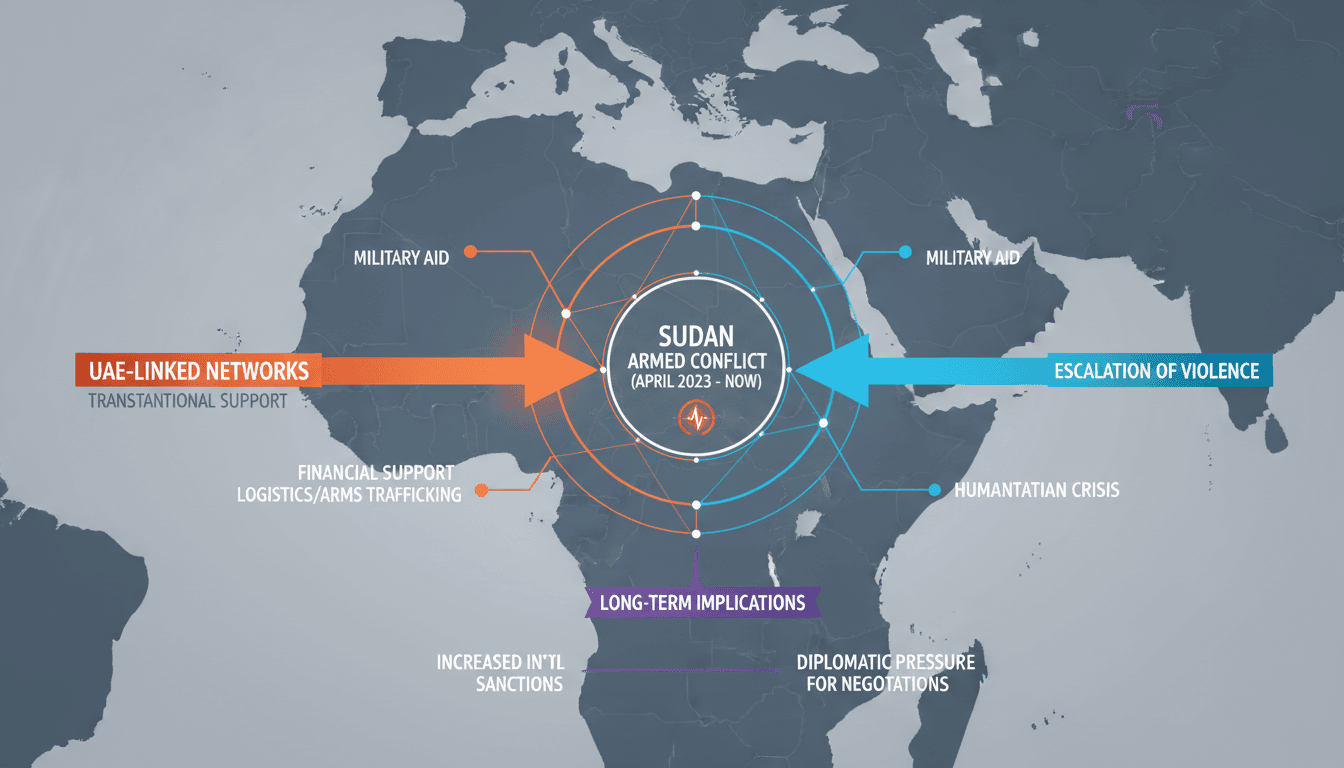
Here's what it means for you.
The ongoing conflict in Sudan, fueled by international networks, could impact global security and economic stability.
Why it matters
The report reveals how foreign involvement in Sudan's conflict exacerbates humanitarian crises and threatens regional stability.
What happened (in 30 seconds)
- On September 3, 2026, the UN released a report detailing external support networks fueling the Sudan conflict.
- Transnational entities, primarily from the UAE, Colombia, and Chad, supplied weapons and military contractors to the Rapid Support Forces (RSF).
- The conflict, which began in April 2023, has resulted in over 59,000 deaths and displaced 13 million people.
The context you actually need
- The Sudan conflict erupted from power-sharing disputes following the ousting of Omar al-Bashir in 2019, leading to a self-sustaining war economy.
- The RSF, previously deployed as mercenaries in Yemen, has received significant foreign military support, enhancing its combat capabilities.
- Documented violations include potential war crimes, with external assistance linked to attacks on civilians and humanitarian sites.
What's really happening
The UN Independent International Fact-Finding Mission's report highlights a complex web of transnational support that has significantly altered the dynamics of the Sudan conflict. The investigation, mandated by the Human Rights Council, uncovered a supply chain involving UAE-registered entities that facilitated the recruitment, financing, and deployment of foreign personnel and military equipment to the RSF. This includes up to 2,000 Colombian military contractors who have been operating combat drones and advanced weaponry alongside RSF units in the conflict zones of Darfur and Kordofan.
The report indicates that these foreign-supplied drones have not only enhanced the strike capabilities of both the RSF and the Sudanese Armed Forces (SAF) but have also been implicated in documented attacks on civilian targets, including hospitals and displacement camps. Such actions raise serious concerns about potential war crimes, particularly in light of the mass killings reported during RSF operations in areas like the Zamzam camp and the 2025 capture of El Fasher.
The external support has created a more lethal conflict environment, enabling both sides to conduct operations with increased efficiency and brutality. The RSF's reliance on foreign military contractors and advanced technology has transformed the conflict into a more sophisticated and deadly engagement, complicating efforts for peace and humanitarian assistance. The UN report calls for an extension of the arms embargo on Sudan, emphasizing the need for international cooperation to halt the flow of military assistance. However, the lack of cooperation from several states, including Ethiopia and Libya, poses significant challenges to these efforts.
As the conflict continues, the implications extend beyond Sudan's borders, affecting regional stability and international diplomatic relations. The UAE's involvement, despite its government denying military backing, raises questions about the role of financial hubs like Dubai in facilitating such support networks. The ongoing violence and humanitarian crisis in Sudan could lead to increased pressure on international actors to intervene, potentially reshaping diplomatic relations in the region.
Who feels it first (and how)
- Humanitarian organizations: Increased challenges in delivering aid due to heightened violence and instability.
- Regional governments: Potential spillover effects from the conflict could destabilize neighboring countries.
- International investors: Heightened risks in the region may deter investment and affect economic ties.
What to watch next
- UN sanctions: Watch for potential new sanctions aimed at halting external military assistance, which could impact the conflict's dynamics.
- Diplomatic negotiations: Monitor efforts for renewed peace talks, especially involving regional powers and international stakeholders.
- Humanitarian response: Keep an eye on the effectiveness of humanitarian aid efforts as the conflict escalates and civilian casualties rise.
The conflict has resulted in over 59,000 deaths and displaced 13 million people.
Continued external support will prolong the conflict and exacerbate humanitarian crises.
The extent to which international diplomatic efforts will succeed in curbing external military assistance.
Frequently Asked Questions
- Why it matters?
- The report reveals how foreign involvement in Sudan's conflict exacerbates humanitarian crises and threatens regional stability.
- What happened (in 30 seconds)?
- On September 3, 2026, the UN released a report detailing external support networks fueling the Sudan conflict. Transnational entities, primarily from the UAE, Colombia, and Chad, supplied weapons and military contractors to the Rapid Support Forces (RSF). The conflict, which began in April 2023, has resulted in over 59,000 deaths and displaced 13 million people.
- What's really happening?
- The UN Independent International Fact-Finding Mission's report highlights a complex web of transnational support that has significantly altered the dynamics of the Sudan conflict. The investigation, mandated by the Human Rights Council, uncovered a supply chain involving UAE-registered entities that facilitated the recruitment, financing, and deployment of foreign personnel and military equipment to the RSF. This includes up to 2,000 Colombian military contractors who have been operating combat
- Who feels it first (and how)?
- Humanitarian organizations: Increased challenges in delivering aid due to heightened violence and instability. Regional governments: Potential spillover effects from the conflict could destabilize neighboring countries. International investors: Heightened risks in the region may deter investment and affect economic ties.
- What to watch next?
- UN sanctions: Watch for potential new sanctions aimed at halting external military assistance, which could impact the conflict's dynamics. Diplomatic negotiations: Monitor efforts for renewed peace talks, especially involving regional powers and international stakeholders. Humanitarian response: Keep an eye on the effectiveness of humanitarian aid efforts as the conflict escalates and civilian casualties rise.
Conservative-leaning political and national coverage.
"The Washington Times is a conservative-leaning newspaper known for its political coverage and advocacy of right-of-center viewpoints."
— A47 Editor
U.N. report details foreign networks fueling war in Sudan
A recent United Nations report has highlighted the role of foreign networks in exacerbating the ongoing conflict in Sudan, which has resulted in over 59,000 deaths and displaced approximately 13 million people since the war began in 2023 between the ...
Arabic-language coverage of international news and geopolitics.
"RT Arabic is a Russian state-funded outlet often criticized for promoting Kremlin-aligned narratives."
— A47 Editor
مرتزقة وشحنات درونات وتكنولوجيا عسكرية.. تقرير يكشف أسباب تأجيج حرب السودان
A report from the United Nations Independent Fact-Finding Mission has revealed that the influx of mercenaries is enhancing the military capabilities of the conflicting parties in Sudan, allowing them to conduct operations that prolong the war and com...
Regional coverage and analysis focused on politics, diplomacy, and business across the Middle East.
"Al-Monitor is known for analytical reporting on Middle East politics and policy developments."
— A47 Editor
UN's Sudan probe says foreign fighters fuelling conflict
A UN-backed investigation has revealed that foreign fighters and their support networks are exacerbating the conflict in Sudan, leading to increased violence against civilians. The independent fact-finding mission highlighted how foreign involvement ...