
U.S. Administration Secures Deal for Development of 17 Venezuelan Oil Fields
Here's what it means for you.
If you’re in the energy sector, this deal could reshape global oil supply chains and influence market prices.
Why it matters
This agreement signals a significant shift in U.S. energy strategy and geopolitical dynamics in Latin America.
What happened (in 30 seconds)
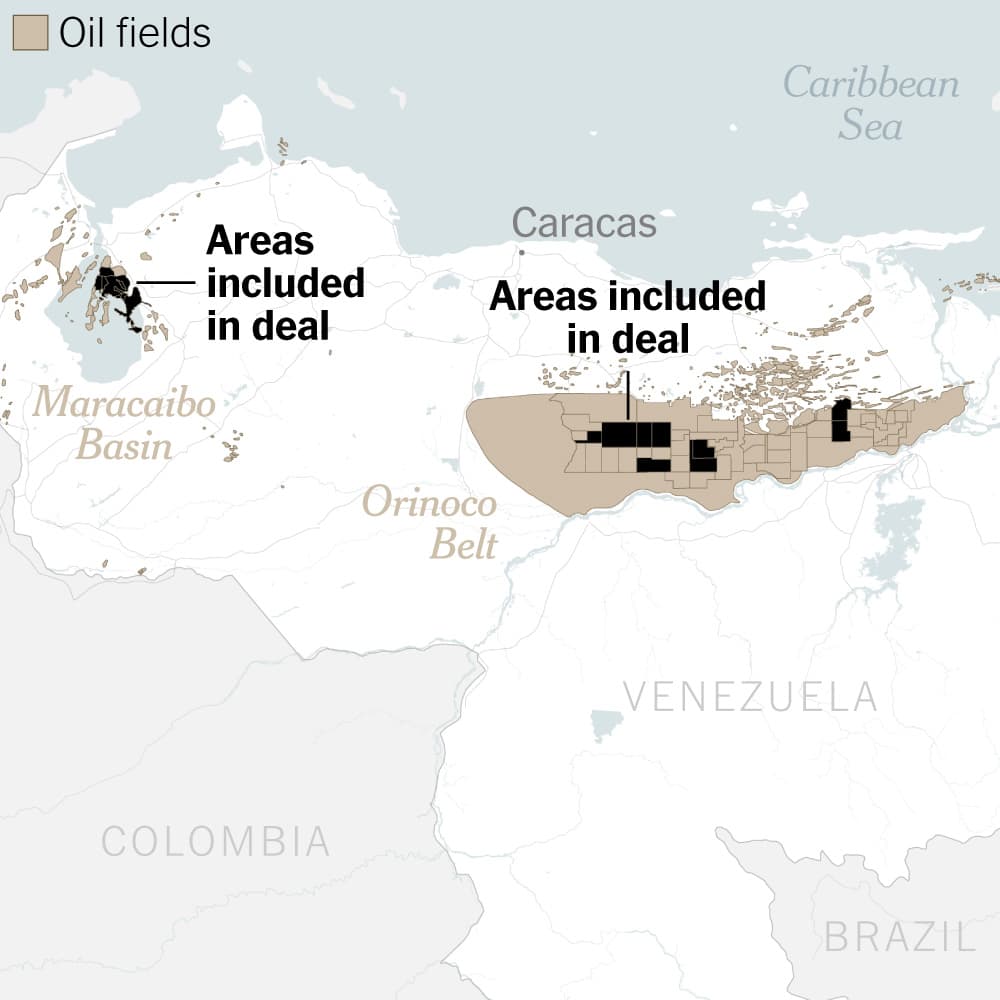
- On September 4, 2026, The New York Times reported a deal between the Trump administration and North American Blue Energy Partners to develop 17 Venezuelan oil fields.
- The U.S. government secured a 35% equity stake and preferential purchase rights for 20% of the output in exchange for facilitating concessions from Venezuela's interim government.
- Venezuela's oil production, which has collapsed in recent years, is targeted to increase to over 1 million barrels per day within five years, requiring $100 billion in investment.
The context you actually need
- Venezuela holds some of the largest proven oil reserves globally, estimated at over 300 billion barrels, but production has plummeted due to mismanagement and sanctions.
- The deal follows the ousting of Nicolás Maduro in January 2026, marking a shift towards U.S. involvement in Venezuelan energy resources.
- North American Blue Energy Partners, led by Alejandro Betancourt, is already a significant player in Venezuela's oil sector, currently producing 200,000 barrels per day.
What's really happening
The recent agreement between the Trump administration and North American Blue Energy Partners (NABEP) represents a strategic pivot in U.S. energy policy, particularly in relation to Latin America. Following the ousting of Nicolás Maduro, the U.S. government is keen to re-establish its influence over Venezuela's vast oil reserves, which are critical for global energy markets. The deal grants NABEP rights to develop 17 oil fields, which are estimated to contain recoverable reserves of 65 billion barrels—approximately one-fifth of Venezuela's total reserves.
This arrangement is not merely a business transaction; it is a calculated move to secure U.S. interests in a region that has historically been influenced by adversarial powers, notably Russia and China. By acquiring a 35% equity stake in NABEP through the Pentagon's Office of Strategic Capital, the U.S. government ensures a level of oversight and control over the operations, which is unusual for a private sector deal. This involvement reflects a broader trend of governments taking stakes in private enterprises to safeguard national interests, particularly in critical sectors like energy.
The projected investment of $100 billion over the next five years aims to revitalize Venezuela's oil production, which has suffered from years of neglect and infrastructure decay. NABEP's target of increasing production to over 1 million barrels per day is ambitious, especially given that many of the fields are in disrepair. The U.S. government’s preferential purchase rights for 20% of the output at cost further solidify its position in the market, potentially allowing it to influence global oil prices.
However, skepticism surrounds the feasibility of these production targets. Analysts have raised concerns about the legal and logistical challenges that could impede progress, including the need for significant infrastructure upgrades and the historical depletion of the fields. The deal also raises questions about transparency and the long-term sustainability of such investments in a politically volatile environment.
In summary, this agreement is a multifaceted strategy that intertwines economic interests with geopolitical maneuvering, aiming to stabilize and increase oil production in Venezuela while simultaneously reducing U.S. reliance on adversarial energy sources.
Who feels it first (and how)
- Energy companies: U.S. and international firms may see new opportunities or competition in the Venezuelan market.
- Investors: Those in the oil sector will closely monitor the deal's progress and its impact on global oil prices.
- Venezuelan citizens: Potential economic benefits from increased production could improve local conditions, but risks remain due to political instability.
What to watch next
- Production milestones: Keep an eye on NABEP's ability to meet its production targets, as this will influence global oil supply.
- Geopolitical developments: Monitor how this deal affects U.S. relations with other countries involved in Venezuelan oil, particularly Russia and China.
- Market reactions: Watch for fluctuations in oil prices and investor sentiment in response to the deal's progress and any emerging challenges.
The U.S. has secured a significant stake in Venezuelan oil through this deal.
Increased oil production in Venezuela could impact global oil prices and supply chains.
The long-term viability of the deal given Venezuela's political and economic instability.
Frequently Asked Questions
- Why it matters?
- This agreement signals a significant shift in U.S. energy strategy and geopolitical dynamics in Latin America.
- What happened (in 30 seconds)?
- On September 4, 2026, The New York Times reported a deal between the Trump administration and North American Blue Energy Partners to develop 17 Venezuelan oil fields. The U.S. government secured a 35% equity stake and preferential purchase rights for 20% of the output in exchange for facilitating concessions from Venezuela's interim government. Venezuela's oil production, which has collapsed in recent years, is targeted to increase to over 1 million barrels per day within five years, requiring $
- What's really happening?
- The recent agreement between the Trump administration and North American Blue Energy Partners (NABEP) represents a strategic pivot in U.S. energy policy, particularly in relation to Latin America. Following the ousting of Nicolás Maduro, the U.S. government is keen to re-establish its influence over Venezuela's vast oil reserves, which are critical for global energy markets. The deal grants NABEP rights to develop 17 oil fields, which are estimated to contain recoverable reserves of 65 billion b
- Who feels it first (and how)?
- Energy companies: U.S. and international firms may see new opportunities or competition in the Venezuelan market. Investors: Those in the oil sector will closely monitor the deal's progress and its impact on global oil prices. Venezuelan citizens: Potential economic benefits from increased production could improve local conditions, but risks remain due to political instability.
- What to watch next?
- Production milestones: Keep an eye on NABEP's ability to meet its production targets, as this will influence global oil supply. Geopolitical developments: Monitor how this deal affects U.S. relations with other countries involved in Venezuelan oil, particularly Russia and China. Market reactions: Watch for fluctuations in oil prices and investor sentiment in response to the deal's progress and any emerging challenges.
Stock market news, investing ideas, and trading analysis.
"TheStreet provides market news and retail-investor-focused analysis."
— A47 Editor
U.S. just secured control of Venezuela's vast oil reserves
The U.S. has secured control over Venezuela's vast oil reserves, committing $7 billion to develop these resources, which are estimated to exceed 65 billion barrels. This strategic move follows a series of negotiations and agreements aimed at enhancin...
Markets, economy, and company analysis from NYT’s business desk.
"The New York Times is a globally recognized newspaper offering authoritative reporting with a center-left editorial stance."
— A47 Editor
The U.S. Wants the Oil From These 17 Venezuelan Fields
The Trump administration has reached a deal with a private oil company to develop 17 oil fields in Venezuela, a move that aims to tap into the country's vast reserves, estimated at over 65 billion barrels. This initiative is expected to require signi...
24/7 international news from a French perspective in multiple languages.
"France 24 is viewed as a globally focused outlet with balanced coverage and a European perspective."
— A47 Editor
US energy firms dominate Venezuela deals worth billions
US energy firms have signed multi-billion-dollar deals with Venezuela, following an agreement that grants the United States control over a significant portion of the country's oil reserves, estimated at around 65 billion barrels. This development has...