
USS Abraham Lincoln Leaves Thailand After Record Deployment Respite
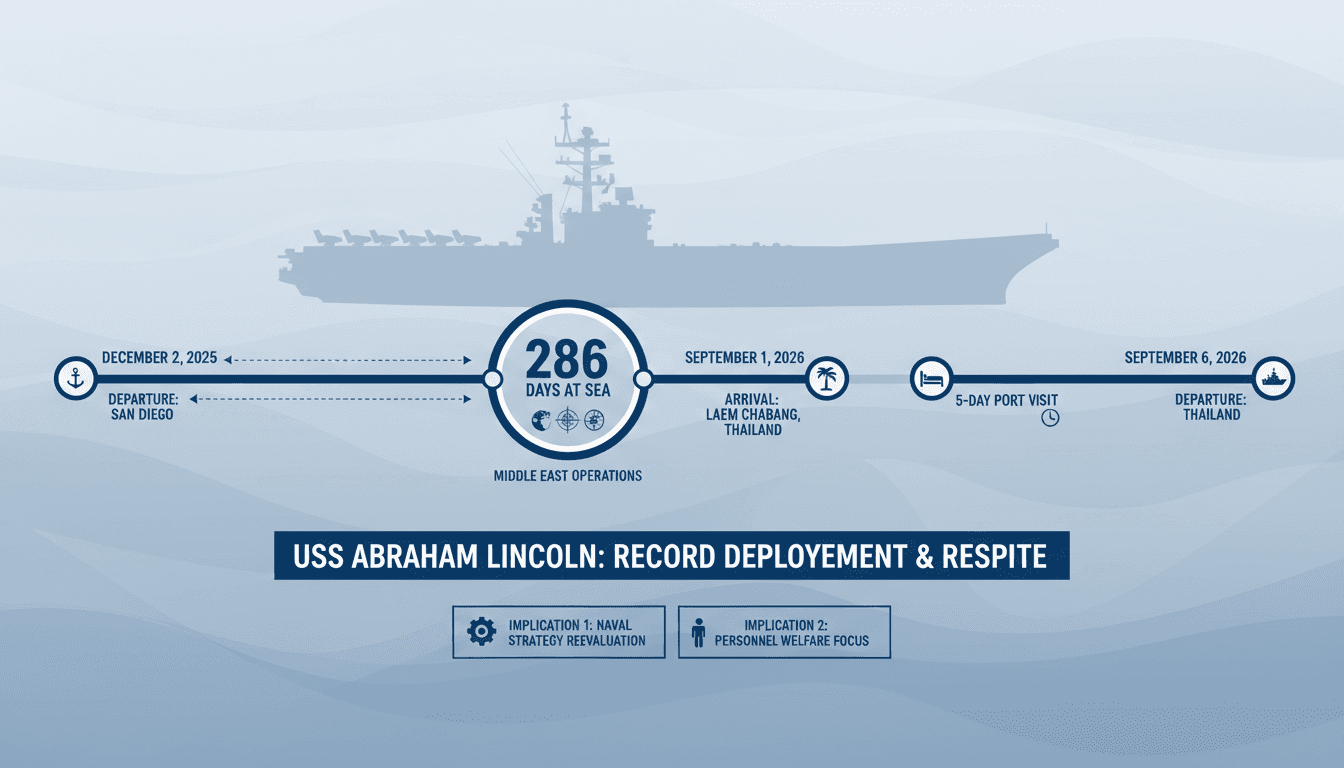
Here's what it means for you.
The extended deployment of U.S. naval forces can impact global military readiness and international relations, which may indirectly affect economic stability.
Why it matters
The USS Abraham Lincoln's record deployment underscores the pressures on military personnel and the strategic importance of U.S. naval presence in Southeast Asia.
What happened (in 30 seconds)
- USS Abraham Lincoln departed Laem Chabang Port, Thailand, on September 6, 2026, after a five-day port visit.
- Record deployment of 286 consecutive days at sea concluded with this respite, marking the first carrier visit to Thailand in 14 years.
- Personnel well-being was prioritized, with approximately 5,000 crew members receiving rest and recuperation in Pattaya.
The context you actually need
- Extended deployments are typically six to nine months, but the USS Abraham Lincoln's mission was prolonged due to ongoing military operations in the Middle East.
- Mental health concerns and deteriorating conditions onboard were reported, highlighting the need for regular port calls to maintain crew morale.
- U.S.-Thailand relations are significant, as Thailand is the only treaty ally of the U.S. in mainland Southeast Asia, making such visits strategically important.
What's really happening
The USS Abraham Lincoln's recent departure from Thailand after a record 286-day deployment reflects a complex interplay of military strategy, personnel welfare, and international relations. The carrier's extended mission began in November 2025, primarily focused on U.S. naval blockade and combat operations during the ongoing conflict with Iran. Such deployments are typically designed to last between six to nine months, but the escalation of military activities necessitated a longer presence in the region.
The five-day port visit to Thailand was not merely a break for the crew; it served as a critical opportunity for rest and recuperation after an arduous period at sea. Approximately 5,000 personnel were transported to Pattaya, where they could unwind and recharge. This respite was essential, as reports indicated that prolonged deployments without port calls led to mental health issues and deteriorating onboard conditions. The visit allowed for necessary maintenance and cleaning of the carrier, ensuring operational readiness for the next phase of its journey.
The significance of this visit extends beyond the immediate needs of the crew. It underscores the strategic partnership between the U.S. and Thailand, which has been a cornerstone of U.S. military presence in Southeast Asia. The last carrier visit to Thailand occurred 14 years ago, making this stop a notable event in the context of U.S. naval diplomacy. The warm reception from Thai officials, including the mayor of Pattaya, reflects the importance of maintaining strong bilateral relations, especially in a region where U.S. influence is increasingly challenged by other powers.
As the USS Abraham Lincoln continues its journey back to the United States, the implications of its deployment and the subsequent port visit will resonate within military circles and beyond. The need for regular respite for personnel is a reminder of the human element in military operations, which can often be overshadowed by strategic objectives. The successful execution of this visit may set a precedent for future deployments, emphasizing the importance of crew welfare in maintaining operational effectiveness.
Who feels it first (and how)
- Military personnel: Crew members benefit directly from the respite, impacting their mental health and operational readiness.
- U.S. Navy leadership: Commanders must balance operational demands with personnel welfare, influencing future deployment strategies.
- Thai local economy: Businesses in Pattaya experienced a temporary boost from the influx of U.S. personnel during the port visit.
What to watch next
- Future deployments: Monitor upcoming U.S. naval operations in the region to see if similar port calls are scheduled, which could indicate a shift in operational strategy.
- Mental health initiatives: Watch for any new programs or policies aimed at supporting military personnel's mental health, especially following extended deployments.
- U.S.-Thailand relations: Keep an eye on diplomatic engagements between the U.S. and Thailand, as this visit may lead to increased military cooperation or joint exercises.
The USS Abraham Lincoln completed a record 286-day deployment.
Future U.S. naval operations will prioritize crew welfare and include regular port calls.
The long-term impact of this deployment on U.S. military strategy in Southeast Asia remains to be seen.
Frequently Asked Questions
- Why it matters?
- The USS Abraham Lincoln's record deployment underscores the pressures on military personnel and the strategic importance of U.S. naval presence in Southeast Asia.
- What happened (in 30 seconds)?
- USS Abraham Lincoln departed Laem Chabang Port, Thailand, on September 6, 2026, after a five-day port visit. Record deployment of 286 consecutive days at sea concluded with this respite, marking the first carrier visit to Thailand in 14 years. Personnel well-being was prioritized, with approximately 5,000 crew members receiving rest and recuperation in Pattaya.
- What's really happening?
- The USS Abraham Lincoln's recent departure from Thailand after a record 286-day deployment reflects a complex interplay of military strategy, personnel welfare, and international relations. The carrier's extended mission began in November 2025, primarily focused on U.S. naval blockade and combat operations during the ongoing conflict with Iran. Such deployments are typically designed to last between six to nine months, but the escalation of military activities necessitated a longer presence in t
- Who feels it first (and how)?
- Military personnel: Crew members benefit directly from the respite, impacting their mental health and operational readiness. U.S. Navy leadership: Commanders must balance operational demands with personnel welfare, influencing future deployment strategies. Thai local economy: Businesses in Pattaya experienced a temporary boost from the influx of U.S. personnel during the port visit.
- What to watch next?
- Future deployments: Monitor upcoming U.S. naval operations in the region to see if similar port calls are scheduled, which could indicate a shift in operational strategy. Mental health initiatives: Watch for any new programs or policies aimed at supporting military personnel's mental health, especially following extended deployments. U.S.-Thailand relations: Keep an eye on diplomatic engagements between the U.S. and Thailand, as this visit may lead to increased military cooperation or joint exer
Regional coverage and analysis focused on politics, diplomacy, and business across the Middle East.
"Al-Monitor is known for analytical reporting on Middle East politics and policy developments."
— A47 Editor
US carrier Abraham Lincoln departs Thailand after respite visit
The U.S. aircraft carrier Abraham Lincoln departed Thailand on September 6 after a five-day port visit, concluding a respite from a lengthy deployment that included operations in the Middle East. Captain Dan Keeler expressed gratitude for the hospita...
English-language news from Qatar covering domestic and regional affairs.
"Gulf Times reflects Qatari perspectives on regional developments."
— A47 Editor
US carrier Abraham Lincoln departs Thailand after respite visit
The US aircraft carrier Abraham Lincoln departed Thailand after a five-day port visit, concluding a respite from an extensive deployment that included operations primarily in the Middle East. This visit followed a grueling 286-day deployment, during ...
International coverage of politics, culture, and current affairs.
"BBC News is widely regarded as a reputable international news organization, known for its impartial tone and public service mandate."
— A47 Editor
Why did USS Lincoln turn up in Thailand looking so rusty?
The USS Abraham Lincoln recently docked in Pattaya, Thailand, after a lengthy deployment of nearly nine months at sea, during which it faced severe conditions including food shortages and plumbing failures. The ship's arrival has drawn criticism rega...
Political, social, and economic news across Asia and the Pacific.
"France 24 is viewed as a globally focused outlet with balanced coverage and a European perspective."
— A47 Editor
USS Lincoln crew hits the streets of Thailand's Pattaya after nine-month deployment
After a record-breaking nine-month deployment at sea, approximately 5,000 U.S. sailors and Marines from the USS Lincoln have arrived in Pattaya, Thailand, for a much-anticipated shore leave. Local authorities reported no significant incidents involvi...