
Nepal initiates DNA profiling to identify victims of devastating flash floods
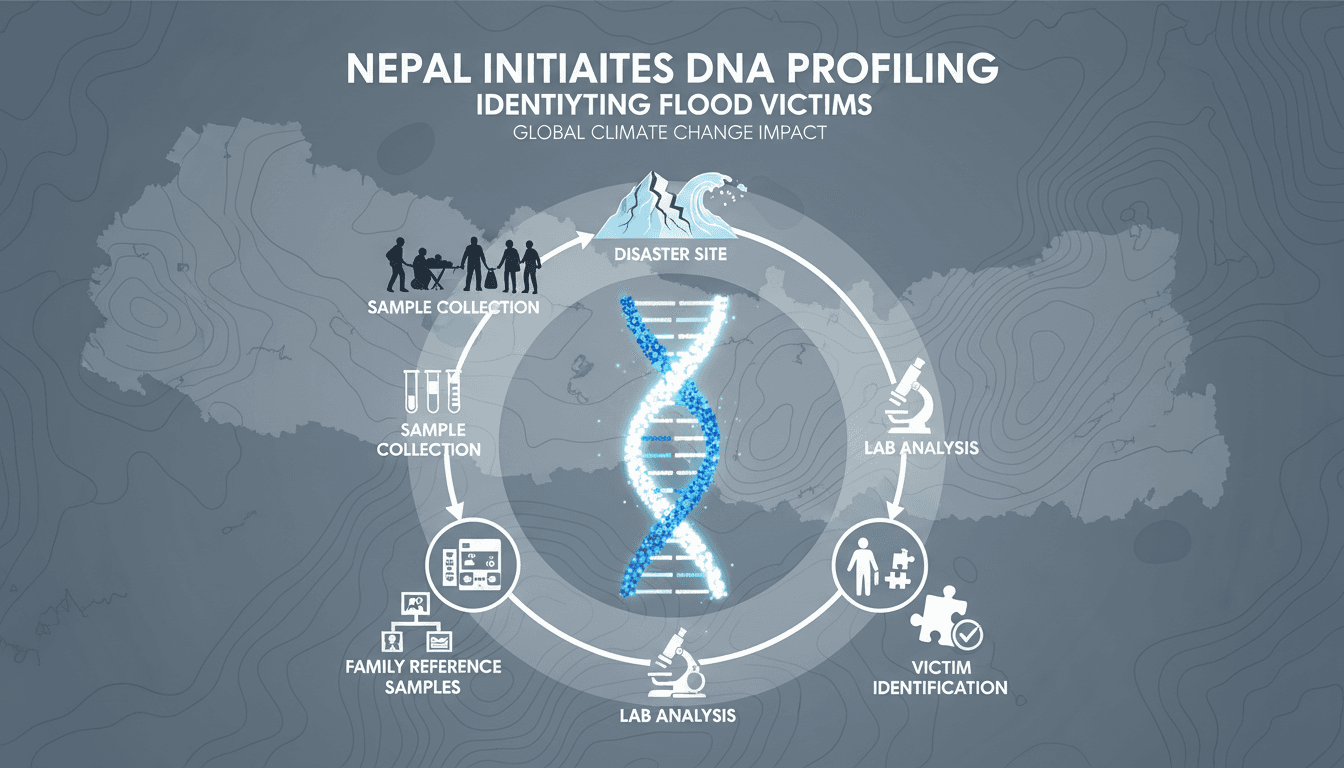
Here's what it means for you.
As global professionals, the evolution of forensic technology in crisis management could redefine how we approach disaster recovery and victim identification.
The Vibe
The tragic flash floods in Nepal have catalyzed a significant shift towards advanced forensic methods for victim identification, highlighting the intersection of technology and humanitarian response.
What it signals
This trend underscores a growing reliance on technology in crisis management, reshaping how societies respond to disasters. As climate change intensifies natural disasters, the need for efficient identification processes becomes paramount, influencing public health policies, emergency response protocols, and international collaboration in forensic science.
Why it's happening now
1. The increasing frequency of climate-related disasters is straining traditional identification methods, necessitating innovative solutions like DNA profiling. 2. Advances in forensic technology have made DNA testing more accessible and reliable, allowing for rapid response in crisis situations. 3. Global interconnectedness means that international support, such as forensic teams from neighboring countries, is more feasible and timely, enhancing local capabilities.
Who it's for (and who it leaves out)
The primary beneficiaries are families of disaster victims who gain closure through accurate identification. However, those without access to resources or support systems may find themselves excluded from these advancements.
What to watch next
1. The development of international standards for forensic identification in disaster scenarios could emerge, influencing global protocols. 2. Increased investment in forensic technology and training in vulnerable regions may become a priority for NGOs and governments.
Visual Directive: A striking infographic illustrating the process of DNA profiling in disaster victim identification.
Over 1,270 confirmed deaths have been reported from the Nepal floods.
The use of DNA profiling will become a standard practice in disaster victim identification globally.
The long-term impact on local forensic capabilities and international collaboration remains to be seen.
Comprehensive coverage of Middle Eastern and global issues.
"Al Jazeera is a prominent voice from the Global South, especially the Middle East, with an emphasis on underreported stories."
— A47 Editor
Nepal flood victims to be identified through DNA
In the wake of catastrophic flooding in Nepal, authorities are implementing DNA testing to identify victims, many of whom are in advanced stages of decomposition. The floods, triggered by a glacier collapse, have resulted in over 1,100 confirmed deat...
Political, social, and economic news across Asia and the Pacific.
"France 24 is viewed as a globally focused outlet with balanced coverage and a European perspective."
— A47 Editor
Nepal: How are the hundreds of victims from the floods being identified?
Nepal is grappling with the aftermath of catastrophic floods that occurred on August 26, leading to a significant challenge in identifying the remains of the victims, many of which are in an advanced state of decomposition. Authorities have begun bur...
Political, social, and economic news across Asia and the Pacific.
"France 24 is viewed as a globally focused outlet with balanced coverage and a European perspective."
— A47 Editor
After Nepal’s devastating floods, DNA tests help identify victims
Recent flash floods in Nepal have led to a significant humanitarian crisis, with authorities struggling to identify the remains of victims, many of which are in advanced stages of decomposition. DNA tests are being utilized to match genetic profiles ...