
Houthi Attacks on Saudi Energy Infrastructure Escalate Tensions in Red Sea Region
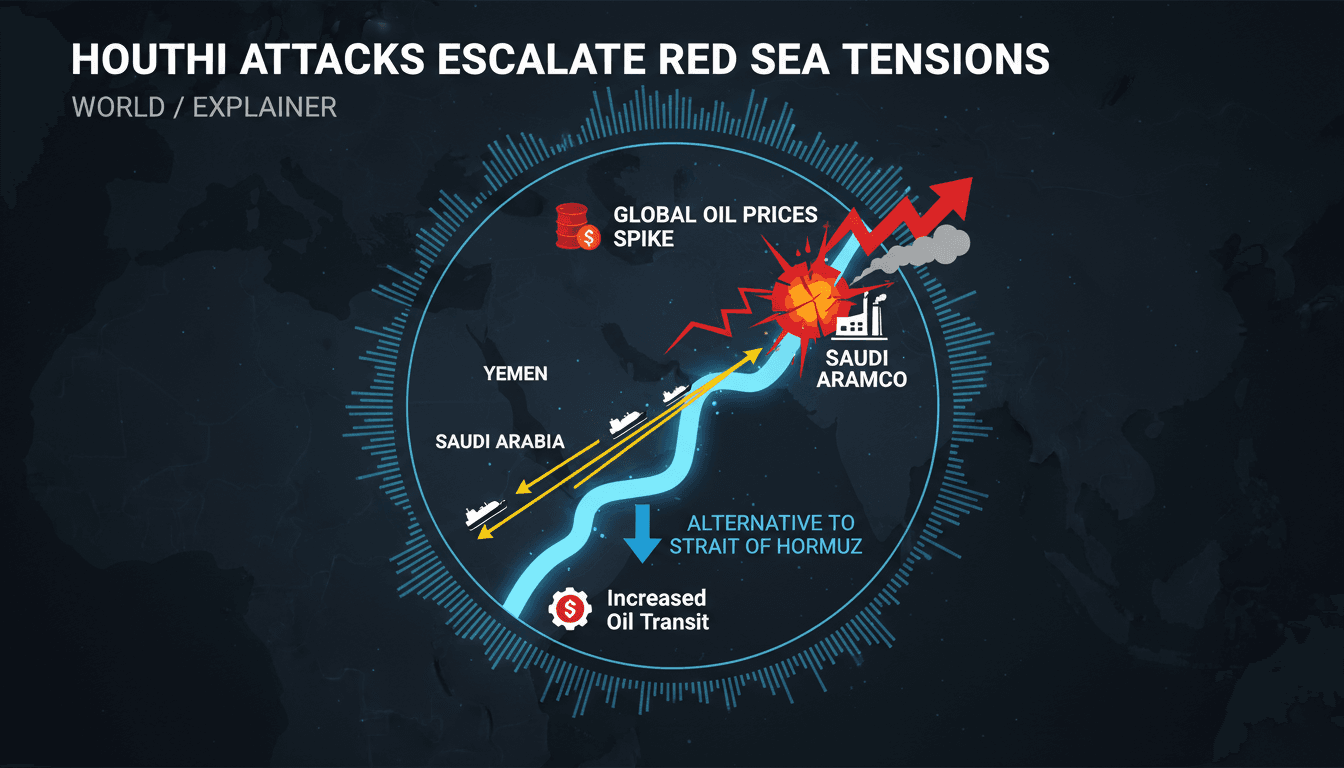
Here's what it means for you.
Rising oil prices could impact your fuel and shipping costs as geopolitical tensions escalate.
Why it matters
The Bab el-Mandeb strait is a critical chokepoint for global oil supply, and disruptions here can lead to significant price volatility.
What happened (in 30 seconds)
- Houthi forces launched missile and drone strikes on Saudi Aramco facilities on September 8, 2026, injuring 73 people and disrupting operations.
- Saudi Arabia redirected crude exports to the Bab el-Mandeb strait, now handling 8.1 million barrels per day, as an alternative to the Strait of Hormuz.
- Global oil prices surged with Brent crude nearing $99 per barrel, raising concerns for consumers and businesses worldwide.
The context you actually need
- The Houthi attacks are framed as retaliation for Saudi airstrikes in Yemen, escalating regional tensions.
- The Bab el-Mandeb strait's strategic importance has increased as Saudi Arabia seeks to bypass the Strait of Hormuz, which has seen reduced oil flows.
- US President Trump has warned of military consequences for Iran's proxy actions, indicating potential for further escalation in the region.
What's really happening
On September 8, 2026, Houthi forces executed a coordinated attack on Saudi energy infrastructure, targeting key facilities in Jazan, Najran, Abha, and Khamis Mushait. This included a significant strike on a refinery capable of processing 400,000 barrels of oil per day. The immediate aftermath saw fires and operational disruptions, with 73 reported injuries. Houthi spokesman Yahya Saree claimed the strikes were a direct response to Saudi military actions in Yemen, suggesting a cycle of retaliation that could lead to further escalations.
The backdrop to this conflict is a multi-month escalation involving Iran, which began with US and Israeli strikes earlier in 2026. These actions have severely disrupted oil flows through the Strait of Hormuz, prompting Saudi Arabia to redirect its crude exports to the Bab el-Mandeb strait. This shift has increased the strategic vulnerability of the Bab el-Mandeb, which had already been a target for Houthi attacks in previous years.
As of now, the Bab el-Mandeb is handling an average of 8.1 million barrels per day, a significant increase attributed to the need for alternative routes following the disruptions in Hormuz. This increase in traffic heightens the risks associated with shipping in the region, especially as Houthi forces have previously threatened Saudi tankers in the Red Sea.
The implications of these attacks extend beyond immediate regional security concerns. With Brent crude trading near $99 per barrel, the potential for sustained price increases looms large. Analysts are warning that if Houthi attacks continue, oil markets could experience significant volatility, leading to higher costs for consumers and businesses globally. The US administration has reiterated its commitment to holding Iran accountable for its proxy actions, which could lead to further military involvement in the region.
Who feels it first (and how)
- Consumers: Higher fuel prices and increased costs for goods due to shipping delays.
- Businesses: Companies reliant on oil and shipping may face increased operational costs and supply chain disruptions.
- Investors: Volatility in oil markets could impact investment strategies and portfolio valuations.
- Expatriates in the UAE: Heightened regional security concerns may affect economic activity and living conditions.
What to watch next
- Oil price trends: Monitor Brent crude prices for indications of sustained volatility and its impact on global markets.
- Houthi military actions: Keep an eye on further Houthi strikes or threats, which could escalate tensions and disrupt shipping routes.
- US military responses: Watch for any announcements from the US regarding military actions or sanctions against Iran, which could influence regional stability.
Houthi attacks on Saudi energy infrastructure have escalated tensions in the region.
Oil prices will remain volatile as geopolitical tensions continue to rise.
The extent of US military involvement in response to Houthi actions remains uncertain.
Frequently Asked Questions
- Why it matters?
- The Bab el-Mandeb strait is a critical chokepoint for global oil supply, and disruptions here can lead to significant price volatility.
- What happened (in 30 seconds)?
- Houthi forces launched missile and drone strikes on Saudi Aramco facilities on September 8, 2026, injuring 73 people and disrupting operations. Saudi Arabia redirected crude exports to the Bab el-Mandeb strait, now handling 8.1 million barrels per day, as an alternative to the Strait of Hormuz. Global oil prices surged with Brent crude nearing $99 per barrel, raising concerns for consumers and businesses worldwide.
- What's really happening?
- On September 8, 2026, Houthi forces executed a coordinated attack on Saudi energy infrastructure, targeting key facilities in Jazan, Najran, Abha, and Khamis Mushait. This included a significant strike on a refinery capable of processing 400,000 barrels of oil per day. The immediate aftermath saw fires and operational disruptions, with 73 reported injuries. Houthi spokesman Yahya Saree claimed the strikes were a direct response to Saudi military actions in Yemen, suggesting a cycle of retaliatio
- Who feels it first (and how)?
- Consumers: Higher fuel prices and increased costs for goods due to shipping delays. Businesses: Companies reliant on oil and shipping may face increased operational costs and supply chain disruptions. Investors: Volatility in oil markets could impact investment strategies and portfolio valuations. Expatriates in the UAE: Heightened regional security concerns may affect economic activity and living conditions.
- What to watch next?
- Oil price trends: Monitor Brent crude prices for indications of sustained volatility and its impact on global markets. Houthi military actions: Keep an eye on further Houthi strikes or threats, which could escalate tensions and disrupt shipping routes. US military responses: Watch for any announcements from the US regarding military actions or sanctions against Iran, which could influence regional stability.
U.S. political news and right-leaning commentary.
"Fox News is a highly influential conservative news outlet known for right-leaning political commentary and coverage."
— A47 Editor
New risk for US consumers as Iran-backed attacks threaten a second major oil chokepoint
Recent missile and drone attacks by Iran-backed Houthi rebels have targeted Aramco facilities in Saudi Arabia, raising alarms about the security of two critical oil chokepoints: the Strait of Hormuz and Bab el-Mandeb. These assaults threaten to disru...
Global political, business, and cultural coverage from WSJ international desks.
"The Wall Street Journal offers extensive international reporting with a reputation for financial insight and a center-right editorial stance."
— A47 Editor
Yemen’s Houthi Militants Attack Saudi Energy Infrastructure
Yemen's Houthi militants have launched significant attacks on Saudi energy infrastructure, igniting fires at oil facilities and injuring at least 73 individuals. This escalation follows a backdrop of ongoing tensions in the region, particularly amid ...
European coverage of Middle East politics and security issues.
"France 24 offers international reporting with a European editorial perspective."
— A47 Editor
Houthi attacks disrupt Saudi oil facilities and wound more than 70
Houthi forces launched a significant attack on four cities in southern Saudi Arabia, injuring at least 73 people and igniting fires at oil facilities. This incident marks one of the largest assaults on the kingdom since the onset of the Gulf conflict...
Coverage of current events and conflicts in the Middle East.
"France 24 is viewed as a globally focused outlet with balanced coverage and a European perspective."
— A47 Editor
Houthi attacks disrupt Saudi oil facilities and wound more than 70
Houthi forces launched a significant attack on four cities in southern Saudi Arabia, injuring at least 73 people and igniting fires at oil facilities. This incident marks one of the largest assaults on the kingdom since the onset of the Gulf conflict...