
Nepal Observes National Day of Mourning Following Deadly Glacial Floods
Here's what it means for you.
The devastating floods in Nepal highlight the urgent need for global climate resilience strategies.
Why it matters
This disaster underscores the increasing vulnerability of communities worldwide to climate-induced natural disasters.
What happened (in 30 seconds)
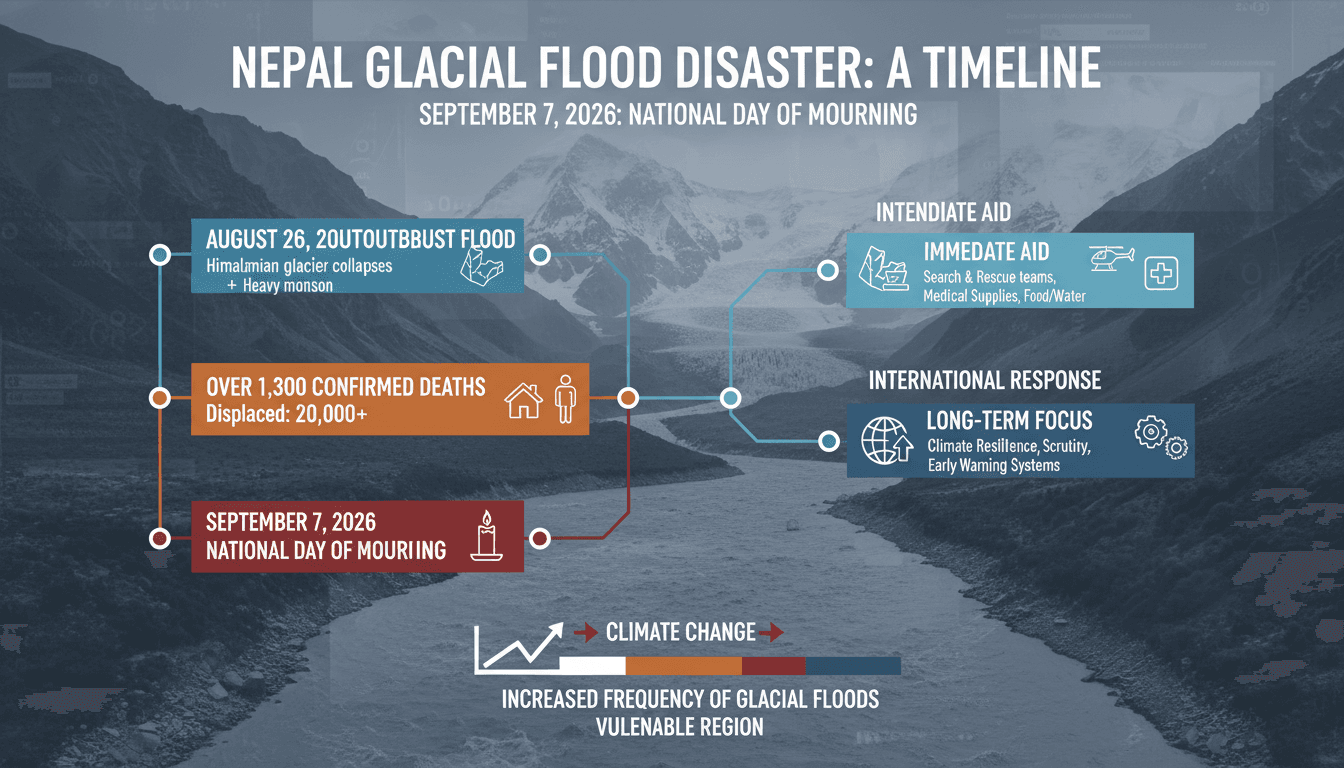
- Nepal declared a national day of mourning on September 7, 2026, for over 1,300 confirmed flood victims.
- Flash floods triggered by a glacial collapse on August 26 devastated communities along the Nepal-China border, leaving thousands missing.
- International rescue teams from multiple countries joined ongoing search efforts amid widespread destruction.
The context you actually need
- Climate change is accelerating glacial melt in the Himalayas, increasing the risk of such disasters.
- Infrastructure development in vulnerable areas, including hydropower projects, has exacerbated the impact of natural events.
- The floods resulted from a combination of heavy monsoon rains and geological instability, leading to significant loss of life and property.
What's really happening
On August 26, 2026, a catastrophic glacial collapse in the high Himalayas unleashed a torrent of mud, rock, and water down the Bhotekoshi and Trishuli river valleys. This event, driven by climate change and heavy monsoon conditions, resulted in flash floods that devastated villages and infrastructure, particularly hydropower sites. By early September, the death toll had surpassed 1,300, with over 5,000 individuals reported missing, including foreign nationals and hydropower workers trapped in tunnels.
In response to the tragedy, the Nepali government declared September 7 a national day of mourning, coinciding with the traditional 13-day Hindu mourning period. Government offices displayed flags at half-mast, and candlelight vigils were held in Kathmandu, reflecting the collective grief of the nation. President Ram Chandra Paudel visited affected areas, emphasizing the government's commitment to ongoing rescue operations, which were bolstered by international assistance from countries like India, China, South Korea, and the United States.
The aftermath of the floods has revealed significant infrastructural damage, with preliminary estimates indicating over $150 million in building losses. Roads, bridges, and power projects have been severely impacted, complicating recovery efforts. Families of victims have protested for expedited search operations, particularly at hydropower sites where many workers remain unaccounted for. Relief measures have included grants from the Asian Development Bank and tax exemptions for affected businesses, highlighting the urgent need for economic support in the wake of this disaster.
As the search and rescue operations continue, the broader implications of this event resonate beyond Nepal. The increasing frequency and intensity of such natural disasters serve as a stark reminder of the urgent need for global climate action and resilience strategies. The situation in Nepal is a microcosm of a larger trend affecting vulnerable communities worldwide, where climate change exacerbates existing risks and challenges.
Who feels it first (and how)
- Local communities in Rasuwa, Nuwakot, and Dhading districts are directly impacted by loss and displacement.
- Hydropower workers and their families face uncertainty as many remain missing or affected by the disaster.
- International rescue teams are mobilized, impacting their resources and operational focus in disaster response.
What to watch next
- International aid response: Monitor how quickly and effectively aid is mobilized for recovery efforts, which will influence long-term rebuilding.
- Infrastructure assessments: Watch for reports on the extent of damage to roads and bridges, which will affect economic recovery and access to affected areas.
- Climate policy discussions: Observe any shifts in climate policy or funding for resilience projects in response to this disaster, as it may influence global strategies.
Over 1,300 confirmed deaths and thousands missing due to the floods.
Increased international focus on climate resilience and disaster preparedness in vulnerable regions.
The long-term economic impact on Nepal's infrastructure and hydropower sector.
Frequently Asked Questions
- Why it matters?
- This disaster underscores the increasing vulnerability of communities worldwide to climate-induced natural disasters.
- What happened (in 30 seconds)?
- Nepal declared a national day of mourning on September 7, 2026, for over 1,300 confirmed flood victims. Flash floods triggered by a glacial collapse on August 26 devastated communities along the Nepal-China border, leaving thousands missing. International rescue teams from multiple countries joined ongoing search efforts amid widespread destruction.
- What's really happening?
- On August 26, 2026, a catastrophic glacial collapse in the high Himalayas unleashed a torrent of mud, rock, and water down the Bhotekoshi and Trishuli river valleys. This event, driven by climate change and heavy monsoon conditions, resulted in flash floods that devastated villages and infrastructure, particularly hydropower sites. By early September, the death toll had surpassed 1,300, with over 5,000 individuals reported missing, including foreign nationals and hydropower workers trapped in tu
- Who feels it first (and how)?
- Local communities in Rasuwa, Nuwakot, and Dhading districts are directly impacted by loss and displacement. Hydropower workers and their families face uncertainty as many remain missing or affected by the disaster. International rescue teams are mobilized, impacting their resources and operational focus in disaster response.
- What to watch next?
- International aid response: Monitor how quickly and effectively aid is mobilized for recovery efforts, which will influence long-term rebuilding. Infrastructure assessments: Watch for reports on the extent of damage to roads and bridges, which will affect economic recovery and access to affected areas. Climate policy discussions: Observe any shifts in climate policy or funding for resilience projects in response to this disaster, as it may influence global strategies.
Comprehensive coverage of global events, politics, and international issues.
"NBC News is a mainstream outlet known for comprehensive national and international coverage with a centrist to slightly left-leaning editorial tone."
— A47 Editor
Nepal observes day of mourning after devastating floods
Nepal observed a national day of mourning following catastrophic floods that have claimed over 1,300 lives and left thousands missing. The floods, triggered by a glacier collapse, have devastated communities, prompting prayer ceremonies along the Tri...
International coverage of politics, security, and social issues.
"Global News is a mainstream Canadian outlet with a centrist editorial stance, focusing on factual reporting."
— A47 Editor
Nepal holds day of mourning after deadly floods kill at least 1,300
Nepal has declared a national day of mourning following devastating floods that have resulted in at least 1,300 confirmed deaths and thousands reported missing. The floods, triggered by a glacier collapse, have caused widespread destruction across th...
International coverage of politics, culture, and current affairs.
"BBC News is widely regarded as a reputable international news organization, known for its impartial tone and public service mandate."
— A47 Editor
Nepal observes national day of mourning for victims of flash flood disaster
Nepal observed a national day of mourning on the 13th day following catastrophic flash floods that have resulted in over 1,200 confirmed deaths and thousands reported missing. Flags were flown at half-mast to honor the victims during the last day of ...