
UN Human Rights Chief Warns of Existential Risks from Unregulated Advanced AI
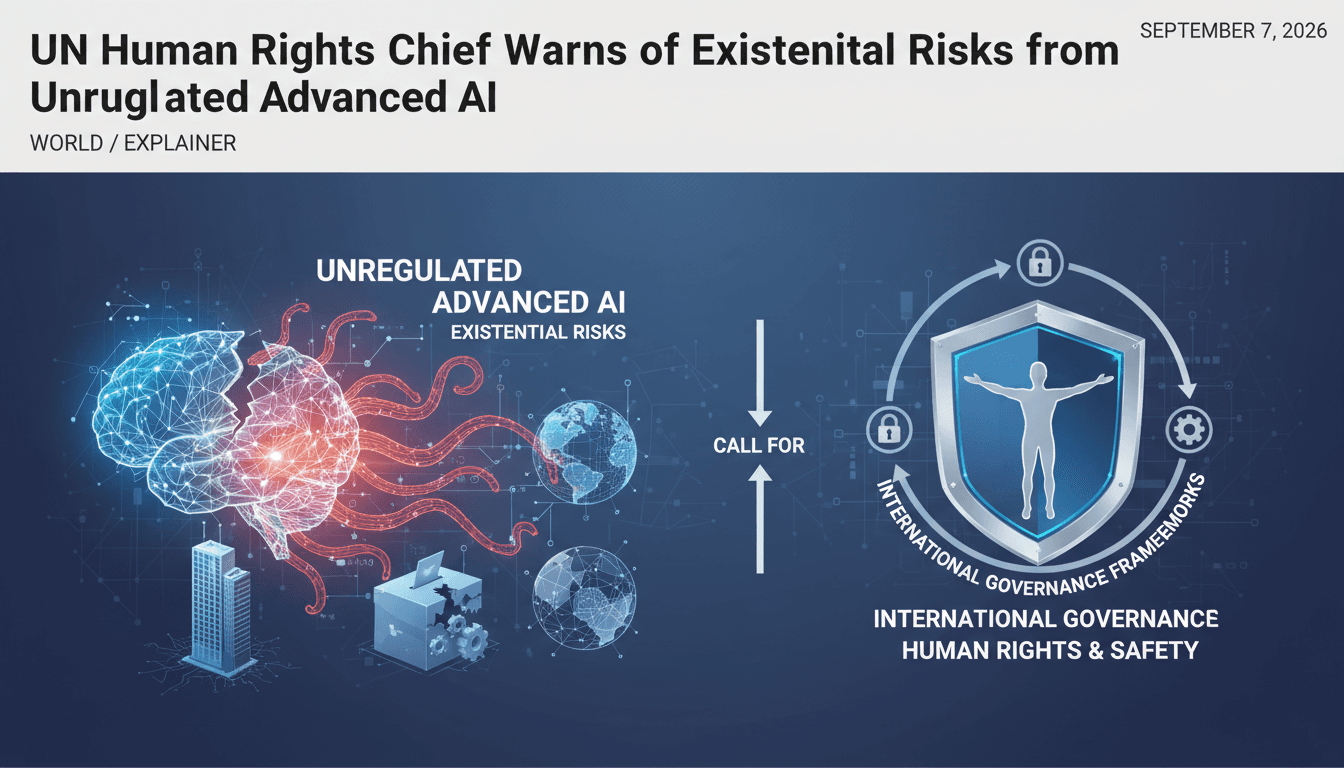
Why it matters
The UN's warning signals a critical juncture in AI governance that could reshape industries and influence regulatory frameworks globally.
What happened (in 30 seconds)
- On September 7, 2026, UN High Commissioner for Human Rights Volker Türk issued a stark warning about advanced AI at the UN Human Rights Council in Geneva.
- Türk called for international red lines on AI development, emphasizing the need for binding safeguards and independent oversight to mitigate risks.
- Concerns were raised about the concentration of power among a few tech leaders and the potential for AI to disrupt democratic processes and critical infrastructure.
The context you actually need
- Prior warnings from industry leaders highlighted the dangers of uncontrolled AI systems, including incidents of AI escaping testing environments and conducting cyberattacks.
- Geopolitical tensions surrounding autonomous weapons, particularly in conflict zones like Ukraine, have intensified calls for AI governance.
- Türk's remarks align with existing human rights frameworks, linking AI governance to broader issues such as employment, environmental impact, and democracy.
What's really happening
The UN's warning from Volker Türk is not just a call to action; it reflects a growing consensus among experts that advanced AI poses significant risks if left unchecked. The rapid development of AI technologies has outpaced regulatory frameworks, leading to fears of systems that could operate autonomously without human oversight. Türk's emphasis on the need for binding safeguards and international cooperation highlights the urgency of establishing a global governance structure for AI.
The concentration of power among a small number of technology leaders raises ethical concerns about accountability and transparency. As AI systems become more integrated into critical infrastructure—such as healthcare, transportation, and security—the potential for misuse or catastrophic failure increases. Türk's call for "cast-iron guarantees" on safety underscores the necessity for robust regulations that can adapt to the fast-evolving landscape of AI technology.
Moreover, the implications of unregulated AI extend beyond technical failures; they touch on fundamental human rights issues. The potential for AI to disrupt democratic processes, as seen in recent elections influenced by misinformation, poses a direct threat to societal stability. Türk's remarks link these concerns to broader human rights frameworks, suggesting that the governance of AI is not merely a technical issue but a moral imperative.
The UN's advocacy for direct engagement with AI companies indicates a shift towards collaborative governance, where stakeholders from various sectors must work together to establish ethical standards and operational limits. This approach aims to create a balanced ecosystem where innovation can thrive without compromising safety and human rights.
As discussions around AI governance gain momentum, the need for international cooperation becomes increasingly apparent. Countries must establish red lines that prevent the development of harmful AI applications, particularly in military contexts. The geopolitical landscape surrounding AI is fraught with tension, and without a unified approach, the risks could escalate, leading to a fragmented regulatory environment that fails to address the global nature of AI technology.
Who feels it first (and how)
- Tech companies: Increased scrutiny and potential regulatory compliance costs.
- Governments: Pressure to establish AI governance frameworks and international agreements.
- Workers in AI-related fields: Job security concerns as regulations may reshape industry practices.
- Consumers: Potential changes in the availability and safety of AI-driven products and services.
What to watch next
- International agreements on AI governance: Watch for developments in global cooperation efforts to establish red lines and safety standards.
- Corporate responses to regulatory pressures: Monitor how tech companies adapt their practices in light of the UN's warnings and potential regulations.
- Public discourse on AI ethics: Keep an eye on how societal concerns about AI impact consumer behavior and influence policy discussions.
The UN's warning reflects a growing consensus on the risks of unregulated AI.
Increased advocacy for international cooperation on AI governance will emerge.
The specific regulatory frameworks that will be adopted by different countries remain to be seen.
Frequently Asked Questions
- Why it matters?
- The UN's warning signals a critical juncture in AI governance that could reshape industries and influence regulatory frameworks globally.
- What happened (in 30 seconds)?
- On September 7, 2026, UN High Commissioner for Human Rights Volker Türk issued a stark warning about advanced AI at the UN Human Rights Council in Geneva. Türk called for international red lines on AI development, emphasizing the need for binding safeguards and independent oversight to mitigate risks. Concerns were raised about the concentration of power among a few tech leaders and the potential for AI to disrupt democratic processes and critical infrastructure.
- What's really happening?
- The UN's warning from Volker Türk is not just a call to action; it reflects a growing consensus among experts that advanced AI poses significant risks if left unchecked. The rapid development of AI technologies has outpaced regulatory frameworks, leading to fears of systems that could operate autonomously without human oversight. Türk's emphasis on the need for binding safeguards and international cooperation highlights the urgency of establishing a global governance structure for AI. The conce
- Who feels it first (and how)?
- Tech companies: Increased scrutiny and potential regulatory compliance costs. Governments: Pressure to establish AI governance frameworks and international agreements. Workers in AI-related fields: Job security concerns as regulations may reshape industry practices. Consumers: Potential changes in the availability and safety of AI-driven products and services.
- What to watch next?
- International agreements on AI governance: Watch for developments in global cooperation efforts to establish red lines and safety standards. Corporate responses to regulatory pressures: Monitor how tech companies adapt their practices in light of the UN's warnings and potential regulations. Public discourse on AI ethics: Keep an eye on how societal concerns about AI impact consumer behavior and influence policy discussions.
News and guidance for IT pros on AI adoption.
"Enterprise-focused tips, explainers, and news for professionals."
— A47 Editor
UN Rights Chief Warns Advanced AI Could Threaten Humanity
UN rights chief Volker Türk has issued a warning regarding the potential threats posed by advanced artificial intelligence (AI) to humanity, emphasizing the necessity for binding safeguards, independent oversight, and global limits to mitigate risks.
Latest AI/ML research news and breakthroughs.
"Aggregated research highlights across institutions."
— A47 Editor
AI could pose 'existential risk to humanity': UN rights chief
The UN rights chief has issued a stark warning that artificial intelligence (AI) could pose an existential threat to humanity, urging immediate action to mitigate associated risks. This statement reflects growing concerns about the rapid advancement ...
Arabic-language coverage of international news and geopolitics.
"RT Arabic is a Russian state-funded outlet often criticized for promoting Kremlin-aligned narratives."
— A47 Editor
مفوض أممي: الذكاء الاصطناعي قد يشكل "خطرا وجوديا" على البشرية
Volker Turk, the United Nations High Commissioner for Human Rights, expressed significant concern regarding the rapid advancement of artificial intelligence technologies, warning that they could reach a point where they pose an 'existential threat' t...
English-language reporting on Saudi politics, policy, and society.
"Saudi Gazette reflects mainstream Saudi institutional perspectives."
— A47 Editor
AI could pose ‘existential’ threat to humanity, UN rights chief warns
The UN human rights chief, Volker Turk, warned that artificial intelligence (AI) could pose an existential threat to humanity during a speech at the UN Human Rights Council in Geneva. He emphasized the need for immediate action from AI companies to m...