
Iran Establishes Restricted Maritime Zone in Persian Gulf and Agrees Shipping Corridor with Oman
Why it matters
This development could significantly impact global oil prices and shipping routes, affecting economies reliant on energy trade.
What happened (in 30 seconds)
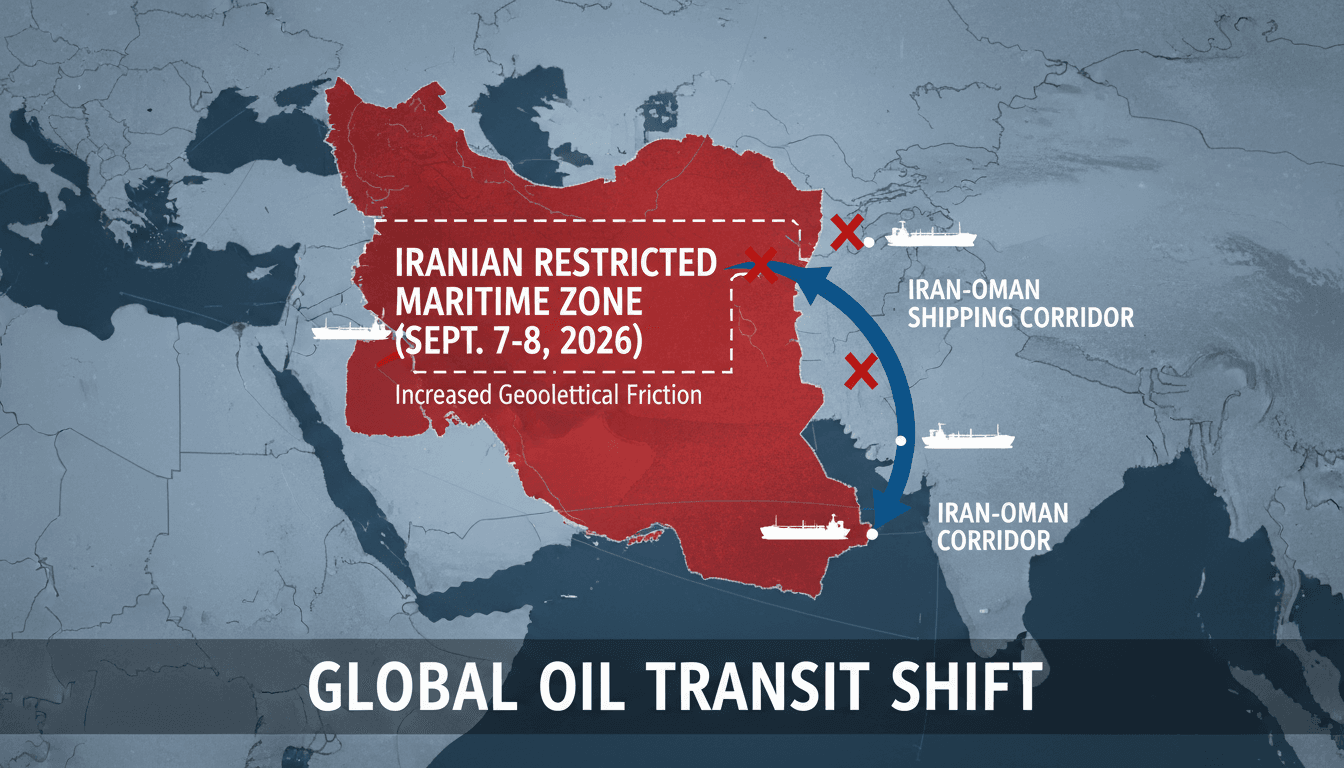
- Iran announced a new restricted maritime zone in the Persian Gulf, extending from the U.S. Navy blockade line.
- Oman agreed to a shipping corridor plan with Iran, which is set to be signed imminently.
- Oil prices surged as Brent crude settled above $97 per barrel amid rising tensions and reduced commercial traffic.
The context you actually need
- U.S.-Iran tensions have escalated recently due to tanker strikes and naval exchanges, disrupting traffic through the Strait of Hormuz.
- Oil transit volumes through the Strait of Hormuz have dropped significantly, from 21.6 million barrels per day in Q4 2025 to 4.9 million barrels per day in Q2 2026.
- Iran's control over the new corridor could reshape maritime governance in the region, complicating international shipping logistics.
What's really happening
Iran's announcement of a restricted maritime zone and a shipping corridor agreement with Oman is a strategic maneuver amid escalating tensions with the U.S. and its allies. The new zone, which extends from the U.S. Navy blockade line into Gulf waters, is designed to assert Iranian control over a critical shipping lane that sees a significant volume of global oil transit. The Strait of Hormuz is a vital chokepoint, with approximately 20% of the world's oil passing through it.
The Iranian Supreme National Security Council Secretary, Mohsen Rezaei, emphasized that vessels entering this restricted zone would face sanctions, although specific boundaries and enforcement measures remain unspecified. This ambiguity raises concerns among international shipping companies about the risks of navigating these waters. The agreement with Oman, which is expected to be signed shortly, positions Iran as a key player in managing the shipping corridor, potentially allowing it to dictate terms for vessels passing through.
The backdrop to this announcement is a series of confrontations between Iranian and U.S. naval forces, including attacks on Iranian tankers and retaliatory actions against U.S. warships. These incidents have already led to a decline in commercial shipping traffic, as companies seek safer routes, often diverting to southern paths along Omani waters. The ongoing uncertainty regarding maritime security has prompted shipping insurers to raise premiums, further complicating logistics for businesses reliant on energy imports and exports.
As oil prices rise, with Brent crude now above $97 per barrel, the economic implications extend beyond the Gulf region. Countries that depend on stable energy prices, including those in Europe and Asia, may face increased costs that could ripple through their economies. The situation is further complicated by the fact that Oman has not publicly confirmed the terms of the agreement, leaving room for speculation about the future of maritime governance in the region.
Who feels it first (and how)
- Shipping companies: Increased insurance costs and potential rerouting will affect operational budgets.
- Energy importers/exporters: Higher oil prices and supply chain delays could impact profitability and pricing strategies.
- Consumers: Rising energy costs may lead to increased prices for goods and services, affecting household budgets.
- Regional governments: Countries reliant on oil revenues may see fluctuations in income, impacting public spending and economic stability.
What to watch next
- Shipping insurance rates: Monitor changes in premiums as insurers assess the risks associated with the new maritime zone.
- Oil price fluctuations: Keep an eye on Brent crude prices as geopolitical tensions evolve, influencing global energy markets.
- International responses: Watch for reactions from Gulf states and international bodies regarding the management of the Strait of Hormuz and potential negotiations.
Iran's restricted maritime zone is set to be implemented soon, with Oman involved in the corridor agreement.
Oil prices will remain volatile as tensions persist, affecting global markets.
The specific enforcement measures and boundaries of the restricted zone have not been detailed, leaving uncertainty for shipping operations.
Frequently Asked Questions
- Why it matters?
- This development could significantly impact global oil prices and shipping routes, affecting economies reliant on energy trade.
- What happened (in 30 seconds)?
- Iran announced a new restricted maritime zone in the Persian Gulf, extending from the U.S. Navy blockade line. Oman agreed to a shipping corridor plan with Iran, which is set to be signed imminently. Oil prices surged as Brent crude settled above $97 per barrel amid rising tensions and reduced commercial traffic.
- What's really happening?
- Iran's announcement of a restricted maritime zone and a shipping corridor agreement with Oman is a strategic maneuver amid escalating tensions with the U.S. and its allies. The new zone, which extends from the U.S. Navy blockade line into Gulf waters, is designed to assert Iranian control over a critical shipping lane that sees a significant volume of global oil transit. The Strait of Hormuz is a vital chokepoint, with approximately 20% of the world's oil passing through it. The Iranian Suprem
- Who feels it first (and how)?
- Shipping companies: Increased insurance costs and potential rerouting will affect operational budgets. Energy importers/exporters: Higher oil prices and supply chain delays could impact profitability and pricing strategies. Consumers: Rising energy costs may lead to increased prices for goods and services, affecting household budgets. Regional governments: Countries reliant on oil revenues may see fluctuations in income, impacting public spending and economic stability.
- What to watch next?
- Shipping insurance rates: Monitor changes in premiums as insurers assess the risks associated with the new maritime zone. Oil price fluctuations: Keep an eye on Brent crude prices as geopolitical tensions evolve, influencing global energy markets. International responses: Watch for reactions from Gulf states and international bodies regarding the management of the Strait of Hormuz and potential negotiations.
English-language digital publication covering business, politics, technology, and current affairs.
"The Arabian Post mixes original and syndicated-style coverage with a broad regional and global business-news orientation."
— A47 Editor
Iran outlines Gulf restricted zone, Oman corridor plan
Iran is set to announce a new restricted maritime zone near the Strait of Hormuz and finalize a shipping corridor agreement with Oman, as stated by Mohsen Rezaei, secretary of Iran's Supreme National Security Council. This restricted area will extend...
Regional coverage and analysis focused on politics, diplomacy, and business across the Middle East.
"Al-Monitor is known for analytical reporting on Middle East politics and policy developments."
— A47 Editor
Iran to announce new Gulf restricted zone, Hormuz route: What we know
Iran's Supreme National Security Council, led by Mohsen Rezaei, announced the establishment of a new restricted zone in the Gulf, starting from the point of the US blockade of Iranian ports and extending into the Gulf. This decision follows a series ...
RT is a Russian state-funded network covering global events from a Russian perspective.
"RT is widely criticized for promoting pro-Kremlin narratives and is considered by many to be a state propaganda outlet."
— A47 Editor
Iran to declare new ‘restricted zone’ outside Strait of Hormuz – official
Iran is set to announce a new 'restricted zone' outside the Strait of Hormuz, as indicated by a senior security official. This move comes amid ongoing tensions in the region, particularly concerning maritime security and international shipping routes...