
Houthi Offensive Captures Key Red Sea Territories Amid Escalating Yemen Civil War
Why it matters
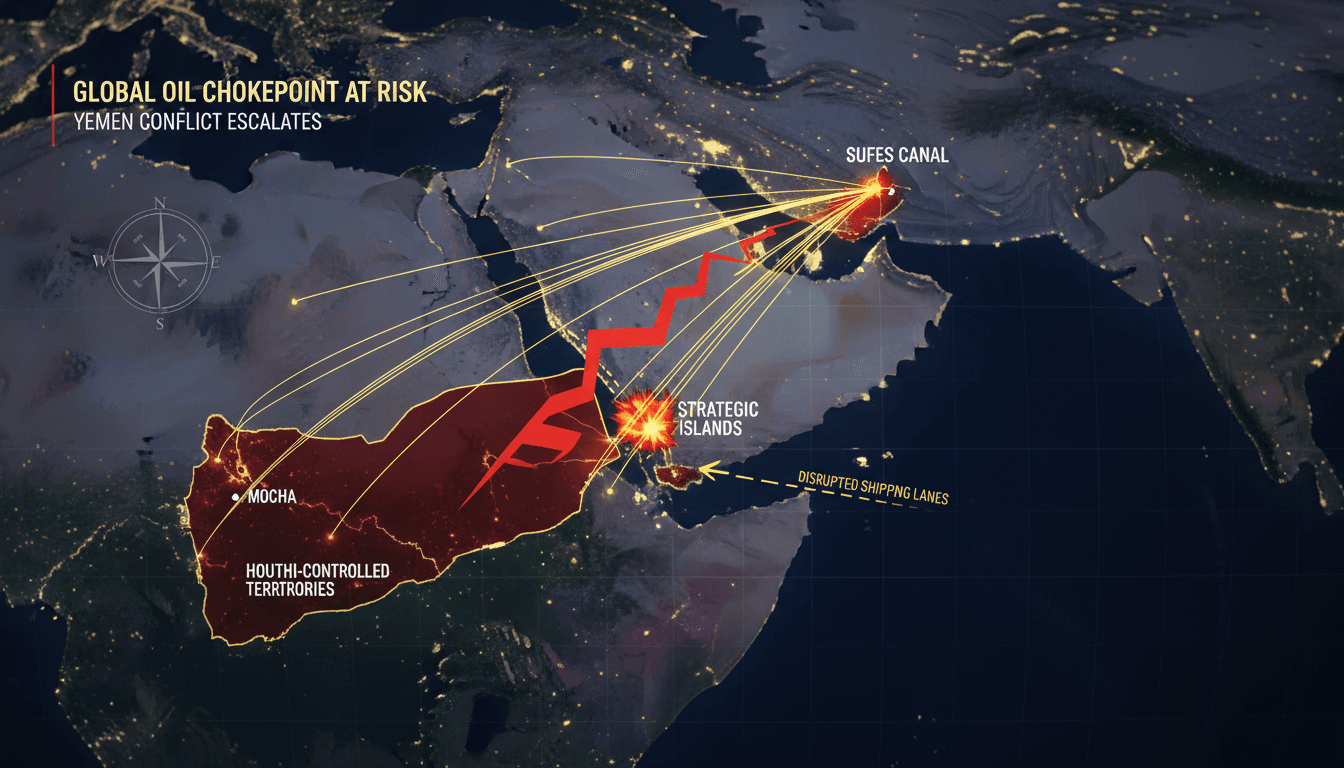
The conflict's escalation threatens 15% of global sea trade and Saudi oil exports, affecting energy prices worldwide.
What happened (in 30 seconds)
- Houthi militants launched a rapid offensive along Yemen's Red Sea coast, capturing key territories including Mocha port and strategic islands.
- Over 125,000 civilians have been displaced due to renewed fighting, adding to millions already affected by the decade-long civil war.
- Global oil prices surged, with Brent crude reaching $108 per barrel, as fears of disrupted supply chains mount.
The context you actually need
- Yemen's civil war began in 2014, pitting the Iran-aligned Houthi movement against the Saudi-backed Yemeni government, leading to a humanitarian crisis.
- Recent tensions include Houthi attacks on shipping in the Red Sea and a 2025 US-Houthi truce, which has been strained by the ongoing Iran war.
- The Bab al-Mandab strait is a critical chokepoint for global oil shipments, making its security vital for international energy markets.
What's really happening
In mid-September 2026, Houthi forces executed a well-coordinated offensive that marked a significant territorial shift in Yemen's ongoing civil war. The capture of Mocha port, a historical hub for coffee trade, and the strategic islands in the Bab al-Mandab strait has heightened tensions not only within Yemen but also across global markets. This offensive follows months of military positioning and is the most substantial gain for the Houthis in years, indicating a shift in the balance of power.
The Houthis have claimed responsibility for missile and drone strikes targeting Saudi infrastructure, including an east-west oil pipeline, which has been temporarily shut down for repairs. In retaliation, Saudi forces have conducted hundreds of airstrikes against Houthi positions, further escalating the conflict. The United Nations has expressed deep concern over the humanitarian crisis, as the fighting has displaced at least 125,000 people since early September, adding to the millions already affected by the war.
The implications of this conflict extend beyond Yemen's borders. With 15% of global sea trade passing through the Bab al-Mandab strait, any disruption could lead to significant increases in oil prices and logistical challenges for international shipping. Brent crude prices surged to $108 per barrel, reflecting market anxiety over potential supply chain disruptions. The United States has opted for a diplomatic approach, engaging with Houthi representatives in Oman to reaffirm truce boundaries while avoiding direct military involvement.
As the conflict continues, the humanitarian situation is deteriorating, with organizations like the World Food Programme and UNICEF scaling up emergency aid efforts. The rising number of displaced individuals and the disruption of essential services such as healthcare and education are critical issues that need immediate attention. Analysts warn that if the Bab al-Mandab strait becomes a battleground, the economic repercussions could be felt globally, affecting everything from fuel prices to shipping costs.
Who feels it first (and how)
- Oil and gas companies: Increased operational costs and potential supply chain disruptions.
- Shipping and logistics firms: Higher shipping rates and delays due to potential route changes.
- Consumers: Rising fuel prices impacting transportation and goods costs.
- Humanitarian organizations: Increased demand for aid as displacement and casualties rise.
What to watch next
- Oil price fluctuations: Continued volatility in Brent crude prices will indicate market reactions to the conflict's developments.
- International diplomatic efforts: Watch for any new negotiations or interventions from the US or UN aimed at de-escalating the conflict.
- Humanitarian aid responses: Monitor the effectiveness and scale of aid efforts as the situation evolves, particularly regarding displaced populations.
The Houthi offensive has displaced over 125,000 civilians and escalated tensions in the region.
Oil prices will remain volatile as markets react to ongoing developments in Yemen.
The long-term impact on global shipping routes and energy supplies remains uncertain.
Frequently Asked Questions
- Why it matters?
- The conflict's escalation threatens 15% of global sea trade and Saudi oil exports, affecting energy prices worldwide.
- What happened (in 30 seconds)?
- Houthi militants launched a rapid offensive along Yemen's Red Sea coast, capturing key territories including Mocha port and strategic islands. Over 125,000 civilians have been displaced due to renewed fighting, adding to millions already affected by the decade-long civil war. Global oil prices surged, with Brent crude reaching $108 per barrel, as fears of disrupted supply chains mount.
- What's really happening?
- In mid-September 2026, Houthi forces executed a well-coordinated offensive that marked a significant territorial shift in Yemen's ongoing civil war. The capture of Mocha port, a historical hub for coffee trade, and the strategic islands in the Bab al-Mandab strait has heightened tensions not only within Yemen but also across global markets. This offensive follows months of military positioning and is the most substantial gain for the Houthis in years, indicating a shift in the balance of power.
- Who feels it first (and how)?
- Oil and gas companies: Increased operational costs and potential supply chain disruptions. Shipping and logistics firms: Higher shipping rates and delays due to potential route changes. Consumers: Rising fuel prices impacting transportation and goods costs. Humanitarian organizations: Increased demand for aid as displacement and casualties rise.
- What to watch next?
- Oil price fluctuations: Continued volatility in Brent crude prices will indicate market reactions to the conflict's developments. International diplomatic efforts: Watch for any new negotiations or interventions from the US or UN aimed at de-escalating the conflict. Humanitarian aid responses: Monitor the effectiveness and scale of aid efforts as the situation evolves, particularly regarding displaced populations.
International coverage from The Guardian's global desks.
"The Guardian is known for its progressive editorial stance and in-depth analysis."
— A47 Editor
Thursday briefing: Yemen’s war continues to threaten oil supplies– but what about its people?
The recent advance of Houthi militants along Yemen's Red Sea coast has raised significant concerns regarding global trade and energy supplies, with over 100,000 Yemenis displaced due to escalating violence. The Houthis have captured strategic locatio...
Regional coverage and analysis focused on politics, diplomacy, and business across the Middle East.
"Al-Monitor is known for analytical reporting on Middle East politics and policy developments."
— A47 Editor
Houthi blitz leaves Saudi Arabia exposed, Iran emboldened
The Houthi rebels have made significant military advances in Yemen, capturing strategic locations around the Bab el-Mandeb Strait, including the port city of Mocha and the island of Perim. This escalation has exposed Saudi Arabia to its most severe s...
European coverage of Middle East politics and security issues.
"France 24 offers international reporting with a European editorial perspective."
— A47 Editor
First Hormuz, now the Red Sea? Oil spikes as Saudis sucked into Yemen spiral
The ongoing conflict in Yemen has escalated significantly as Iran-backed Houthi rebels have captured key strategic locations, including the island of Perim and the port city of Mocha, around the Bab el-Mandeb Strait. This military advance threatens a...
Coverage of current events and conflicts in the Middle East.
"France 24 is viewed as a globally focused outlet with balanced coverage and a European perspective."
— A47 Editor
First Hormuz, now the Red Sea? Oil spikes as Saudis sucked into Yemen spiral
The ongoing conflict in Yemen has escalated significantly as Iran-backed Houthi rebels have captured key strategic locations, including the island of Perim and the port city of Mocha, around the Bab el-Mandeb Strait. This military advance threatens a...
U.S. political news and right-leaning commentary.
"Fox News is a highly influential conservative news outlet known for right-leaning political commentary and coverage."
— A47 Editor
Oil squeeze tightens as Iran-backed attacks cripple Hormuz escape routes
A recent drone attack has damaged Saudi Arabia's East-West Pipeline, while Houthi rebels have seized strategic islands near Bab el-Mandeb, significantly impacting oil routes beyond the Strait of Hormuz. This escalation highlights the ongoing tensions...