
UAE Issues Extreme Heat Warnings as Inland Temperatures Expected to Reach 47°C
Why it matters
The forecasted temperatures and humidity levels could strain energy resources and affect daily life across the UAE.
What happened (in 30 seconds)
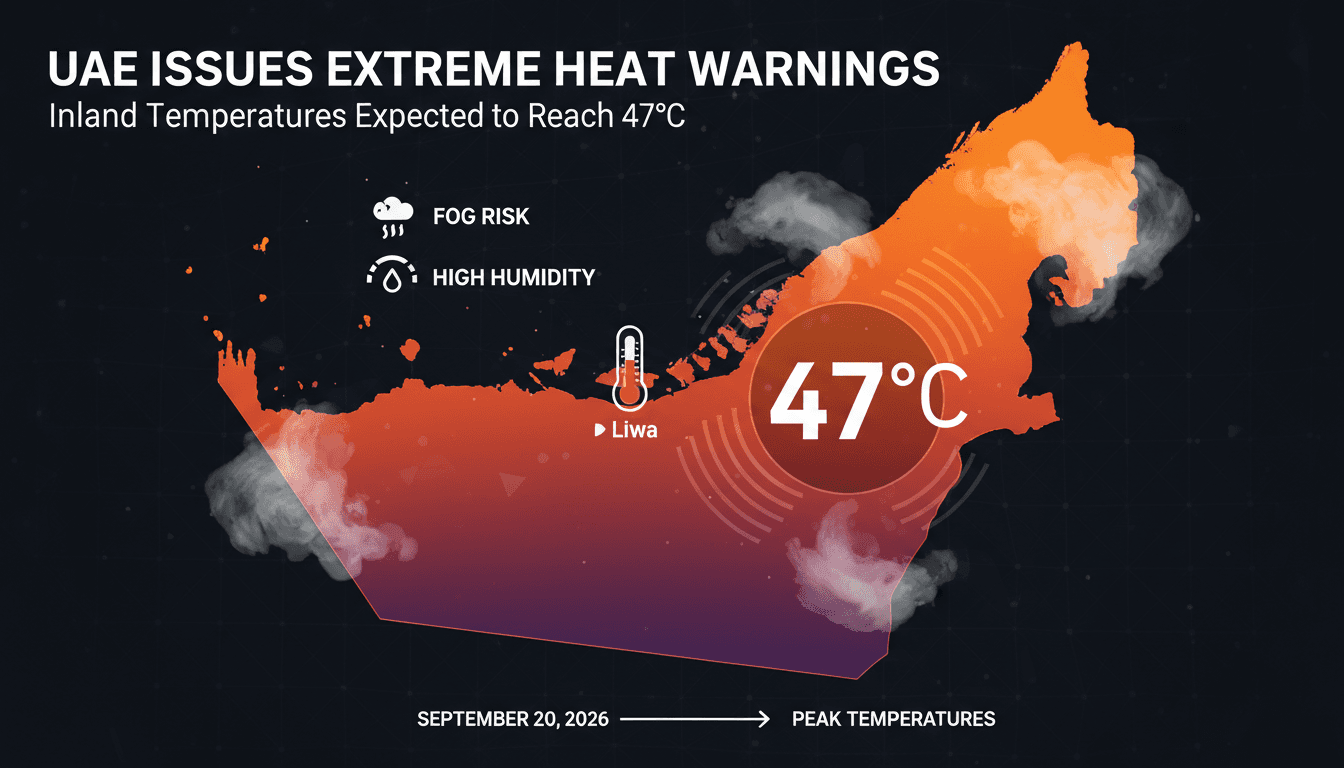
- UAE temperatures are set to peak at 47°C on September 21, 2026, particularly in Liwa.
- High humidity levels are expected to reach 90% in western areas, increasing fog risks.
- The National Centre of Meteorology (NCM) has issued warnings for residents and visitors to stay hydrated and avoid peak sun exposure.
The context you actually need
- The UAE's climate is characterized by prolonged high temperatures during late summer due to its subtropical desert environment.
- Atmospheric patterns, including southeasterly winds and moisture from the Arabian Gulf, contribute to overnight humidity and fog formation.
- Daily advisories from the NCM emphasize the importance of hydration and caution regarding reduced visibility from fog.
What's really happening
The UAE's forecast of extreme temperatures is a result of its unique climatic conditions, particularly during the late summer months. The subtropical desert climate allows for intense solar heating, leading to prolonged periods of high temperatures. On September 21, 2026, Liwa is projected to reach a staggering 47°C, with Al Ain at 45°C, Abu Dhabi at 44°C, and Dubai at 42°C. This temperature spike is not just a number; it reflects a broader trend of increasing heat intensity in the region.
The atmospheric conditions that lead to these high temperatures are influenced by several factors. The southeasterly winds bring moisture from the Arabian Gulf, which, combined with clear skies and low precipitation, creates an environment ripe for heat retention. As the sun sets, the accumulated heat does not dissipate quickly, leading to elevated overnight temperatures and high humidity levels. This moisture buildup can result in fog and mist, particularly in coastal and western areas, which poses visibility challenges for residents and travelers alike.
The NCM's warnings are crucial for public safety, advising residents to stay hydrated and avoid outdoor activities during peak heat hours. The expected maximum humidity levels of 90% in western areas will exacerbate the discomfort caused by the heat, making it essential for individuals to take precautions. The energy demand for cooling systems is likely to remain elevated, consistent with seasonal norms, as residents turn to air conditioning to cope with the oppressive heat.
This weather pattern is not an isolated event; it reflects a larger trend of climate variability that could have long-term implications for the region. As temperatures rise, the strain on energy resources and public health systems may increase, necessitating adaptive measures from both individuals and authorities.
Who feels it first (and how)
- Residents in Liwa and Al Ain: Most directly affected by extreme temperatures and humidity.
- Outdoor workers: Increased risk of heat-related illnesses due to prolonged exposure.
- Tourists and visitors: Potential disruptions to travel plans and outdoor activities due to fog and heat advisories.
What to watch next
- Energy consumption levels: Monitor how demand for cooling systems fluctuates during this period, as it could indicate strain on resources.
- Public health advisories: Keep an eye on updates from the NCM regarding health risks associated with extreme heat and humidity.
- Fog formation incidents: Watch for reports on visibility issues, particularly in coastal areas, which could impact transportation.
Temperatures will peak at 47°C in Liwa on September 21, 2026.
Increased energy demand for cooling systems and heightened public health advisories.
The long-term implications of this weather pattern on climate policy and infrastructure in the UAE.
Frequently Asked Questions
- Why it matters?
- The forecasted temperatures and humidity levels could strain energy resources and affect daily life across the UAE.
- What happened (in 30 seconds)?
- UAE temperatures are set to peak at 47°C on September 21, 2026, particularly in Liwa. High humidity levels are expected to reach 90% in western areas, increasing fog risks. The National Centre of Meteorology (NCM) has issued warnings for residents and visitors to stay hydrated and avoid peak sun exposure.
- What's really happening?
- The UAE's forecast of extreme temperatures is a result of its unique climatic conditions, particularly during the late summer months. The subtropical desert climate allows for intense solar heating, leading to prolonged periods of high temperatures. On September 21, 2026, Liwa is projected to reach a staggering 47°C, with Al Ain at 45°C, Abu Dhabi at 44°C, and Dubai at 42°C. This temperature spike is not just a number; it reflects a broader trend of increasing heat intensity in the region. The
- Who feels it first (and how)?
- Residents in Liwa and Al Ain: Most directly affected by extreme temperatures and humidity. Outdoor workers: Increased risk of heat-related illnesses due to prolonged exposure. Tourists and visitors: Potential disruptions to travel plans and outdoor activities due to fog and heat advisories.
- What to watch next?
- Energy consumption levels: Monitor how demand for cooling systems fluctuates during this period, as it could indicate strain on resources. Public health advisories: Keep an eye on updates from the NCM regarding health risks associated with extreme heat and humidity. Fog formation incidents: Watch for reports on visibility issues, particularly in coastal areas, which could impact transportation.
UAE-based newspaper covering Gulf politics, society, and international developments.
"Gulf News is one of the UAE’s most prominent English-language publications."
— A47 Editor
UAE weather: Temperatures to hit 47°C as fog risk lingers into next week
The United Arab Emirates is bracing for extreme weather conditions, with temperatures projected to reach 47°C and persistent fog expected into the following week. The National Centre of Meteorology has issued warnings regarding these high temperature...
A curated Gulf News feed featuring major stories across news, business, opinion, and lifestyle.
"Gulf News is a major UAE newspaper whose featured stories feed reflects a broad editorial mix shaped for a Gulf audience."
— A47 Editor
UAE weather: Temperatures to hit 47°C as fog risk lingers into next week
The United Arab Emirates is bracing for extreme weather conditions, with temperatures projected to reach 47°C and persistent fog expected into the following week. The National Centre of Meteorology has issued warnings regarding these high temperature...
UAE-based newspaper covering Gulf politics, society, and international developments.
"Gulf News is one of the UAE’s most prominent English-language publications."
— A47 Editor
UAE weather: Fair to partly cloudy weather on Saturday
The United Arab Emirates is expected to experience fair to partly cloudy weather on Saturday, with temperatures in Abu Dhabi projected to reach 41ºC. The National Centre of Meteorology (NCM) has issued forecasts indicating a stable weather pattern fo...
English-language coverage focused on UAE news, government updates, and domestic affairs.
"Emirates 24|7 reflects a mainstream UAE editorial perspective with strong emphasis on official and domestic developments."
— A47 Editor
UAE weekend weather: Hot, humid and foggy; mountains and beaches offer cool relief
The United Arab Emirates is experiencing hot and humid weather this weekend, with temperatures expected to reach the low- to mid-40s Celsius. The National Centre of Meteorology (NCM) has issued warnings for high humidity levels, peaking at 90% along ...
UAE-based newspaper covering Gulf politics, society, and international developments.
"Gulf News is one of the UAE’s most prominent English-language publications."
— A47 Editor
UAE weather: Temperatures to reach 44°C on Friday, with fog risk overnight
The United Arab Emirates is set to experience high temperatures reaching 44°C on Friday, with an overnight risk of fog. The National Centre of Meteorology has issued warnings regarding these extreme weather conditions, which are typical for this time...
A curated Gulf News feed featuring major stories across news, business, opinion, and lifestyle.
"Gulf News is a major UAE newspaper whose featured stories feed reflects a broad editorial mix shaped for a Gulf audience."
— A47 Editor
UAE weather: Temperatures to reach 44°C on Friday, with fog risk overnight
The United Arab Emirates is set to experience high temperatures reaching 44°C on Friday, with an overnight risk of fog. The National Centre of Meteorology has issued warnings regarding these extreme weather conditions, which are typical for this time...