
Severe thunderstorms cause flooding in eastern Spain as Typhoon Dujuan approaches Japan
Why it matters
The simultaneous occurrence of severe weather events in Spain and Japan highlights the interconnectedness of global climate systems and their implications for safety and infrastructure.
What happened (in 30 seconds)
- Severe thunderstorms hit eastern Spain on September 16-17, causing deadly flooding in Barcelona and Valencia.
- Tropical Storm Dujuan intensified in the Pacific, approaching Japan with forecasts of becoming a category 1 typhoon.
- Emergency responses were activated in both regions, with Spain recovering from flooding and Japan preparing for heavy rain and landslides.
The context you actually need
- Eastern Spain faces heightened flood risks in autumn due to warm Mediterranean waters, which fuel thunderstorms.
- The 2026 Pacific typhoon season has been notably active, with multiple systems impacting Japan earlier in the year.
- Record sea temperatures in the Mediterranean are contributing to more intense weather events, raising concerns about future climate patterns.
What's really happening
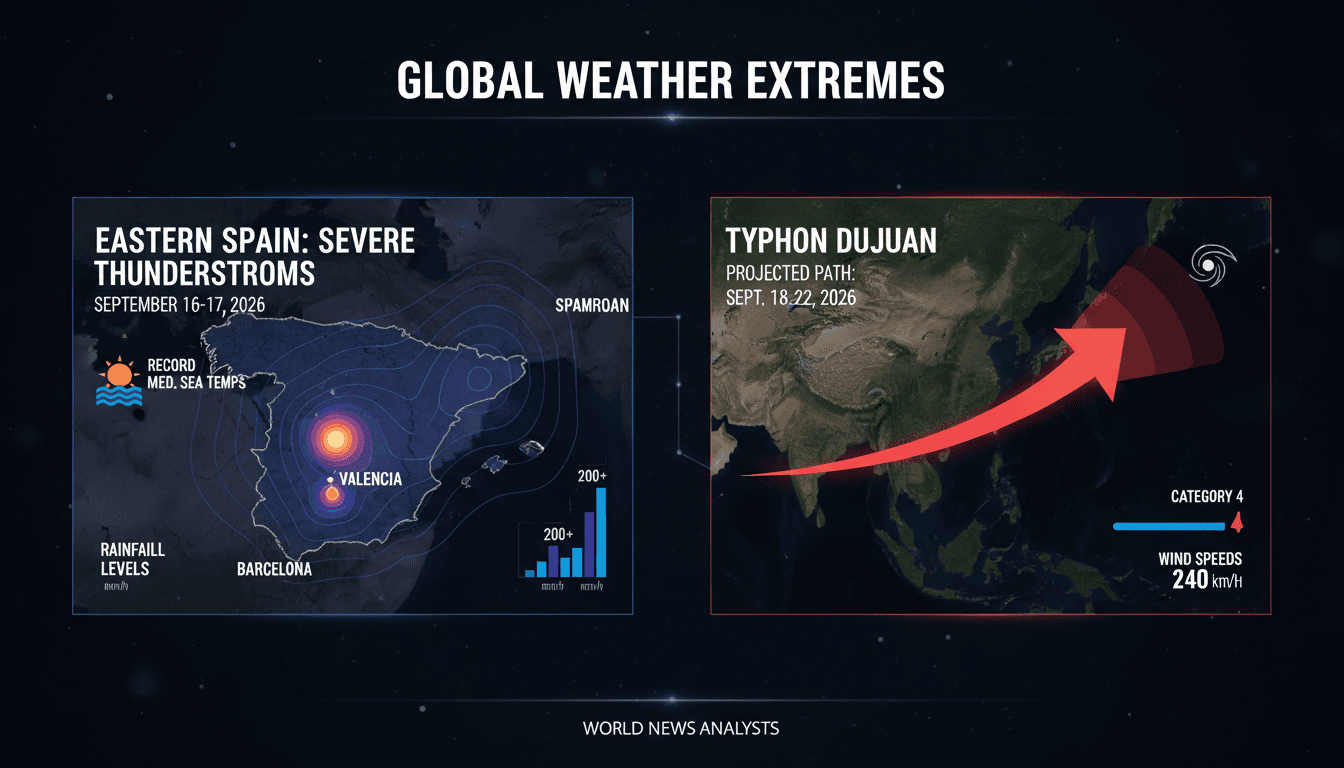
On September 16, 2026, severe thunderstorms developed over Castilla-La Mancha, moving toward Spain's eastern coast. These storms stalled overnight, unleashing torrential rain that exceeded 100mm in just a few hours near Barcelona and 70mm in 30 minutes. The flooding resulted in submerged roads and vehicles, canceled flights, and even postponed a La Liga match in Valencia. Tragically, a man's body was recovered near Olivella after his car was swept away by floodwaters.
Simultaneously, Tropical Storm Dujuan formed in the western Pacific, intensifying as it approached Japan. Forecasts indicated that it could reach category 1 typhoon strength by September 18-19, tracking toward the southeast coast and the Kanto region, which includes Tokyo. By September 19-20, the Japan Meteorological Agency (JMA) issued warnings for heavy rainfall of up to 300mm, strong winds, and potential landslides as the storm neared.
These weather events are not isolated incidents but part of a broader trend linked to climate change. The Mediterranean region has seen record sea temperatures, which provide the necessary moisture and energy for thunderstorms. This phenomenon has been observed in previous years, such as the devastating 2024 Valencia floods that resulted in over 200 fatalities. The current situation underscores the increasing frequency and intensity of severe weather events, which are becoming more common as global temperatures rise.
In Japan, the JMA and local governments took proactive measures by issuing evacuation advisories and suspending some train services. This is particularly critical as the storm coincides with the Silver Week holiday period, a time when many travel for leisure, potentially disrupting events like the Asian Games in Nagoya. The economic implications of such weather events can be significant, affecting tourism, local businesses, and infrastructure.
Who feels it first (and how)
- Local residents in affected areas face immediate risks to safety and property.
- Emergency responders are mobilized to conduct rescues and recovery efforts.
- Travelers in Spain and Japan may experience disruptions in flights and transportation services.
- Businesses in tourism and local economies may suffer losses due to cancellations and infrastructure damage.
What to watch next
- Recovery efforts in Spain: Monitor how quickly infrastructure is restored and if there are any long-term impacts on local economies.
- Typhoon Dujuan's path: Keep an eye on the storm's trajectory and intensity as it approaches Japan, as this will affect safety measures and travel plans.
- Climate data trends: Watch for updates on Mediterranean sea temperatures and Pacific typhoon activity, as these will indicate future weather patterns.
Severe thunderstorms caused flooding in eastern Spain, resulting in at least one fatality.
Typhoon Dujuan will impact Japan with heavy rain and potential landslides, affecting travel and local events.
The long-term economic impacts of these weather events on local businesses and infrastructure recovery.
Frequently Asked Questions
- Why it matters?
- The simultaneous occurrence of severe weather events in Spain and Japan highlights the interconnectedness of global climate systems and their implications for safety and infrastructure.
- What happened (in 30 seconds)?
- Severe thunderstorms hit eastern Spain on September 16-17, causing deadly flooding in Barcelona and Valencia. Tropical Storm Dujuan intensified in the Pacific, approaching Japan with forecasts of becoming a category 1 typhoon. Emergency responses were activated in both regions, with Spain recovering from flooding and Japan preparing for heavy rain and landslides.
- What's really happening?
- On September 16, 2026, severe thunderstorms developed over Castilla-La Mancha, moving toward Spain's eastern coast. These storms stalled overnight, unleashing torrential rain that exceeded 100mm in just a few hours near Barcelona and 70mm in 30 minutes. The flooding resulted in submerged roads and vehicles, canceled flights, and even postponed a La Liga match in Valencia. Tragically, a man's body was recovered near Olivella after his car was swept away by floodwaters. Simultaneously, Tropical S
- Who feels it first (and how)?
- Local residents in affected areas face immediate risks to safety and property. Emergency responders are mobilized to conduct rescues and recovery efforts. Travelers in Spain and Japan may experience disruptions in flights and transportation services. Businesses in tourism and local economies may suffer losses due to cancellations and infrastructure damage.
- What to watch next?
- Recovery efforts in Spain: Monitor how quickly infrastructure is restored and if there are any long-term impacts on local economies. Typhoon Dujuan's path: Keep an eye on the storm's trajectory and intensity as it approaches Japan, as this will affect safety measures and travel plans. Climate data trends: Watch for updates on Mediterranean sea temperatures and Pacific typhoon activity, as these will indicate future weather patterns.
International coverage from The Guardian's global desks.
"The Guardian is known for its progressive editorial stance and in-depth analysis."
— A47 Editor
Weather tracker: Thunderstorms hit Spain as Japan braces for typhoon
Intense thunderstorms have struck eastern Spain, particularly affecting Barcelona and Valencia, leading to severe flooding and at least one confirmed death. The storms, which began in Castilla-La Mancha, brought torrential rain, strong winds, and lar...
24/7 international news from a French perspective in multiple languages.
"France 24 is viewed as a globally focused outlet with balanced coverage and a European perspective."
— A47 Editor
Spain: Images of floods after torrential rain
Torrential rain in eastern Spain has led to severe flooding, resulting in at least one confirmed death and significant disruption to infrastructure, including submerged streets and flooded metro stations. The extreme weather has raised concerns about...
International coverage of politics, culture, and current affairs.
"BBC News is widely regarded as a reputable international news organization, known for its impartial tone and public service mandate."
— A47 Editor
One dead after torrential rain and flash floods hit Barcelona region
Torrential rain and flash floods have struck the Barcelona region, resulting in one confirmed death and widespread disruption across Valencia and Catalonia. The severe weather has led to significant flooding, impacting local infrastructure and commun...