
US Proposes $10 Billion Fund for Gulf Energy Infrastructure Reconstruction
Why it matters
The proposed fund aims to stabilize energy infrastructure in a region critical to global oil and gas supplies, impacting energy prices and security.
What happened (in 30 seconds)
- The US proposed a $10 billion fund to support reconstruction of energy infrastructure damaged during the recent Iran conflict.
- The fund, named PACT, seeks $5 billion from the US and matching funds from eight regional partners, including Saudi Arabia and the UAE.
- Discussions are ongoing, with skepticism from regional officials about the feasibility without a peace agreement with Iran.
The context you actually need
- The conflict disrupted shipping through the Strait of Hormuz, affecting about 20% of global oil and gas supplies and elevating tanker rates to record levels.
- Repair costs are estimated in the tens of billions, with some analyses projecting up to $58 billion for energy-related repairs alone.
- The initiative reflects a strategic shift to reduce dependence on the Strait of Hormuz, which has been a focal point for geopolitical tensions.
What's really happening
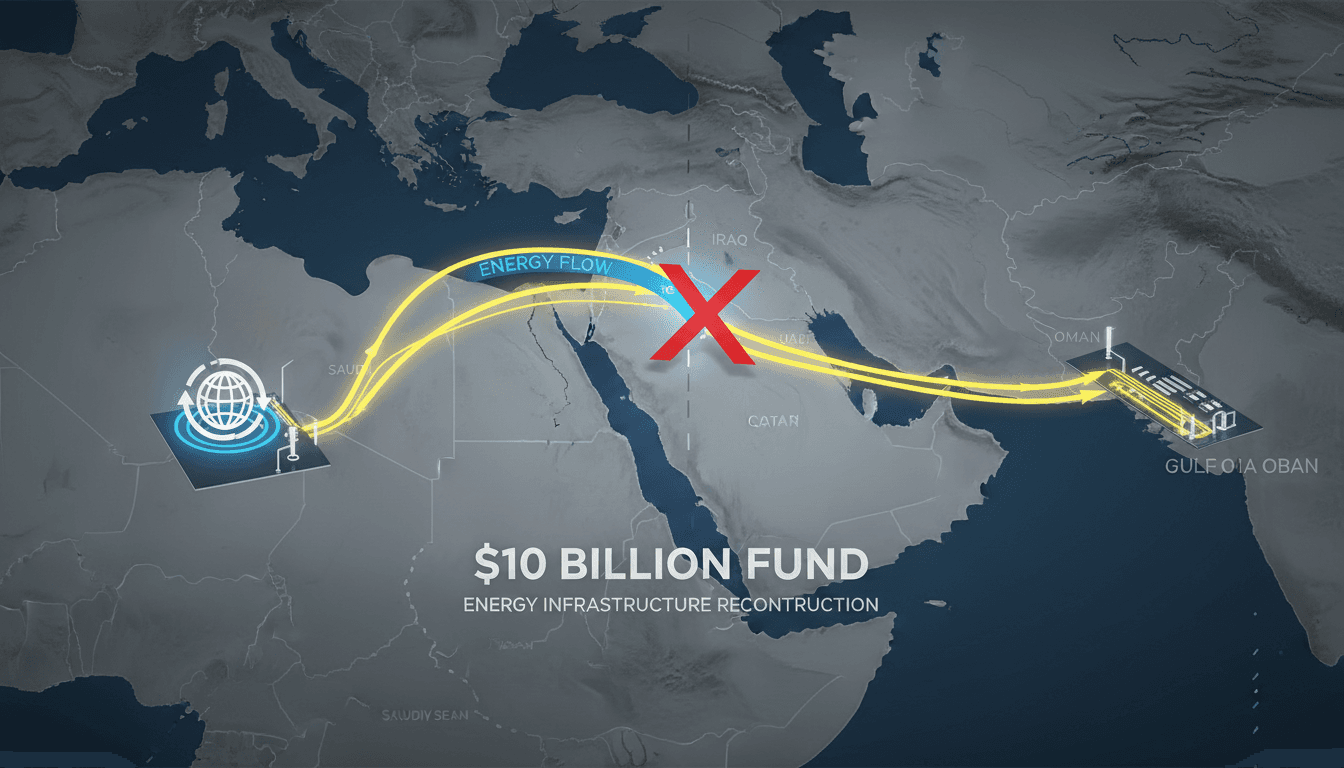
On September 21, 2026, the Trump administration unveiled a proposal for the Partnership for Allied Trust and Construction (PACT), a $10 billion multilateral fund aimed at reconstructing energy infrastructure in the Gulf region. This initiative comes in the wake of a seven-month armed conflict between Iran and a US-led coalition, which resulted in significant damage to energy facilities across Gulf states. The US plans to contribute $5 billion, while seeking an equal amount from regional partners, including Saudi Arabia, the UAE, Qatar, and others.
The fund's primary goal is to repair pipelines, refineries, and terminals that were targeted during the conflict, while also developing alternative export routes to lessen reliance on the strategically vital Strait of Hormuz. This strait is crucial for global energy supplies, and disruptions there can lead to significant fluctuations in oil prices worldwide. The ongoing discussions about the fund are still in preliminary stages, with many details yet to be finalized, including the participation of all proposed partners.
Regional officials have expressed skepticism about the initiative, viewing it as potentially premature without a comprehensive peace agreement with Iran. They caution that reconstruction efforts could be vulnerable to renewed attacks, which would undermine the fund's objectives. Analysts have pointed out that larger producers in the region may have more options for bypassing the Strait, while smaller states could face greater risks and challenges.
The proposal reflects a broader strategy by the US to project unity among Gulf states against Iranian influence while addressing the urgent need for infrastructure repair. However, the lack of a peace agreement raises questions about the sustainability of such investments. The potential for future conflicts could deter investment and complicate logistics in the region, impacting energy markets and supply chains.
Who feels it first (and how)
- Energy producers in the Gulf, who may face increased operational costs and logistical challenges.
- Logistics and shipping companies that rely on stable routes through the Strait of Hormuz.
- Investors and stakeholders in energy markets, who will be affected by fluctuations in oil prices and supply chain disruptions.
- Local economies in Gulf states, particularly those dependent on energy exports, which may experience volatility in employment and economic stability.
What to watch next
- Participation confirmations from regional partners: Their commitment will indicate the fund's viability and potential impact on energy infrastructure.
- Market reactions to tanker rates: Continued high rates could signal ongoing instability in the region, affecting global energy prices.
- Developments in US-Iran relations: Any progress toward a peace agreement could influence the fund's implementation and the overall security landscape in the Gulf.
The US has proposed a $10 billion fund for Gulf energy infrastructure reconstruction.
Regional partners will express varying levels of commitment based on their geopolitical interests and security concerns.
The long-term effectiveness of the fund without a peace agreement with Iran and the potential for renewed conflict.
Frequently Asked Questions
- Why it matters?
- The proposed fund aims to stabilize energy infrastructure in a region critical to global oil and gas supplies, impacting energy prices and security.
- What happened (in 30 seconds)?
- The US proposed a $10 billion fund to support reconstruction of energy infrastructure damaged during the recent Iran conflict. The fund, named PACT, seeks $5 billion from the US and matching funds from eight regional partners, including Saudi Arabia and the UAE. Discussions are ongoing, with skepticism from regional officials about the feasibility without a peace agreement with Iran.
- What's really happening?
- On September 21, 2026, the Trump administration unveiled a proposal for the Partnership for Allied Trust and Construction (PACT), a $10 billion multilateral fund aimed at reconstructing energy infrastructure in the Gulf region. This initiative comes in the wake of a seven-month armed conflict between Iran and a US-led coalition, which resulted in significant damage to energy facilities across Gulf states. The US plans to contribute $5 billion, while seeking an equal amount from regional partners
- Who feels it first (and how)?
- Energy producers in the Gulf, who may face increased operational costs and logistical challenges. Logistics and shipping companies that rely on stable routes through the Strait of Hormuz. Investors and stakeholders in energy markets, who will be affected by fluctuations in oil prices and supply chain disruptions. Local economies in Gulf states, particularly those dependent on energy exports, which may experience volatility in employment and economic stability.
- What to watch next?
- Participation confirmations from regional partners: Their commitment will indicate the fund's viability and potential impact on energy infrastructure. Market reactions to tanker rates: Continued high rates could signal ongoing instability in the region, affecting global energy prices. Developments in US-Iran relations: Any progress toward a peace agreement could influence the fund's implementation and the overall security landscape in the Gulf.
English-language news from Qatar covering domestic and regional affairs.
"Gulf Times reflects Qatari perspectives on regional developments."
— A47 Editor
Damaged Gulf sites: US eyes $10bn fund
The Trump administration has proposed a $10 billion fund aimed at assisting Middle Eastern countries in rebuilding energy infrastructure that has been damaged due to the ongoing conflict with Iran, while also seeking to reduce reliance on the strateg...
Macro commentary, policy analysis, growth/inflation themes, and global outlooks.
"Contextual macro coverage that complements day-to-day market headlines."
— A47 Editor
Trump proposes $5 billion fund for Mideast energy infrastructure - WSJ
Former President Donald Trump has proposed a $5 billion fund aimed at enhancing energy infrastructure in the Middle East, as reported by the Wall Street Journal. This initiative is part of Trump's broader strategy to address energy supply challenges ...
Global political, business, and cultural coverage from WSJ international desks.
"The Wall Street Journal offers extensive international reporting with a reputation for financial insight and a center-right editorial stance."
— A47 Editor
U.S. Proposes $5 Billion to Kickstart Fund to Rebuild Gulf Energy Sites
The U.S. has proposed a $5 billion initiative aimed at establishing a fund to rebuild energy sites in the Gulf region, engaging in discussions with several Middle Eastern nations, including Saudi Arabia and the U.A.E. This proposal reflects a strateg...