
Ukraine and Russia escalate long-range drone warfare amid ongoing conflict
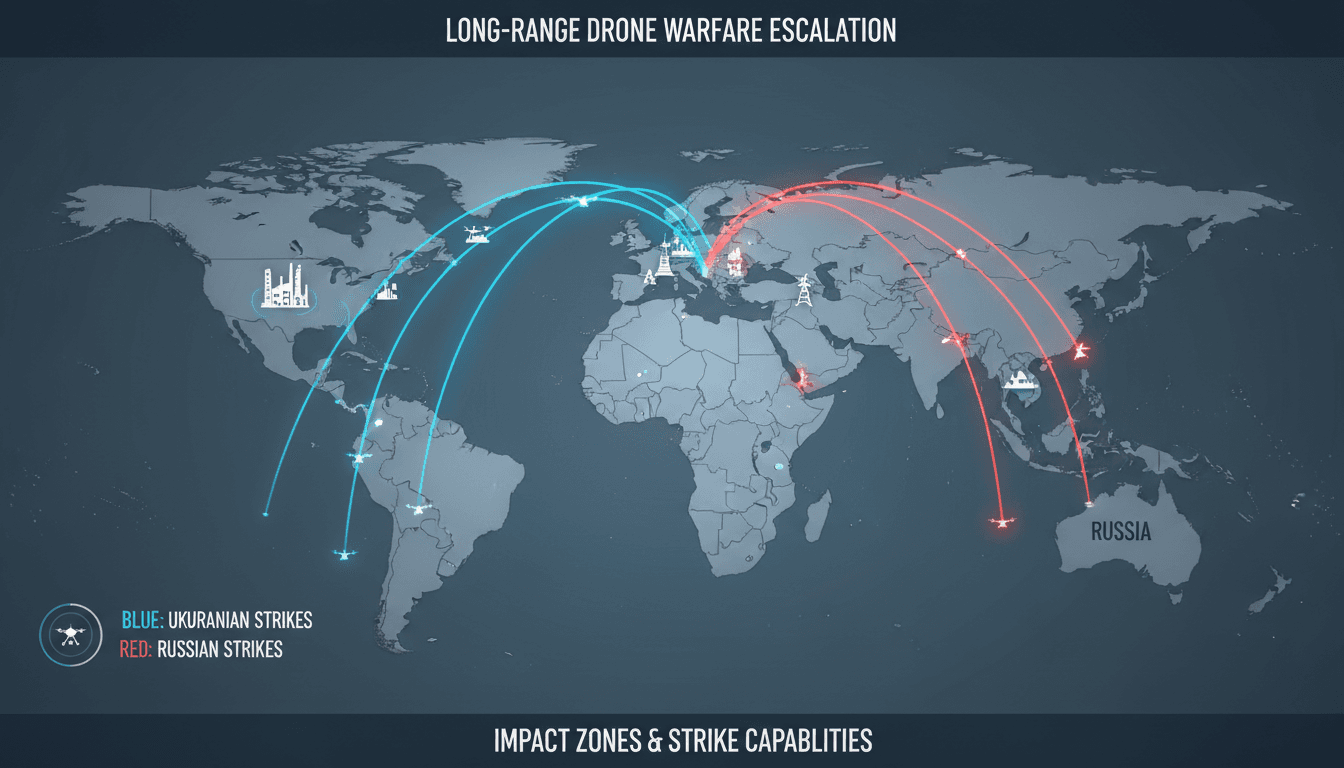
Why it matters
The intensifying drone conflict is reshaping military strategies and economic pressures, impacting global energy markets.
What happened (in 30 seconds)
- The drone war escalated: Ukraine and Russia have rapidly advanced their long-range drone capabilities, targeting infrastructure deep within each other's territories.
- Ukraine's strategic strikes: Ukrainian forces are using FP-1 and FP-2 drones to hit targets up to 1,800 miles inside Russia, disrupting logistics and energy production.
- Russia's countermeasures: Russia has deployed upgraded Geran-4 and Geran-5 drones, enhancing their attack speed and effectiveness against Ukrainian targets.
The context you actually need
- Shift from conventional warfare: The conflict has evolved from traditional ground battles to a focus on drone warfare, reflecting a significant change in military tactics.
- Economic implications: Both nations are targeting each other's economic infrastructure to weaken war-sustaining capabilities, leading to rising civilian casualties and economic strain.
- Stalemated ground war: With neither side achieving a decisive victory, both are resorting to long-range strikes to impose costs on the opponent.
What's really happening
The Ukraine-Russia conflict, which began with Russia's full-scale invasion in February 2022, has transformed into a high-stakes drone arms race. As both nations grapple with a stalemated ground war, they have turned to long-range drone capabilities to disrupt each other's military and economic infrastructure.
Ukraine's specialized units, particularly the 413 Raid regiment, have made significant strides in deploying FP-1 and FP-2 drones, capable of striking targets deep within Russian territory. These strikes have targeted critical infrastructure, including refineries and warehouses, leading to a reported 7.7% decline in Russia's crude oil production over the past year. This economic pressure is part of Ukraine's strategy to degrade Russia's war-sustaining capabilities while compensating for limited Western missile supplies.
In response, Russia has upgraded its drone arsenal with the Geran-4 and Geran-5 jet drones, which can reach speeds of up to 600 km/h. This enhancement has allowed Russia to launch faster and more effective attacks on Ukrainian energy and urban centers, including strikes on Kyiv that have resulted in civilian casualties and infrastructure damage. The conflict has seen a shift towards coordinated drone attacks, with Ukraine employing hundreds of drones in a single operation, contrasting with Russia's focus on volume and speed.
The implications of this drone arms race extend beyond the battlefield. As both nations prioritize deep strikes, the potential for increased civilian casualties and economic disruption rises. Ukrainian officials emphasize the importance of sustaining economic pressure on Russia, while Russian forces have bolstered their air defenses and jamming capabilities. The ongoing conflict has led to rising civilian casualties, with over 2,200 reported deaths in Ukraine in the first eight months of 2026.
As the drone warfare escalates, the global community must consider the broader implications for energy markets and geopolitical stability. The ongoing volatility in Russian oil production could have ripple effects on global energy prices, impacting economies far beyond the immediate conflict zone.
Who feels it first (and how)
- Energy sector professionals: Fluctuations in global oil prices due to reduced Russian production could impact jobs and investments.
- Civilians in Ukraine and Russia: Increased drone strikes lead to civilian casualties and infrastructure damage, affecting daily life and safety.
- Global markets: Investors and businesses reliant on stable energy prices may face uncertainty and volatility.
What to watch next
- Ukrainian drone capabilities: Monitor advancements in Ukraine's drone technology and their impact on the conflict's dynamics.
- Russian energy production: Watch for changes in Russian oil output and how they affect global energy prices.
- Civilian impact: Keep an eye on civilian casualties and humanitarian responses as the conflict escalates.
Both Ukraine and Russia are investing heavily in drone technology to gain a strategic advantage.
The conflict will continue to escalate, with increased civilian casualties and economic disruption.
The long-term effects on global energy markets and geopolitical stability remain uncertain.
Frequently Asked Questions
- Why it matters?
- The intensifying drone conflict is reshaping military strategies and economic pressures, impacting global energy markets.
- What happened (in 30 seconds)?
- The drone war escalated: Ukraine and Russia have rapidly advanced their long-range drone capabilities, targeting infrastructure deep within each other's territories. Ukraine's strategic strikes: Ukrainian forces are using FP-1 and FP-2 drones to hit targets up to 1,800 miles inside Russia, disrupting logistics and energy production. Russia's countermeasures: Russia has deployed upgraded Geran-4 and Geran-5 drones, enhancing their attack speed and effectiveness against Ukrainian targets.
- What's really happening?
- The Ukraine-Russia conflict, which began with Russia's full-scale invasion in February 2022, has transformed into a high-stakes drone arms race. As both nations grapple with a stalemated ground war, they have turned to long-range drone capabilities to disrupt each other's military and economic infrastructure. Ukraine's specialized units, particularly the 413 Raid regiment, have made significant strides in deploying FP-1 and FP-2 drones, capable of striking targets deep within Russian territory
- Who feels it first (and how)?
- Energy sector professionals: Fluctuations in global oil prices due to reduced Russian production could impact jobs and investments. Civilians in Ukraine and Russia: Increased drone strikes lead to civilian casualties and infrastructure damage, affecting daily life and safety. Global markets: Investors and businesses reliant on stable energy prices may face uncertainty and volatility.
- What to watch next?
- Ukrainian drone capabilities: Monitor advancements in Ukraine's drone technology and their impact on the conflict's dynamics. Russian energy production: Watch for changes in Russian oil output and how they affect global energy prices. Civilian impact: Keep an eye on civilian casualties and humanitarian responses as the conflict escalates.
Top international stories selected by The Guardian editors.
"The Guardian is known for its progressive editorial stance and in-depth analysis."
— A47 Editor
The long-range drone war: Ukraine and Russia scramble for supremacy in the skies
The ongoing conflict between Ukraine and Russia has evolved into a drone war, with Ukraine deploying advanced Fire Point FP-2 drones for attacks on occupied territories, including Luhansk. These drones, equipped with significant explosive payloads, r...
Domestic Russian news, politics, and society.
"RT is widely criticized for promoting pro-Kremlin narratives and is considered by many to be a state propaganda outlet."
— A47 Editor
Russia downs nearly 200 Ukrainian drones over single region
Russia has successfully intercepted 193 Ukrainian drones over the Kursk Region during a 24-hour period of heightened aerial attacks, resulting in one civilian fatality and three injuries. This incident underscores the ongoing conflict between the two...
Academic-led explainers and analysis on AI topics.
"Scholarly perspectives written for general audiences."
— A47 Editor
Russia-Ukraine war is accelerating the dangerous race toward fully autonomous drones
The ongoing Russia-Ukraine war has intensified the development and deployment of fully autonomous drones, which can operate independently of communication links, making them less vulnerable to jamming. This shift raises significant ethical concerns r...