
UAE Hosts Global Leaders to Tackle Water Investment Gap Ahead of UN Conference
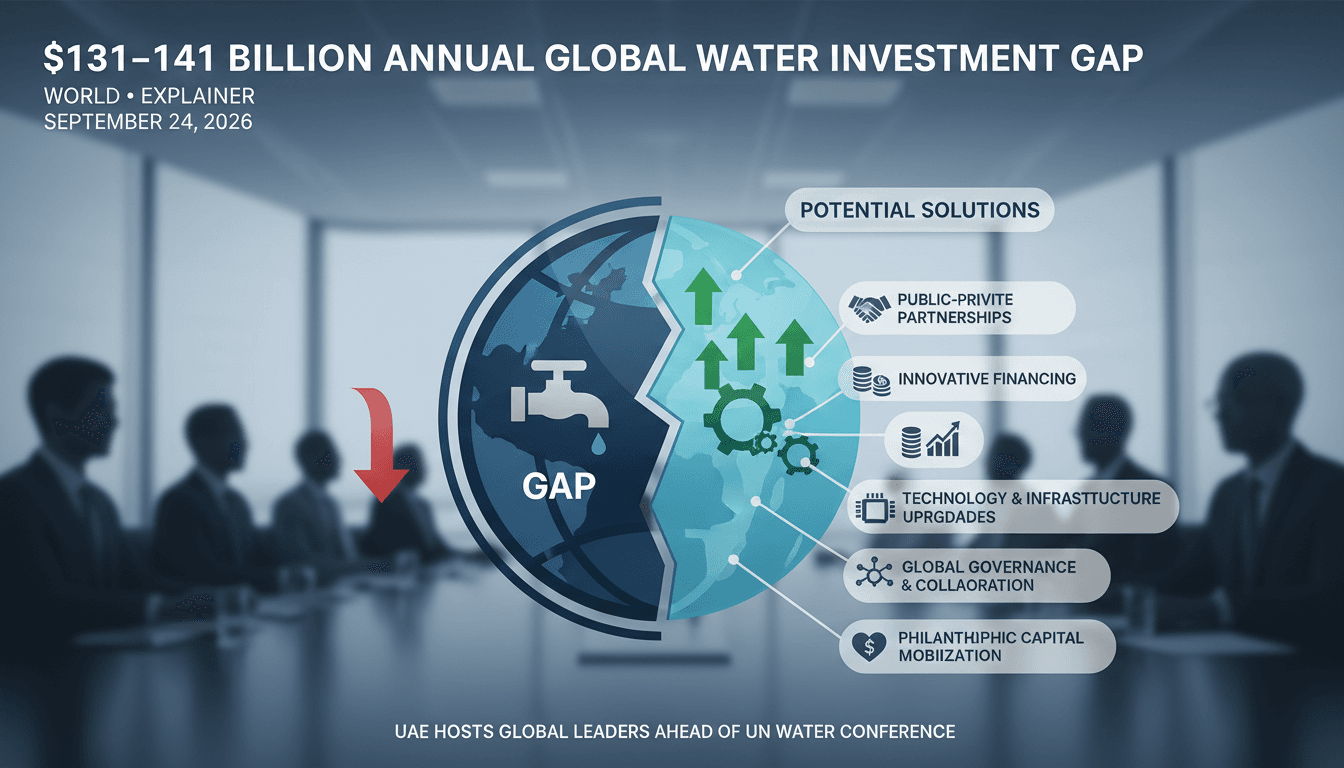
Why it matters
The global water investment gap is a critical barrier to achieving universal access to water and sanitation, impacting economic growth and sustainability.
What happened (in 30 seconds)
- UAE convened approximately 50 global business and philanthropy leaders in New York for a roundtable on water investments.
- Key discussions focused on transitioning water project concepts into investable initiatives to address a $131–141 billion annual funding gap.
- Preparatory step for the December 2026 UN Water Conference, emphasizing the need for innovative financing solutions.
The context you actually need
- Water scarcity affects 2.1 billion people globally, with 3.4 billion lacking adequate sanitation, highlighting the urgency for investment.
- The UAE's leadership in this space is significant, being the first Global South nation to co-host a UN Water Conference, alongside Senegal.
- Prior engagements include partnerships with the World Economic Forum and initiatives like the Mohamed bin Zayed Water Initiative, showcasing a commitment to sustainable water solutions.
What's really happening
The September 24, 2026, roundtable at the UAE Permanent Mission to the UN was a strategic gathering aimed at addressing the pressing global water investment gap. With an estimated annual shortfall of $131–141 billion needed to achieve universal water and sanitation access, the stakes are high. The UAE, under the leadership of Special Envoy Badr Jafar and Assistant Minister Abdulla Balalaa, is positioning itself as a pivotal player in mobilizing both private and philanthropic capital for water projects.
The discussions, moderated by Tania Strauss from the World Economic Forum, were held under the Chatham House Rule, allowing for candid dialogue among participants. Key topics included the need for improved project preparation, risk allocation, and the deployment of blended finance mechanisms. These elements are crucial for transforming innovative water solutions into viable investment opportunities. The roundtable highlighted the importance of offtake guarantees, local-currency financing, and de-risking tools, which are essential for attracting private investment.
Moreover, the emphasis on technology deployment—such as efficient desalination, digital monitoring, and water reuse—underscores the UAE's commitment to leveraging innovation in addressing water scarcity. Water is increasingly recognized as foundational infrastructure for various sectors, including AI data centers, energy transitions, and urban resilience. The UAE's strategic focus on water aligns with its broader economic diversification goals, particularly as demand for water resources grows due to population increases and the expansion of data centers.
This event serves as a precursor to the December 2026 UN Water Conference in Abu Dhabi, reinforcing the UAE's diplomatic leadership in global water governance. The momentum generated by this roundtable is expected to catalyze further public-private-philanthropic partnerships, essential for closing the investment gap and ensuring sustainable water access for all.
Who feels it first (and how)
- Water technology companies: Increased opportunities for funding and partnerships.
- Investors: New avenues for impact investing in sustainable water projects.
- Philanthropy leaders: Enhanced collaboration potential with businesses and governments.
- Governments in water-scarce regions: Potential access to innovative financing solutions and technologies.
- Urban planners: Insights into sustainable water management practices for urban development.
What to watch next
- December 2026 UN Water Conference: Watch for announcements on new funding initiatives and partnerships that emerge from this high-profile event.
- Investment trends in water technology: Monitor shifts in private investment flows towards water-related projects, especially in emerging markets.
- Policy changes: Look for potential regulatory adjustments that may facilitate blended finance mechanisms and project preparation in the water sector.
The global water investment gap is significant, requiring urgent attention and innovative financing solutions.
Increased collaboration between public, private, and philanthropic sectors to address water scarcity.
The specific outcomes and commitments that will arise from the December 2026 UN Water Conference.
Frequently Asked Questions
- Why it matters?
- The global water investment gap is a critical barrier to achieving universal access to water and sanitation, impacting economic growth and sustainability.
- What happened (in 30 seconds)?
- UAE convened approximately 50 global business and philanthropy leaders in New York for a roundtable on water investments. Key discussions focused on transitioning water project concepts into investable initiatives to address a $131–141 billion annual funding gap. Preparatory step for the December 2026 UN Water Conference, emphasizing the need for innovative financing solutions.
- What's really happening?
- The September 24, 2026, roundtable at the UAE Permanent Mission to the UN was a strategic gathering aimed at addressing the pressing global water investment gap. With an estimated annual shortfall of $131–141 billion needed to achieve universal water and sanitation access, the stakes are high. The UAE, under the leadership of Special Envoy Badr Jafar and Assistant Minister Abdulla Balalaa, is positioning itself as a pivotal player in mobilizing both private and philanthropic capital for water pr
- Who feels it first (and how)?
- Water technology companies: Increased opportunities for funding and partnerships. Investors: New avenues for impact investing in sustainable water projects. Philanthropy leaders: Enhanced collaboration potential with businesses and governments. Governments in water-scarce regions: Potential access to innovative financing solutions and technologies. Urban planners: Insights into sustainable water management practices for urban development.
- What to watch next?
- December 2026 UN Water Conference: Watch for announcements on new funding initiatives and partnerships that emerge from this high-profile event. Investment trends in water technology: Monitor shifts in private investment flows towards water-related projects, especially in emerging markets. Policy changes: Look for potential regulatory adjustments that may facilitate blended finance mechanisms and project preparation in the water sector.
Arabic-language economic and business reporting with strong UAE market relevance.
"Emarat Al Youm business coverage often centers UAE property, banking, consumer issues, and economic policy."
— A47 Editor
الإمارات تجمع قادة الأعمال والعمل الخيري في نيويورك لبحث سد النقص في التمويل اللازم لحل أزمة المياه الإمارات تجمع قادة الأعمال والعمل الخيري في نيويورك لبحث سد النقص في التمويل اللازم لحل أزمة المياه
Approximately 50 CEOs, investors, and philanthropic leaders gathered at the Permanent Mission of the United Arab Emirates in New York to discuss addressing the funding gap necessary to resolve the water crisis. This meeting highlights the UAE's commi...
English-language digital publication covering business, politics, technology, and current affairs.
"The Arabian Post mixes original and syndicated-style coverage with a broad regional and global business-news orientation."
— A47 Editor
UAE flags $141bn water funding gap amid AI demand
The UAE has highlighted a significant global water financing shortfall of $141 billion annually, which poses a threat to various ambitions, including advancements in artificial intelligence, energy transition, and food security. This warning was made...
English-language digital publication covering business, politics, technology, and current affairs.
"The Arabian Post mixes original and syndicated-style coverage with a broad regional and global business-news orientation."
— A47 Editor
Water financing gap constrains global growth ambitions
Water shortages and chronic underinvestment in water infrastructure are increasingly recognized as significant barriers to global growth, particularly impacting sectors like artificial intelligence, energy, and food production. This concern was highl...