
Swiss glaciers experience significant ice volume loss amid climate crisis
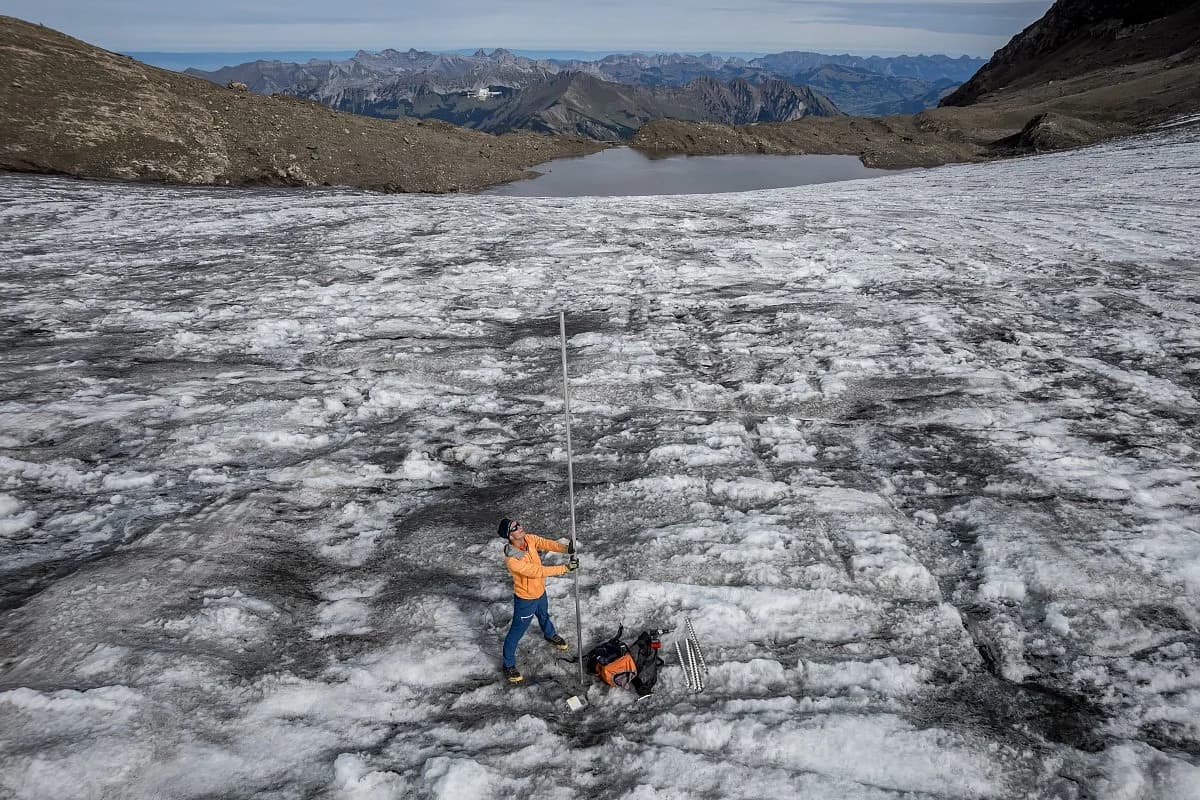
The accelerated melting of Swiss glaciers could impact global sea levels and weather patterns, affecting economies and environments worldwide.
Why it matters
The rapid loss of glacier mass in Switzerland signals a critical shift in climate dynamics that could have far-reaching implications for water resources and global ecosystems.
What happened (in 30 seconds)
- Swiss glaciers lost nearly 20% of their ice volume between 2021 and 2026, with a significant 5.5% loss reported in 2026 alone.
- Record heatwaves and low snowfall contributed to this accelerated melting, marking the second-highest annual loss on record.
- Ongoing monitoring by the GLAMOS network reveals that some smaller glaciers have disappeared permanently, raising alarms about future water resource availability.
The context you actually need
- Historical trends show that Swiss glaciers have been shrinking for decades, with a 10% loss from 1990-2000 and a 27% loss from 2000-2010.
- Recent climate conditions have intensified, with more frequent heatwaves and minimal winter snowfall leading to unprecedented melt rates.
- Meltwater volumes released between July and September 2026 alone reached approximately 2.2 trillion liters, exceeding four times the annual household consumption in Switzerland.
What's really happening
The alarming rate of glacier melt in Switzerland is primarily driven by anthropogenic climate change, which has led to rising global temperatures. The GLAMOS network's recent findings reveal that the average ice thickness of monitored glaciers has decreased by 2.5 to 4 meters, with some areas experiencing reductions of up to 10 meters. This dramatic loss is attributed to a combination of factors, including a winter season with minimal snowfall that left glaciers exposed early in the year, followed by record heatwaves during the summer months.
In 2026, the summer heatwaves were particularly severe, with temperatures soaring well above historical averages. This extreme weather eliminated snow cover even at high altitudes, which typically acts as a protective layer for glaciers. The result was a staggering 5.5% volume loss for the year, just shy of the record set in 2022. Major glaciers such as the Rhône and Aletsch experienced unprecedented melting, underscoring the urgency of the situation.
The implications of this accelerated glacier retreat extend beyond Switzerland. As glaciers melt, they contribute to rising sea levels, which can have devastating effects on coastal communities worldwide. Additionally, the loss of glacial mass threatens freshwater supplies, as many regions rely on meltwater for drinking and irrigation. Swiss researchers have expressed alarm over the potential for water shortages, noting that the volume of meltwater released in recent months could exceed four times the annual household consumption in the country.
Despite the alarming data, there have been no immediate governmental policy announcements to address the crisis. Ongoing monitoring efforts are crucial, as researchers emphasize the long-term risks associated with glacier disappearance. The situation calls for urgent action to mitigate climate change and adapt to its impacts, as the survival of these vital ice formations hangs in the balance.
Who feels it first (and how)
- Local communities in Switzerland relying on glacial meltwater for drinking and agriculture.
- Tourism sectors dependent on winter sports and alpine activities, facing reduced snow cover.
- Global coastal populations affected by rising sea levels due to increased meltwater contributions.
What to watch next
- Future temperature trends: Monitoring how global temperatures evolve will be crucial in predicting further glacier loss.
- Water resource management policies: Watch for potential changes in Swiss water management strategies as the situation develops.
- International climate agreements: The effectiveness of global climate initiatives will be critical in addressing the root causes of glacier melt.
Swiss glaciers have lost nearly 20% of their ice volume from 2021 to 2026.
Continued glacier retreat will exacerbate water resource challenges and contribute to rising sea levels.
The specific long-term impacts on global weather patterns and regional climates remain to be fully understood.
Frequently Asked Questions
- Why it matters?
- The rapid loss of glacier mass in Switzerland signals a critical shift in climate dynamics that could have far-reaching implications for water resources and global ecosystems.
- What happened (in 30 seconds)?
- Swiss glaciers lost nearly 20% of their ice volume between 2021 and 2026, with a significant 5.5% loss reported in 2026 alone. Record heatwaves and low snowfall contributed to this accelerated melting, marking the second-highest annual loss on record. Ongoing monitoring by the GLAMOS network reveals that some smaller glaciers have disappeared permanently, raising alarms about future water resource availability.
- What's really happening?
- The alarming rate of glacier melt in Switzerland is primarily driven by anthropogenic climate change, which has led to rising global temperatures. The GLAMOS network's recent findings reveal that the average ice thickness of monitored glaciers has decreased by 2.5 to 4 meters, with some areas experiencing reductions of up to 10 meters. This dramatic loss is attributed to a combination of factors, including a winter season with minimal snowfall that left glaciers exposed early in the year, follow
- Who feels it first (and how)?
- Local communities in Switzerland relying on glacial meltwater for drinking and agriculture. Tourism sectors dependent on winter sports and alpine activities, facing reduced snow cover. Global coastal populations affected by rising sea levels due to increased meltwater contributions.
- What to watch next?
- Future temperature trends: Monitoring how global temperatures evolve will be crucial in predicting further glacier loss. Water resource management policies: Watch for potential changes in Swiss water management strategies as the situation develops. International climate agreements: The effectiveness of global climate initiatives will be critical in addressing the root causes of glacier melt.
Tech industry news, innovation, gadgets, and startups from a UK broadcaster.
"Sky News is often seen as a center-right outlet in the UK, known for its rolling coverage and breaking stories."
— A47 Editor
'Devastating year' as Swiss glaciers shed 5% of ice amid record-breaking heatwaves
Swiss glaciers have lost 5.5% of their ice volume in 2026, marking a devastating year characterized by extreme heatwaves and insufficient snowfall, according to a recent study. This alarming rate of ice loss raises concerns about the future stability...
International news, politics, and culture.
"Sky News is a UK-based 24-hour channel known for fast-breaking news and political coverage."
— A47 Editor
'Devastating year' as Swiss glaciers shed 5% of ice amid record-breaking heatwaves
Swiss glaciers have lost 5.5% of their ice volume in 2026, marking a devastating year characterized by extreme heatwaves and insufficient snowfall, according to a recent study. This alarming rate of ice loss raises concerns about the future stability...
Reports on science policy, discoveries, and public debate in the scientific realm.
"The Guardian’s science section is known for thoughtful and critical reporting on global research, ethics, and public understanding of science."
— A47 Editor
‘Explosion of melt rates’: 20% of Swiss glaciers lost in five years
Switzerland has experienced a dramatic loss of nearly 20% of its glaciers over the past five years, with a significant 5.5% reduction in ice volume reported in the first eight months of 2026 alone. This alarming trend is attributed to extreme heatwav...
Top international stories selected by The Guardian editors.
"The Guardian is known for its progressive editorial stance and in-depth analysis."
— A47 Editor
‘Explosion of melt rates’: 20% of Swiss glaciers lost in five years
Switzerland has experienced a dramatic loss of nearly 20% of its glaciers over the past five years, with a significant 5.5% reduction in ice volume reported in the first eight months of 2026 alone. This alarming trend is attributed to extreme heatwav...
Reports on climate change, environmental science, sustainability, and nature.
"BBC News is widely regarded as a reputable international news organization, known for its impartial tone and public service mandate."
— A47 Editor
Swiss glaciers suffer 'disastrous' year of ice loss, threatening water supplies
Swiss glaciers have experienced a catastrophic year of ice loss, with scientists warning that this rapid melting is a direct consequence of climate change, threatening vital water supplies for the region.
International coverage of politics, culture, and current affairs.
"BBC News is widely regarded as a reputable international news organization, known for its impartial tone and public service mandate."
— A47 Editor
Swiss glaciers suffer 'disastrous' year of ice loss, threatening water supplies
Swiss glaciers have experienced a catastrophic year of ice loss, with scientists warning that this rapid melting is a direct consequence of climate change, threatening vital water supplies for the region.
UAE-based newspaper covering Gulf politics, society, and international developments.
"Gulf News is one of the UAE’s most prominent English-language publications."
— A47 Editor
'Catastrophic': Swiss glaciers lose fifth of mass in five years
Swiss glaciers have experienced a significant loss, shedding one-fifth of their mass over the past five years, a situation described as 'catastrophic' by experts. This alarming trend highlights the ongoing impacts of climate change on glacial environ...
A curated Gulf News feed featuring major stories across news, business, opinion, and lifestyle.
"Gulf News is a major UAE newspaper whose featured stories feed reflects a broad editorial mix shaped for a Gulf audience."
— A47 Editor
'Catastrophic': Swiss glaciers lose fifth of mass in five years
Swiss glaciers have experienced a significant loss, shedding one-fifth of their mass over the past five years, a situation described as 'catastrophic' by experts. This alarming trend highlights the ongoing impacts of climate change on glacial environ...
International stories from NPR’s global desk.
"NPR is an American public media organization known for thoughtful reporting and a slightly left-leaning editorial tone."
— A47 Editor
Swiss glaciers suffer another year of record ice loss
Switzerland's glaciers are experiencing unprecedented ice loss, with over 5% of their mass disappearing this year alone, raising alarms about the future of water supplies and ecosystems across Europe.