
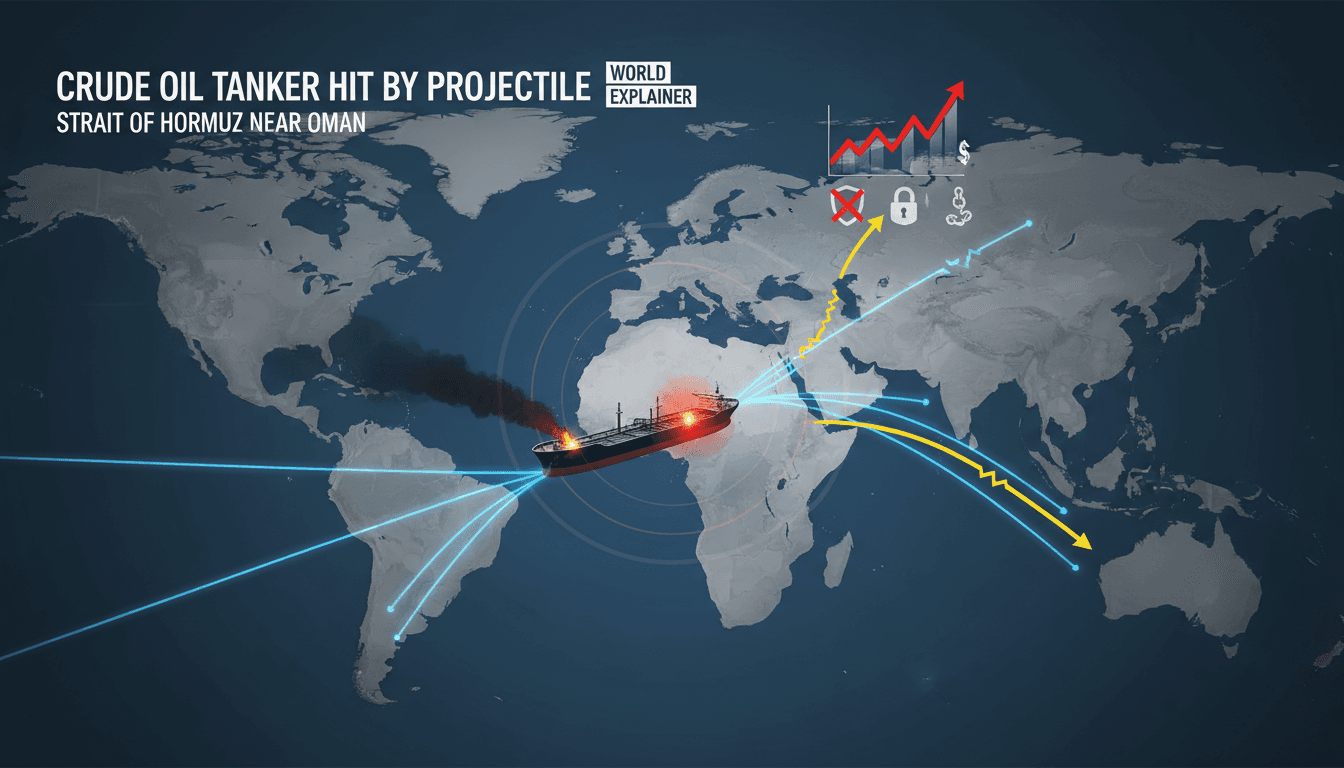
Crude oil tanker hit by projectile in Strait of Hormuz near Oman
Why it matters
The Strait of Hormuz is a critical chokepoint for global oil transit, and incidents like this can lead to increased shipping costs and insurance premiums.
What happened (in 30 seconds)
- On October 2-3, 2026, a crude oil tanker was struck by an unknown projectile off the coast of Oman.
- The UKMTO confirmed the incident, noting no casualties or environmental damage, with the vessel continuing operations.
- Authorities are investigating the incident amid ongoing tensions in the region, particularly between Iran and the US.
The context you actually need
- The Strait of Hormuz carries approximately one-fifth of the world's crude oil, making it a vital artery for global energy supplies.
- Ongoing tensions between Iran and the US have led to increased maritime security incidents, raising concerns for shipping companies.
- Previous incidents involving projectiles and other attacks on vessels in the region have heightened alerts from maritime authorities like the UKMTO.
What's really happening
The incident involving the crude oil tanker in the Strait of Hormuz is emblematic of the escalating maritime security concerns in a region that is already fraught with geopolitical tensions. The Strait of Hormuz is not just a narrow waterway; it is a critical juncture for global oil transport, with about 20% of the world's crude oil passing through it. The recent projectile strike on the tanker, which occurred approximately 4 nautical miles off the coast of Oman, underscores the vulnerabilities faced by vessels operating in this area.
The UKMTO's advisory indicates that the vessel's crew remained safe and that there were no immediate environmental repercussions. However, the incident has triggered a wave of caution among shipping companies and maritime authorities. The ongoing conflict between Iran and the US has created a precarious environment for maritime operations, leading to increased vigilance and security measures. The UKMTO has been issuing alerts more frequently, reflecting the heightened risks associated with navigating these waters.
Shipping companies are likely to face increased insurance premiums as underwriters reassess the risks of operating in the Strait of Hormuz. This could lead to higher costs for transporting oil and other goods, which may eventually be passed on to consumers. Additionally, shipping routes may be adjusted to avoid high-risk areas, potentially leading to longer transit times and increased operational costs.
The investigation into the incident is ongoing, with Omani and UK authorities involved in determining the source of the projectile. The lack of immediate governmental statements or market disruptions suggests that the incident, while serious, has not yet escalated to a level that would trigger widespread panic or significant market shifts. However, the potential for future incidents remains high, particularly if tensions in the region continue to escalate.
As the situation develops, it is crucial for stakeholders in the shipping and energy sectors to stay informed and prepared for potential changes in operational protocols and costs. The incident serves as a reminder of the fragility of maritime security in a geopolitically sensitive area and the ripple effects that such events can have on global trade and energy markets.
Who feels it first (and how)
- Shipping companies: Increased insurance costs and potential route adjustments.
- Energy sector stakeholders: Possible fluctuations in oil prices and supply chain disruptions.
- Local businesses in the UAE: Elevated operational costs due to increased shipping expenses.
What to watch next
- Investigative outcomes: The results of the ongoing investigation could reveal more about the nature of the threat and influence maritime security policies.
- Insurance market responses: Watch for changes in insurance premiums for vessels operating in the region, which could affect shipping costs.
- Geopolitical developments: Any escalation in Iran-US tensions could lead to further incidents, impacting global oil supply chains.
The incident occurred on October 2-3, 2026, with no casualties or environmental damage reported.
Shipping costs may rise due to increased insurance premiums and operational adjustments.
The source of the projectile and the potential for future incidents remain uncertain.
Frequently Asked Questions
- Why it matters?
- The Strait of Hormuz is a critical chokepoint for global oil transit, and incidents like this can lead to increased shipping costs and insurance premiums.
- What happened (in 30 seconds)?
- On October 2-3, 2026, a crude oil tanker was struck by an unknown projectile off the coast of Oman. The UKMTO confirmed the incident, noting no casualties or environmental damage, with the vessel continuing operations. Authorities are investigating the incident amid ongoing tensions in the region, particularly between Iran and the US.
- What's really happening?
- The incident involving the crude oil tanker in the Strait of Hormuz is emblematic of the escalating maritime security concerns in a region that is already fraught with geopolitical tensions. The Strait of Hormuz is not just a narrow waterway; it is a critical juncture for global oil transport, with about 20% of the world's crude oil passing through it. The recent projectile strike on the tanker, which occurred approximately 4 nautical miles off the coast of Oman, underscores the vulnerabilities
- Who feels it first (and how)?
- Shipping companies: Increased insurance costs and potential route adjustments. Energy sector stakeholders: Possible fluctuations in oil prices and supply chain disruptions. Local businesses in the UAE: Elevated operational costs due to increased shipping expenses.
- What to watch next?
- Investigative outcomes: The results of the ongoing investigation could reveal more about the nature of the threat and influence maritime security policies. Insurance market responses: Watch for changes in insurance premiums for vessels operating in the region, which could affect shipping costs. Geopolitical developments: Any escalation in Iran-US tensions could lead to further incidents, impacting global oil supply chains.
Pan-Arab political news and analysis.
"Al-Quds Al-Arabi is a London-based Arabic newspaper known for political coverage."
— A47 Editor
هيئة بحرية بريطانية: إصابة ناقلة نفط خام بمقذوف مجهول قبالة عُمان
The British Maritime Trade Operations reported that a crude oil tanker was struck by an unknown projectile in the Strait of Hormuz, as stated by the ship's captain. The incident occurred near the northern tip of Oman, close to the Musandam region, an...
Jordanian news and regional updates.
"Roya News is a Jordanian outlet focused on breaking news and local affairs."
— A47 Editor
التجارة البحرية البريطانية: ربان ناقلة نفط أكد إصابتها بمقذوف على بعد 4 أميال بحرية شرق سلطنة عمان
The UK Maritime Trade Operations (UKMTO) announced on Saturday that a tanker was struck by a projectile approximately four nautical miles east of Oman. This incident raises concerns about maritime security in the region, particularly for vessels oper...
Arabic-language coverage of political affairs and current events.
"Okaz political coverage typically follows mainstream Saudi framing on national and regional affairs."
— A47 Editor
مقذوف مجهول يصيب ناقلة نفط قبالة سواحل عُمان
An oil tanker was struck by an unknown projectile off the coast of Oman, approximately 4 nautical miles east of the country, as reported by the United Kingdom Maritime Trade Operations (UKMTO). Fortunately, the crew is safe, and there have been no re...