
US Sanctions Pakistani Arms Supplier for Alleged Weapons Procurement for Iran
Why it matters
These sanctions are part of a broader strategy to disrupt Iran's military capabilities and influence regional stability.
What happened (in 30 seconds)
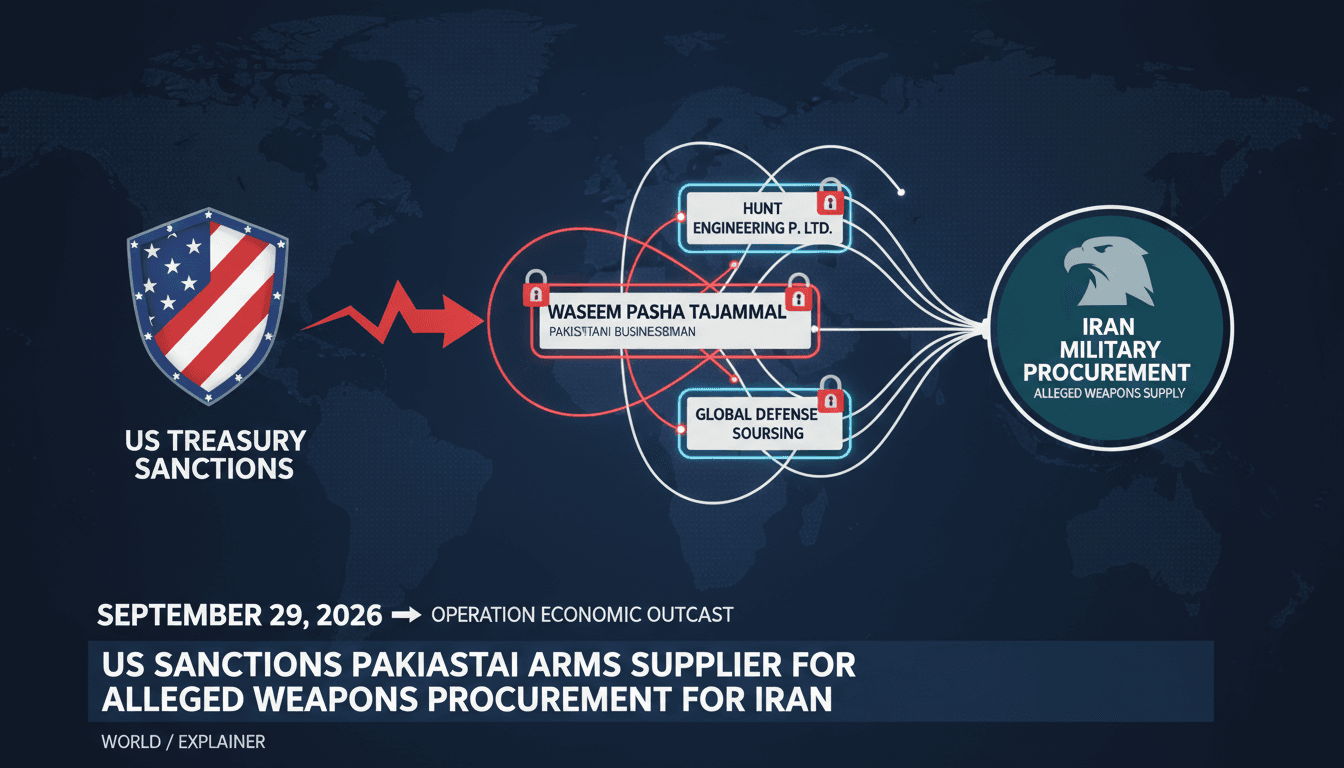
- On September 29, 2026, the US imposed sanctions on Waseem Pasha Tajammal and his companies for allegedly supplying weapons to Iran.
- Cavalier Dynamics Private Limited, based in Pakistan, is the primary entity involved, with subsidiaries in Saudi Arabia and Turkey also sanctioned.
- Operation Economic Outcast, launched in August 2026, aims to dismantle networks supporting Iran's military operations.
The context you actually need
- Heightened US-Iran tensions have escalated since February 2026, with ongoing conflicts influencing military procurement strategies.
- MODAFL, Iran's Ministry of Defence and Armed Forces Logistics, is responsible for overseeing weapons research and production, making it a key target for sanctions.
- The sanctions coincide with coordinated actions against nine other entities globally, indicating a concerted effort to isolate Iran's military supply chain.
What's really happening
The sanctions against Waseem Pasha Tajammal and his companies are a strategic move by the US Treasury to disrupt Iran's military procurement networks. Tajammal, a 58-year-old businessman, is accused of acting as an intermediary, leveraging his professional connections to facilitate the procurement of weapons and components for Iran's Ministry of Defence and Armed Forces Logistics (MODAFL). This ministry is crucial for Iran's military capabilities, overseeing everything from ballistic missiles to unmanned aerial vehicles.
The sanctions are part of Operation Economic Outcast, which was launched in August 2026 to target financial, material, and technological support networks that sustain Iran's military operations. By designating Tajammal and his companies, the US aims to cut off critical supply lines that enable Iran to enhance its military capabilities amid rising tensions in the region.
The sanctions also reflect a broader geopolitical strategy, as they were announced alongside similar actions against nine other individuals and entities across multiple countries, including China and Hong Kong. This coordinated approach underscores the US's commitment to isolating Iran and degrading its weapons programs. The involvement of Saudi Arabia, which jointly sanctioned the Saudi subsidiary of Tajammal's company, highlights the importance of regional partnerships in enforcing these measures.
Despite the severity of these sanctions, there has been no immediate response from the Pakistani government, nor have there been significant market shifts reported in the aftermath. This lack of immediate impact may suggest that the sanctions are more about signaling intent and coordination with allies than about immediate economic repercussions.
The dormant UK company owned by Tajammal, Toughtac Protection Ltd, remains unsanctioned, indicating that the US may be selectively targeting entities based on their operational relevance to Iran's military supply chain. This nuanced approach allows for a more focused disruption of Iran's procurement capabilities without unnecessarily broadening the sanctions to include less relevant entities.
Who feels it first (and how)
- Arms manufacturers in Pakistan and associated regions may face increased scrutiny and reduced business opportunities.
- International trade firms involved in arms procurement could see disruptions in their supply chains.
- Geopolitical analysts and policymakers will need to reassess strategies regarding Iran and its military capabilities.
What to watch next
- Future sanctions: Monitor for additional sanctions targeting other entities involved in Iran's military supply chain, which could further isolate Iran economically.
- Regional responses: Watch for reactions from Pakistan and its allies, as they may influence future diplomatic relations and trade agreements.
- Military developments: Keep an eye on Iran's military capabilities and procurement strategies, as sanctions may push them to seek alternative suppliers or methods.
The US Treasury has imposed sanctions on Waseem Pasha Tajammal and his companies.
Additional sanctions may follow as the US continues to target Iran's military procurement networks.
The long-term economic impact on Pakistan and regional stability remains uncertain.
Frequently Asked Questions
- Why it matters?
- These sanctions are part of a broader strategy to disrupt Iran's military capabilities and influence regional stability.
- What happened (in 30 seconds)?
- On September 29, 2026, the US imposed sanctions on Waseem Pasha Tajammal and his companies for allegedly supplying weapons to Iran. Cavalier Dynamics Private Limited, based in Pakistan, is the primary entity involved, with subsidiaries in Saudi Arabia and Turkey also sanctioned. Operation Economic Outcast, launched in August 2026, aims to dismantle networks supporting Iran's military operations.
- What's really happening?
- The sanctions against Waseem Pasha Tajammal and his companies are a strategic move by the US Treasury to disrupt Iran's military procurement networks. Tajammal, a 58-year-old businessman, is accused of acting as an intermediary, leveraging his professional connections to facilitate the procurement of weapons and components for Iran's Ministry of Defence and Armed Forces Logistics (MODAFL). This ministry is crucial for Iran's military capabilities, overseeing everything from ballistic missiles to
- Who feels it first (and how)?
- Arms manufacturers in Pakistan and associated regions may face increased scrutiny and reduced business opportunities. International trade firms involved in arms procurement could see disruptions in their supply chains. Geopolitical analysts and policymakers will need to reassess strategies regarding Iran and its military capabilities.
- What to watch next?
- Future sanctions: Monitor for additional sanctions targeting other entities involved in Iran's military supply chain, which could further isolate Iran economically. Regional responses: Watch for reactions from Pakistan and its allies, as they may influence future diplomatic relations and trade agreements. Military developments: Keep an eye on Iran's military capabilities and procurement strategies, as sanctions may push them to seek alternative suppliers or methods.
UAE-based English-language newspaper covering regional politics, economics, and global affairs.
"The National reflects Emirati policy perspectives while maintaining international editorial standards."
— A47 Editor
Pakistani sanctioned by US for 'supplying weapons to Iran'
The United States has imposed sanctions on a Pakistani individual for allegedly supplying weapons to Iran, marking a significant escalation in the ongoing tensions between the U.S. and Iran. This action is part of a broader strategy by the U.S. to ex...
Regional coverage and analysis focused on politics, diplomacy, and business across the Middle East.
"Al-Monitor is known for analytical reporting on Middle East politics and policy developments."
— A47 Editor
US imposes sanctions on 13 tied to Iran weapons procurement
The U.S. government has imposed new sanctions on 13 individuals and entities, including those based in Russia, China, Hong Kong, and Pakistan, for their involvement in helping Iran procure weapons and components. This action is part of the Trump admi...
Regional coverage and analysis focused on politics, diplomacy, and business across the Middle East.
"Al-Monitor is known for analytical reporting on Middle East politics and policy developments."
— A47 Editor
After indirect talks, new US sanctions target Iran's weapons supply
The United States has imposed new sanctions targeting Iran's weapons supply following a recent round of indirect talks aimed at resolving ongoing tensions between the two nations. These sanctions come amidst a backdrop of heightened diplomatic activi...