
Death of Russian lab worker leads to quarantine and international scrutiny
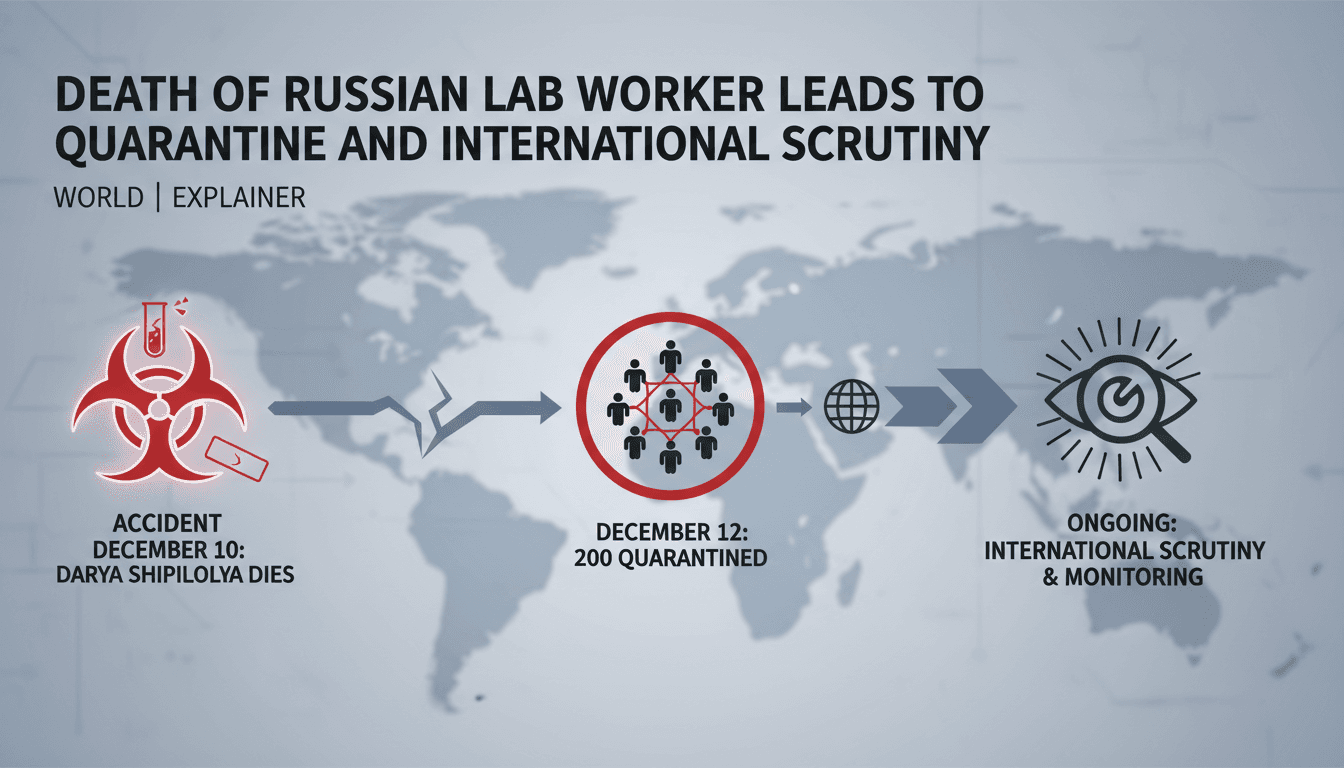
Why it matters
This incident raises significant concerns about laboratory safety standards and potential pathogen risks, impacting global health security.
What happened (in 30 seconds)
- Darya Shipilova, a 28-year-old lab technician, died from pneumonia of unknown origin on October 2, 2026, after working at the Irkutsk Anti-Plague Research Institute.
- Russian authorities quarantined approximately 200 individuals who had contact with her, despite denying any connection to her laboratory duties or plague pathogens.
- U.S. officials are closely monitoring the situation amid conflicting reports of a possible lab accident, with no confirmed outbreak of plague.
The context you actually need
- Longstanding concerns exist regarding biosafety in Russian laboratories, particularly those studying high-risk pathogens like the plague.
- Geopolitical tensions between Russia and Western nations have heightened scrutiny of any potential pathogen release, complicating international relations.
- Previous incidents of laboratory accidents in Russia have led to calls for greater transparency and improved safety protocols in bioscience research.
What's really happening
The death of Darya Shipilova has triggered a complex chain of events that highlights the fragility of biosafety in laboratories handling dangerous pathogens. Shipilova's reported accident, where she allegedly broke a test tube containing live bacteria, raises immediate questions about the safety protocols in place at the Irkutsk Anti-Plague Research Institute. This facility has been under scrutiny for its handling of plague and other high-risk pathogens, with past incidents contributing to a growing international concern about laboratory safety in Russia.
Following her hospitalization and subsequent death, Russian authorities acted swiftly to quarantine nearly 200 individuals who had contact with Shipilova. This response, while precautionary, reflects a broader anxiety about potential pathogen leaks from laboratories, especially in a geopolitical climate marked by distrust and heightened vigilance. The Russian health watchdog, Rospotrebnadzor, has maintained that there is no confirmed link between Shipilova's death and any pathogens, asserting that the epidemiological situation remains stable. However, the lack of transparency and conflicting statements from local officials have fueled skepticism.
The U.S. and the World Health Organization (WHO) are monitoring the situation closely, indicating that international health authorities are on alert for any signs of a wider outbreak. The incident underscores the delicate balance between scientific research and public health safety, particularly in regions with a history of laboratory accidents. As the investigation continues, the implications for global health security are significant, especially if any pathogens were to escape containment.
The incident also serves as a reminder of the interconnectedness of global health systems. In an era where pathogens can cross borders with ease, the potential for localized incidents to escalate into international crises is a real concern. The response from health authorities and governments will be critical in shaping public perception and policy regarding biosafety in laboratories worldwide.
Who feels it first (and how)
- Health professionals: Increased scrutiny and potential changes in protocols for handling pathogens.
- Travelers: Heightened health checks and monitoring in regions with laboratory facilities.
- International relations experts: Greater focus on biosafety standards in diplomatic discussions.
- Local communities: Increased anxiety and precautionary measures in areas near research facilities.
What to watch next
- Monitoring updates: Keep an eye on reports from U.S. and WHO officials regarding the health status of quarantined individuals and any emerging risks.
- Investigation outcomes: The findings from the ongoing investigation into Shipilova's death will be crucial in determining future biosafety regulations.
- International response: Watch for potential changes in international health policies or agreements regarding laboratory safety standards.
Darya Shipilova died from pneumonia of unknown origin; approximately 200 individuals were quarantined.
Increased international scrutiny of Russian biosafety practices and potential policy changes in response to the incident.
The exact cause of Shipilova's pneumonia and whether it is linked to her laboratory work.
Frequently Asked Questions
- Why it matters?
- This incident raises significant concerns about laboratory safety standards and potential pathogen risks, impacting global health security.
- What happened (in 30 seconds)?
- Darya Shipilova, a 28-year-old lab technician, died from pneumonia of unknown origin on October 2, 2026, after working at the Irkutsk Anti-Plague Research Institute. Russian authorities quarantined approximately 200 individuals who had contact with her, despite denying any connection to her laboratory duties or plague pathogens. U.S. officials are closely monitoring the situation amid conflicting reports of a possible lab accident, with no confirmed outbreak of plague.
- What's really happening?
- The death of Darya Shipilova has triggered a complex chain of events that highlights the fragility of biosafety in laboratories handling dangerous pathogens. Shipilova's reported accident, where she allegedly broke a test tube containing live bacteria, raises immediate questions about the safety protocols in place at the Irkutsk Anti-Plague Research Institute. This facility has been under scrutiny for its handling of plague and other high-risk pathogens, with past incidents contributing to a gro
- Who feels it first (and how)?
- Health professionals: Increased scrutiny and potential changes in protocols for handling pathogens. Travelers: Heightened health checks and monitoring in regions with laboratory facilities. International relations experts: Greater focus on biosafety standards in diplomatic discussions. Local communities: Increased anxiety and precautionary measures in areas near research facilities.
- What to watch next?
- Monitoring updates: Keep an eye on reports from U.S. and WHO officials regarding the health status of quarantined individuals and any emerging risks. Investigation outcomes: The findings from the ongoing investigation into Shipilova's death will be crucial in determining future biosafety regulations. International response: Watch for potential changes in international health policies or agreements regarding laboratory safety standards.
Public health news, medical research, and wellness coverage.
"NBC News is a mainstream outlet known for comprehensive national and international news coverage with a centrist to slightly left-leaning editorial tone."
— A47 Editor
Mystery death in Russian lab
A woman employed at a laboratory in Russia that conducts research on the plague has died, prompting U.S. officials to closely monitor the situation. The circumstances surrounding her death remain unclear, raising concerns about potential implications...
Comprehensive coverage of global events, politics, and international issues.
"NBC News is a mainstream outlet known for comprehensive national and international coverage with a centrist to slightly left-leaning editorial tone."
— A47 Editor
Mystery death in Russian lab
A woman employed at a laboratory in Russia that conducts research on the plague has died, prompting U.S. officials to closely monitor the situation. The circumstances surrounding her death remain unclear, raising concerns about potential implications...
International coverage from The Guardian's global desks.
"The Guardian is known for its progressive editorial stance and in-depth analysis."
— A47 Editor
US closely monitoring case of lab worker who ‘possibly’ died of plague in Siberia, says Rubio
The U.S. is closely monitoring the case of Darya Shipilova, a laboratory worker who died in Siberia after an incident at the Irkutsk Anti-Plague Institute. Her death, attributed to pneumonia of unknown origin, has led to quarantine measures for appro...
Global political, business, and cultural coverage from WSJ international desks.
"The Wall Street Journal offers extensive international reporting with a reputation for financial insight and a center-right editorial stance."
— A47 Editor
Russia Probes Death of Woman Who Worked at Antiplague Institute
A woman employed at Russia's Antiplague Institute has died from pneumonia of an unknown cause, prompting investigations by the Kremlin. The circumstances surrounding her death remain unclear, raising concerns about public health and safety.