
Hurricane Isaias Intensifies to Category 3 Ahead of Gulf Coast Landfall
Why it matters
The rapid intensification of hurricanes poses heightened risks for coastal economies and infrastructure.
What happened (in 30 seconds)
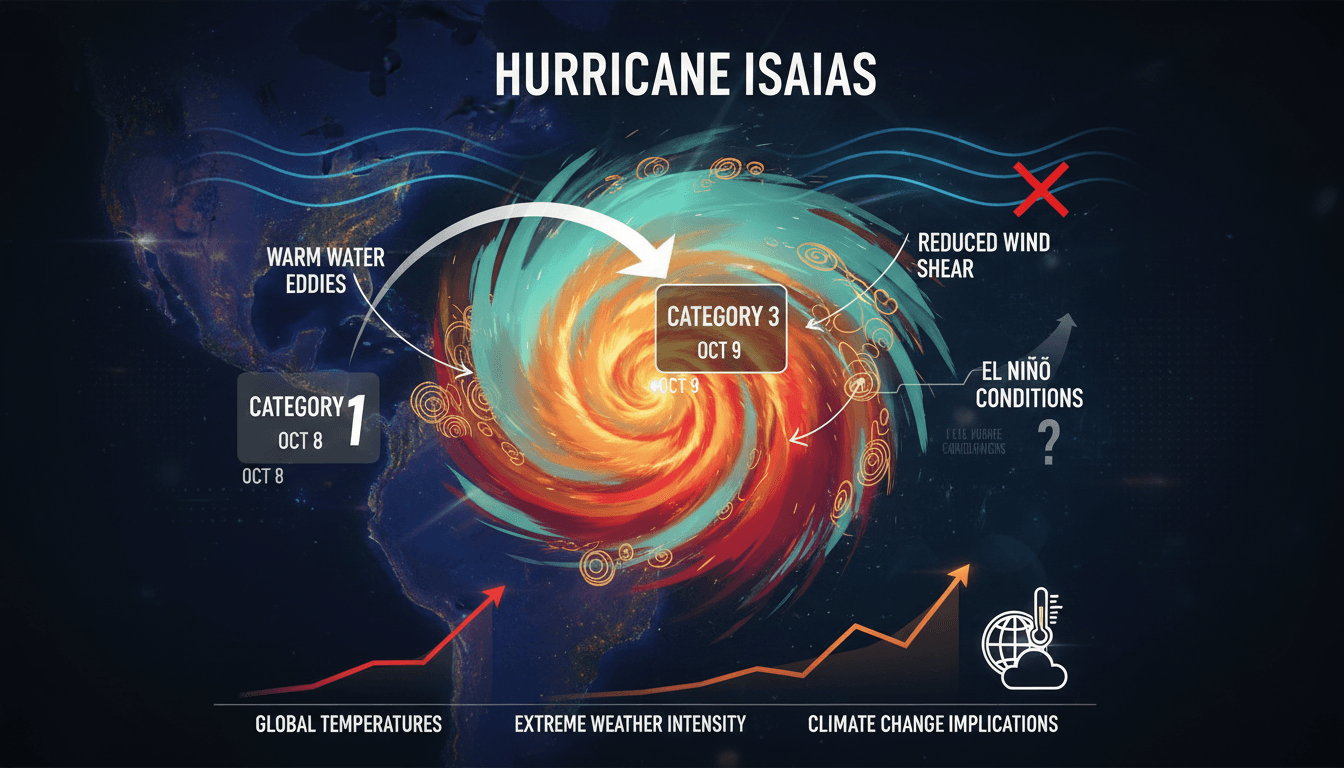
- Hurricane Isaias rapidly intensified from Category 1 to Category 3 on October 9, 2026, with winds reaching 120 mph.
- Warm Gulf waters and a deep warm-water eddy fueled the storm's rapid strengthening, despite typical El Niño conditions.
- NOAA issued warnings for the Gulf Coast, urging residents to prepare for life-threatening storm surge and tornado risks.
The context you actually need
- El Niño conditions usually suppress hurricane activity by increasing vertical wind shear, but Isaias thrived due to temporary weakening of these conditions.
- Warm-water eddies in the Gulf of Mexico provide additional heat energy, allowing storms to intensify rapidly as they mix surface and deeper waters.
- Hurricane warnings were issued for Mississippi, Alabama, and Florida, with risks extending inland, indicating a broader impact on regional safety and economy.
What's really happening
Hurricane Isaias's rapid intensification is a stark reminder of how climate dynamics can alter storm behavior. Typically, the Atlantic hurricane season is moderated by El Niño, which increases vertical wind shear—an atmospheric condition that disrupts storm formation and growth. However, in this instance, Isaias formed late in the season, taking advantage of a temporary lull in wind shear over the Gulf of Mexico. This allowed the storm to tap into exceptionally warm ocean waters, including a significant warm-water eddy spun off from the Loop Current.
The warm-water eddy is crucial; it acts as a reservoir of heat, providing the energy necessary for storms to strengthen. As Isaias approached the Gulf Coast, it mixed surface waters with deeper, warmer layers, leading to a rapid increase in wind speeds. Within a mere 24 hours, Isaias escalated from a Category 1 to a Category 3 hurricane, reaching sustained winds of 120 mph. This kind of rapid intensification is concerning, as it can catch communities off guard, leaving little time for preparation.
The implications of such storms extend beyond immediate physical damage. Coastal economies, heavily reliant on tourism and fishing, face significant threats from storm surges and flooding. Infrastructure, including roads and power lines, can be severely impacted, leading to prolonged recovery times. Insurance markets may also feel the strain, as claims from storm damage rise, potentially leading to increased premiums for homeowners and businesses in vulnerable areas.
As climate change continues to influence ocean temperatures and weather patterns, the frequency and intensity of such storms may increase. This creates a feedback loop where communities must invest more in resilience and adaptation strategies, further straining local economies. The urgency for effective disaster preparedness and response plans becomes paramount, as the risks associated with hurricanes like Isaias are not just local but have far-reaching implications for global supply chains and economic stability.
Who feels it first (and how)
- Coastal residents: Facing immediate threats from storm surge, flooding, and high winds.
- Local businesses: Particularly in tourism and fishing, which may suffer from damage and loss of income.
- Insurance companies: Likely to see an increase in claims, affecting premiums and coverage availability.
- Emergency services: Strained resources as they respond to evacuations and disaster relief efforts.
What to watch next
- Storm tracking updates: Monitor NOAA and NHC for real-time updates on Isaias's path and intensity, which will inform evacuation and safety measures.
- Economic impact assessments: Look for reports on damage costs and recovery efforts in affected areas, which will influence local and national economic forecasts.
- Climate policy discussions: Watch for shifts in policy as governments respond to increasing hurricane intensity, potentially affecting funding for infrastructure and disaster preparedness.
Hurricane Isaias rapidly intensified due to warm Gulf waters and reduced wind shear.
Increased hurricane intensity will lead to higher economic costs and insurance claims in coastal regions.
The long-term effects of climate change on hurricane frequency and intensity remain uncertain.
Frequently Asked Questions
- Why it matters?
- The rapid intensification of hurricanes poses heightened risks for coastal economies and infrastructure.
- What happened (in 30 seconds)?
- Hurricane Isaias rapidly intensified from Category 1 to Category 3 on October 9, 2026, with winds reaching 120 mph. Warm Gulf waters and a deep warm-water eddy fueled the storm's rapid strengthening, despite typical El Niño conditions. NOAA issued warnings for the Gulf Coast, urging residents to prepare for life-threatening storm surge and tornado risks.
- What's really happening?
- Hurricane Isaias's rapid intensification is a stark reminder of how climate dynamics can alter storm behavior. Typically, the Atlantic hurricane season is moderated by El Niño, which increases vertical wind shear—an atmospheric condition that disrupts storm formation and growth. However, in this instance, Isaias formed late in the season, taking advantage of a temporary lull in wind shear over the Gulf of Mexico. This allowed the storm to tap into exceptionally warm ocean waters, including a sig
- Who feels it first (and how)?
- Coastal residents: Facing immediate threats from storm surge, flooding, and high winds. Local businesses: Particularly in tourism and fishing, which may suffer from damage and loss of income. Insurance companies: Likely to see an increase in claims, affecting premiums and coverage availability. Emergency services: Strained resources as they respond to evacuations and disaster relief efforts.
- What to watch next?
- Storm tracking updates: Monitor NOAA and NHC for real-time updates on Isaias's path and intensity, which will inform evacuation and safety measures. Economic impact assessments: Look for reports on damage costs and recovery efforts in affected areas, which will influence local and national economic forecasts. Climate policy discussions: Watch for shifts in policy as governments respond to increasing hurricane intensity, potentially affecting funding for infrastructure and disaster preparedness.
Science and technology stories including AI.
"Longstanding science magazine with thoughtful AI coverage."
— A47 Editor
How Hurricane Isaias got so dangerously strong so fast
Hurricane Isaias has rapidly intensified into a Category 3 storm and is currently moving toward the U.S. Gulf Coast, raising concerns about its potential impact on the region. Meteorologists have noted that this hurricane has set a record as the late...
Scientific research, technology, environment, and society.
"Scientific American is one of the oldest and most authoritative science magazines, known for deep dives into science, technology, and society."
— A47 Editor
How Hurricane Isaias got so dangerously strong so fast
Hurricane Isaias has rapidly intensified into a Category 3 storm and is currently moving toward the U.S. Gulf Coast, raising concerns about its potential impact on the region. Meteorologists have noted that this hurricane has set a record as the late...
Reports on climate change, environmental science, sustainability, and nature.
"BBC News is widely regarded as a reputable international news organization, known for its impartial tone and public service mandate."
— A47 Editor
Hurricane Isaias strengthens to a major category three storm
Hurricane Isaias has intensified into a major category three storm, marking a significant development as it approaches the US Gulf Coast, with landfall expected later this week. This storm is notable as it is the first hurricane of the 2026 Atlantic ...
International coverage from The Guardian's global desks.
"The Guardian is known for its progressive editorial stance and in-depth analysis."
— A47 Editor
Isaias strengthens to become first Atlantic hurricane of 2026 season
Isaias has intensified into the first Atlantic hurricane of the 2026 season, with wind speeds reaching 80 mph and a minimum pressure of 975 mb. The National Oceanic and Atmospheric Administration (NOAA) forecasts that it may strengthen to a category ...
Reports on climate change, environmental science, sustainability, and nature.
"BBC News is widely regarded as a reputable international news organization, known for its impartial tone and public service mandate."
— A47 Editor
BBC on Hurricane Isaias and its expected Gulf Coast landfall
BBC Weather's Chris Fawkes reports that Hurricane Isaias, the first hurricane of the 2026 Atlantic season, is expected to make landfall on the Gulf Coast on Friday, bringing with it dangerous winds, storm surge, and heavy rains.
International coverage of politics, culture, and current affairs.
"BBC News is widely regarded as a reputable international news organization, known for its impartial tone and public service mandate."
— A47 Editor
BBC on Hurricane Isaias and its expected Gulf Coast landfall
BBC Weather's Chris Fawkes reports that Hurricane Isaias, the first hurricane of the 2026 Atlantic season, is expected to make landfall on the Gulf Coast on Friday, bringing with it dangerous winds, storm surge, and heavy rains.
Oil, metals, and agriculture: supply/demand headlines, OPEC chatter, inventories, and price action.
"Solid tape for energy and metals traders tracking macro and micro catalysts."
— A47 Editor
Tropical Storm Isaias forecast to hit US Gulf coast as hurricane early Saturday
Tropical Storm Isaias is forecast to impact the US Gulf coast as a hurricane early Saturday, according to reports from Investing.com. The storm's trajectory and intensity are being closely monitored as it approaches landfall, raising concerns for res...