
Tropical Storm Isaias Strengthens in Gulf of Mexico Ahead of Hurricane Landfall
Why it matters
The storm's potential to disrupt oil and gas production in the Gulf of Mexico could lead to increased energy prices and supply chain volatility.
What happened (in 30 seconds)
- Tropical Storm Isaias formed in the Gulf of Mexico on October 7, 2026, and is forecast to strengthen into a hurricane.
- Hurricane watches and warnings have been issued for the northern US Gulf Coast, with landfall expected early October 10.
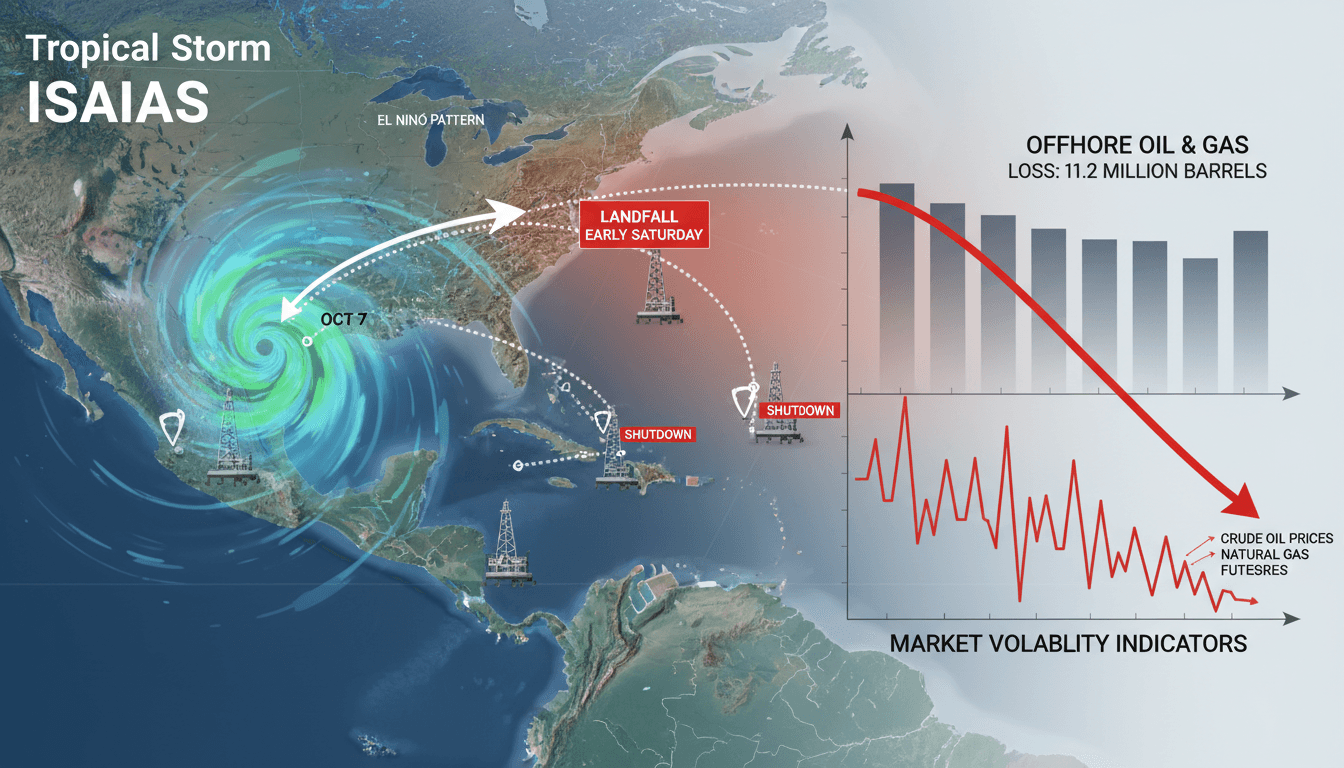
- Evacuations and production shut-ins are already underway, impacting approximately 25% of oil and 16.4% of natural gas output in the region.
The context you actually need
- El Niño conditions have suppressed the Atlantic hurricane season, making Isaias the first hurricane of 2026, potentially tying a record for the latest first hurricane.
- Warm Gulf waters have contributed to the rapid intensification of Isaias, raising concerns about severe weather impacts.
- Energy operators like BP, Chevron, and Shell are already implementing safety measures, indicating the storm's potential economic ramifications.
What's really happening
Tropical Storm Isaias is intensifying over the warm waters of the Gulf of Mexico, with forecasts indicating it could reach hurricane strength by October 8-9. The National Hurricane Center (NHC) has issued warnings for the northern Gulf Coast, particularly affecting Mississippi, Alabama, and the Florida Panhandle. The storm is expected to make landfall as a Category 1-2 hurricane, bringing with it heavy rainfall, storm surge, and the risk of tornadoes.
The 2026 Atlantic hurricane season has been notably quiet due to a strong El Niño pattern, which typically increases vertical wind shear and suppresses storm formation. However, Isaias has emerged as a significant weather event, marking a shift in the season's dynamics. The rapid formation of the storm in the southwestern Gulf, where water temperatures are near-record highs, has raised alarms among meteorologists and energy operators alike.
As the storm approaches, personnel evacuations from offshore oil platforms have begun, with reports indicating that 25% of oil production and 16.4% of natural gas output have already been shut in. This disruption is expected to lead to an estimated loss of 11.2 million barrels of oil production across the Gulf during the storm's duration, which could have cascading effects on energy prices and availability.
Florida Governor Ron DeSantis has declared a state of emergency for 25 counties, urging voluntary evacuations in affected areas. The federal government is coordinating responses, with Senator Rick Scott confirming support for impacted regions. The energy market is already experiencing volatility as operators prepare for potential disruptions, which could lead to increased prices for consumers and businesses reliant on these resources.
Who feels it first (and how)
- Energy sector workers: Evacuations and production shut-ins directly impact jobs and income.
- Consumers: Increased energy prices may affect household budgets and business operating costs.
- Local businesses: Those dependent on tourism and local economies in affected areas may see immediate impacts from evacuations and storm damage.
- Investors: Market volatility in energy commodities could affect investment portfolios and stock prices of energy companies.
What to watch next
- Hurricane intensity updates: Monitoring Isaias's strength will be crucial for predicting its impact on energy production and pricing.
- Production recovery timelines: Understanding how quickly oil and gas operators can resume normal operations post-storm will inform market stability.
- Energy price fluctuations: Watch for changes in energy prices as the storm progresses and impacts become clearer.
- Isaias is expected to make landfall as a hurricane, impacting the northern Gulf Coast.
- Energy prices will experience volatility due to production disruptions.
- The full extent of damage and recovery time for energy infrastructure remains uncertain.
Frequently Asked Questions
- Why it matters?
- The storm's potential to disrupt oil and gas production in the Gulf of Mexico could lead to increased energy prices and supply chain volatility.
- What happened (in 30 seconds)?
- Tropical Storm Isaias formed in the Gulf of Mexico on October 7, 2026, and is forecast to strengthen into a hurricane. Hurricane watches and warnings have been issued for the northern US Gulf Coast, with landfall expected early October 10. Evacuations and production shut-ins are already underway, impacting approximately 25% of oil and 16.4% of natural gas output in the region.
- What's really happening?
- Tropical Storm Isaias is intensifying over the warm waters of the Gulf of Mexico, with forecasts indicating it could reach hurricane strength by October 8-9. The National Hurricane Center (NHC) has issued warnings for the northern Gulf Coast, particularly affecting Mississippi, Alabama, and the Florida Panhandle. The storm is expected to make landfall as a Category 1-2 hurricane, bringing with it heavy rainfall, storm surge, and the risk of tornadoes. The 2026 Atlantic hurricane season has been
- Who feels it first (and how)?
- Energy sector workers: Evacuations and production shut-ins directly impact jobs and income. Consumers: Increased energy prices may affect household budgets and business operating costs. Local businesses: Those dependent on tourism and local economies in affected areas may see immediate impacts from evacuations and storm damage. Investors: Market volatility in energy commodities could affect investment portfolios and stock prices of energy companies.
- What to watch next?
- Hurricane intensity updates: Monitoring Isaias's strength will be crucial for predicting its impact on energy production and pricing. Production recovery timelines: Understanding how quickly oil and gas operators can resume normal operations post-storm will inform market stability. Energy price fluctuations: Watch for changes in energy prices as the storm progresses and impacts become clearer.
Oil, metals, and agriculture: supply/demand headlines, OPEC chatter, inventories, and price action.
"Solid tape for energy and metals traders tracking macro and micro catalysts."
— A47 Editor
Tropical Storm Isaias forecast to hit US Gulf coast as hurricane early Saturday
Tropical Storm Isaias is forecast to impact the US Gulf coast as a hurricane early Saturday, according to reports from Investing.com. The storm's trajectory and intensity are being closely monitored as it approaches landfall, raising concerns for res...
Top international stories selected by The Guardian editors.
"The Guardian is known for its progressive editorial stance and in-depth analysis."
— A47 Editor
Tropical Storm Isaias near Mexico is forecast to become a hurricane
Tropical Storm Isaias has formed off the eastern coast of Mexico, expected to strengthen into the first hurricane of the Atlantic season as early as Thursday. The storm, which succeeded Tropical Depression Nine, is currently located about 285 miles w...
Reports on climate change, environmental science, sustainability, and nature.
"BBC News is widely regarded as a reputable international news organization, known for its impartial tone and public service mandate."
— A47 Editor
Tropical Storm Isaias forecast to become first Atlantic hurricane of 2026
Tropical Storm Isaias is forecasted to become the first Atlantic hurricane of 2026, marking a significant shift in an unusually quiet hurricane season influenced by the El Niño phenomenon. This development comes after a record-breaking period with no...