
Chinstrap Penguin Colony on Zavodovski Island Declines by 63 Percent
Why it matters
The loss of the world's largest chinstrap penguin colony signals broader ecological shifts that could affect marine biodiversity and climate policy.
What happened (in 30 seconds)
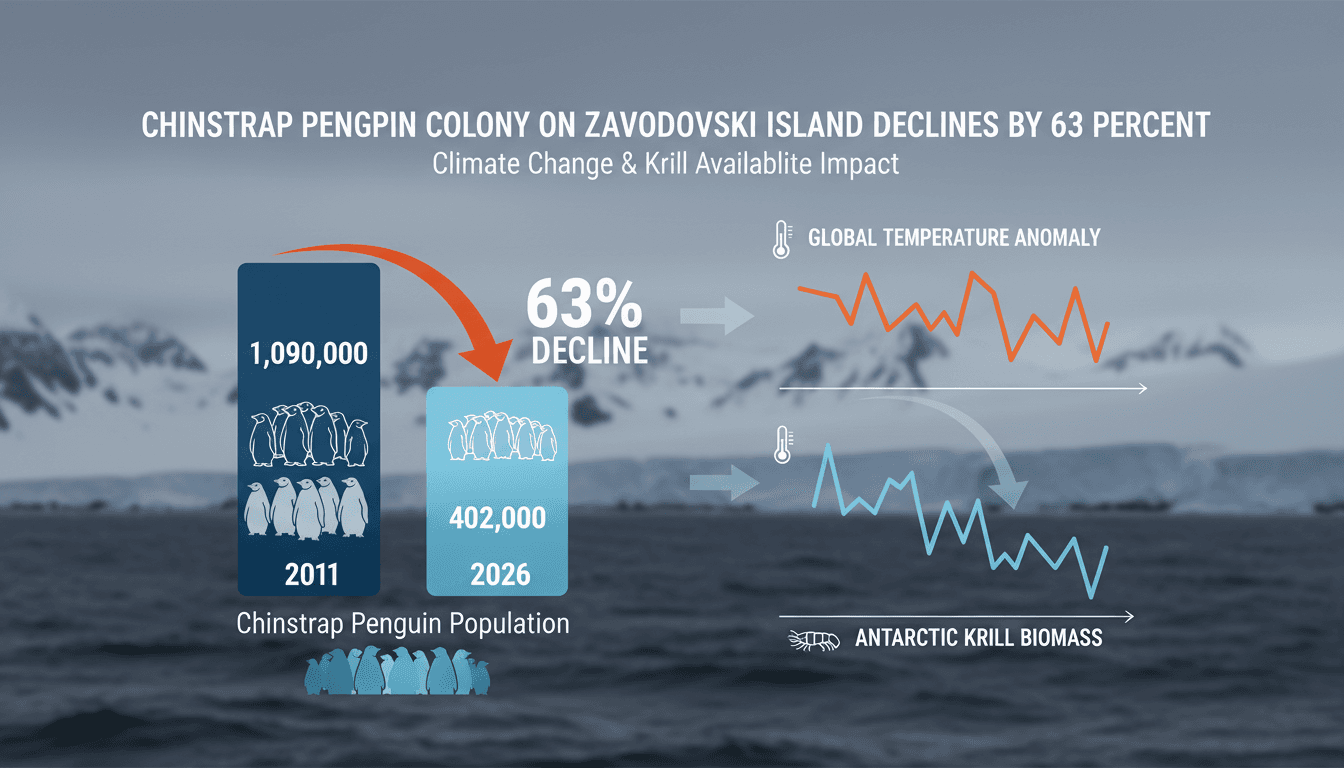
- A 63% decline in the chinstrap penguin population on Zavodovski Island was confirmed, dropping from 1.09 million to 402,000 individuals.
- Climate change is primarily responsible for the decline, reducing the availability of Antarctic krill, a key food source for these penguins.
- Cape Adare has now taken the title of the world's largest penguin colony, reflecting a significant shift in the Antarctic ecosystem.
The context you actually need
- Zavodovski Island was previously home to the largest chinstrap penguin colony, with around 600,000 individuals in 2011, alongside macaroni penguins.
- Climate trends have shown rapid warming in the Antarctic Peninsula, with temperatures rising up to 5°C above preindustrial levels, disrupting local ecosystems.
- Aerial surveys conducted by the British Antarctic Survey revealed a consistent annual decline rate of about 7% in occupied nests from 2011 to 2025.
What's really happening
The decline of the chinstrap penguin colony on Zavodovski Island is a stark indicator of the impacts of climate change on polar ecosystems. The British Antarctic Survey's findings, published in Current Biology, reveal that the population has plummeted by 63% over a 14-year period, primarily due to the diminishing availability of Antarctic krill, which these penguins rely on for sustenance.
As the Southern Ocean warms, krill populations are shifting to cooler waters, making it increasingly difficult for chinstrap penguins to forage effectively. This dietary restriction has led to a significant reduction in breeding success and overall population numbers. Interestingly, while chinstrap penguins are declining, macaroni penguins, which have a more adaptable diet, are thriving in the same region, indicating a shift in the ecological balance.
The implications of this decline extend beyond just the penguins. The South Sandwich Islands are home to a significant portion of the global chinstrap population, and their decline could signal broader disruptions in marine ecosystems. Researchers are now calling for a reassessment of the chinstrap penguin's status on the IUCN Red List, potentially elevating it from "least concern" to "endangered." This shift could have far-reaching consequences for conservation efforts and international environmental policies.
The loss of the largest penguin colony also raises questions about the resilience of other species in the region. As ecosystems become increasingly stressed due to climate change, the interconnectedness of species means that the decline of one can lead to cascading effects on others. The situation on Zavodovski Island serves as a microcosm of the challenges facing polar regions globally, where climate change is not just a future threat but a current reality.
Who feels it first (and how)
- Environmental scientists: Increased research focus on climate impacts and species conservation.
- Fisheries: Potential shifts in krill availability could affect fishing industries reliant on these marine resources.
- Conservation organizations: Heightened urgency to advocate for policy changes and habitat protection.
- Local communities in polar regions: Changes in wildlife populations may impact tourism and local economies.
What to watch next
- IUCN status reassessment: Monitoring the potential change in the chinstrap penguin's conservation status will indicate the urgency of global climate action.
- Krill population studies: Observing shifts in krill distribution and abundance will provide insights into the health of marine ecosystems.
- Global climate policy developments: Watch for international agreements or initiatives aimed at addressing climate change impacts on polar regions.
The chinstrap penguin population on Zavodovski Island has declined by 63% from 2011 to 2025.
Other species in the Antarctic ecosystem may also face population declines due to climate change.
The long-term effects of these changes on global marine biodiversity and fisheries remain uncertain.
Frequently Asked Questions
- Why it matters?
- The loss of the world's largest chinstrap penguin colony signals broader ecological shifts that could affect marine biodiversity and climate policy.
- What happened (in 30 seconds)?
- A 63% decline in the chinstrap penguin population on Zavodovski Island was confirmed, dropping from 1.09 million to 402,000 individuals. Climate change is primarily responsible for the decline, reducing the availability of Antarctic krill, a key food source for these penguins. Cape Adare has now taken the title of the world's largest penguin colony, reflecting a significant shift in the Antarctic ecosystem.
- What's really happening?
- The decline of the chinstrap penguin colony on Zavodovski Island is a stark indicator of the impacts of climate change on polar ecosystems. The British Antarctic Survey's findings, published in Current Biology, reveal that the population has plummeted by 63% over a 14-year period, primarily due to the diminishing availability of Antarctic krill, which these penguins rely on for sustenance. As the Southern Ocean warms, krill populations are shifting to cooler waters, making it increasingly diff
- Who feels it first (and how)?
- Environmental scientists: Increased research focus on climate impacts and species conservation. Fisheries: Potential shifts in krill availability could affect fishing industries reliant on these marine resources. Conservation organizations: Heightened urgency to advocate for policy changes and habitat protection. Local communities in polar regions: Changes in wildlife populations may impact tourism and local economies.
- What to watch next?
- IUCN status reassessment: Monitoring the potential change in the chinstrap penguin's conservation status will indicate the urgency of global climate action. Krill population studies: Observing shifts in krill distribution and abundance will provide insights into the health of marine ecosystems. Global climate policy developments: Watch for international agreements or initiatives aimed at addressing climate change impacts on polar regions.
Tech industry news, innovation, gadgets, and startups from a UK broadcaster.
"Sky News is often seen as a center-right outlet in the UK, known for its rolling coverage and breaking stories."
— A47 Editor
World's largest penguin colony shrinks two-thirds in just 14 years
The chinstrap penguin population on Zavodovski Island, previously the world's largest penguin colony, has declined by nearly two-thirds over the past 14 years, primarily due to climate change, according to recent studies.
International news, politics, and culture.
"Sky News is a UK-based 24-hour channel known for fast-breaking news and political coverage."
— A47 Editor
World's largest penguin colony shrinks two-thirds in just 14 years
The chinstrap penguin population on Zavodovski Island, previously the world's largest penguin colony, has declined by nearly two-thirds over the past 14 years, primarily due to climate change, according to recent studies.
Top international stories selected by The Guardian editors.
"The Guardian is known for its progressive editorial stance and in-depth analysis."
— A47 Editor
World’s largest penguin colony suffers ‘enormous population crash’
The chinstrap penguin population on Zavodovski Island, part of the South Sandwich Islands in Antarctica, has experienced a dramatic decline of two-thirds since 2011, primarily attributed to the climate crisis, according to a recent study. This signif...
Reports on climate change, environmental science, sustainability, and nature.
"BBC News is widely regarded as a reputable international news organization, known for its impartial tone and public service mandate."
— A47 Editor
World's largest penguin colony hit by 'alarming' decline in numbers
The world's largest colony of chinstrap penguins, located on a remote volcanic island, is experiencing a significant decline in numbers, attributed to the impacts of climate change. This alarming trend raises concerns about the future of this species...