
IMF and World Bank Meetings in Bangkok Address Middle East Conflict and Record Debt Levels
Why it matters
The convergence of a prolonged Middle East conflict and record global debt levels poses significant risks to economic stability worldwide.
What happened (in 30 seconds)
- IMF and World Bank Annual Meetings are taking place in Bangkok from October 12 to 18, 2026, focusing on the US-Israeli-led war with Iran and global debt issues.
- Record public debt levels are at their highest since World War II, with developing nations facing $400 billion in external debt payments in 2026.
- Key discussions will center on debt sustainability and conditional lending reforms, with no major policy announcements expected.
The context you actually need
- Geopolitical tensions have escalated since the US-Israeli conflict with Iran began on February 28, 2026, disrupting 20% of global oil supplies.
- Rising interest rates and inflationary pressures are exacerbating vulnerabilities for emerging economies, particularly those with high external debt.
- Previous meetings in Morocco followed the October 2023 Hamas attacks, highlighting ongoing instability in the region and its economic repercussions.
What's really happening
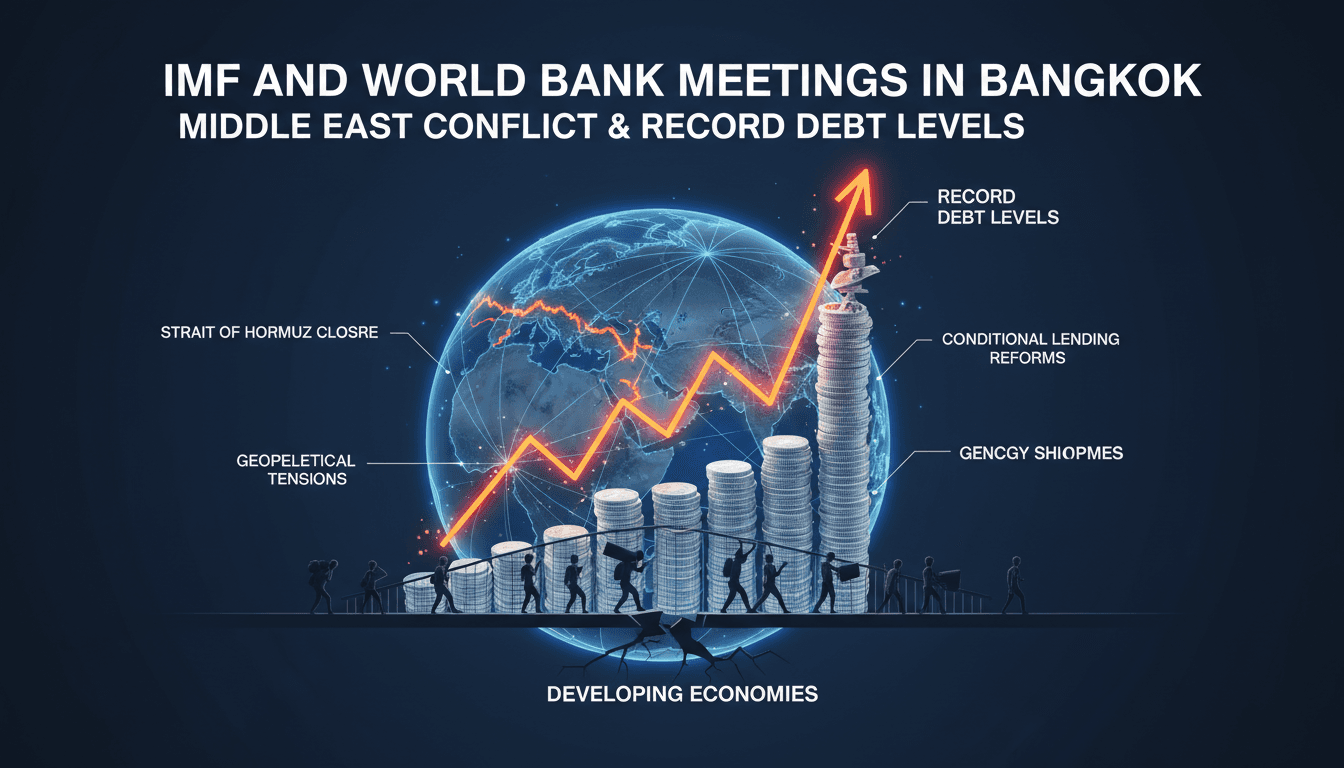
The IMF and World Bank Annual Meetings in Bangkok are unfolding against a backdrop of significant geopolitical and economic challenges. The ongoing conflict in the Middle East, particularly the US-Israeli-led war with Iran, has led to the closure of the Strait of Hormuz, a critical chokepoint for global oil supplies. This disruption has caused the largest energy supply shock on record, impacting energy prices and economic stability worldwide.
As the meetings convene, approximately 18,000 participants, including finance ministers and central bankers from G20 nations, are focusing on the implications of these geopolitical tensions on global debt levels. Public debt has surged to post-World War II highs, driven by pandemic recovery efforts, rising interest rates, and supply shocks. Developing nations are particularly vulnerable, facing $400 billion in external debt payments in 2026, with interest payments exceeding 10% of their revenue on average.
IMF Managing Director Kristalina Georgieva and World Bank President Ajay Banga have emphasized the combined pressures from energy costs, fertilizer prices, and debt, highlighting the urgent need for discussions on debt sustainability and conditional lending reforms. However, the absence of key figures like US Treasury Secretary Scott Bessent suggests that major policy announcements may not materialize, leaving many developing nations concerned about potential austerity measures tied to IMF conditionality changes.
The meetings are expected to feature closed-door discussions on debt restructuring challenges and the unequal impacts of these economic pressures on developing economies. As markets monitor oil prices and growth forecasts, the potential for downgrades in affected regions looms large, further complicating the economic landscape.
Who feels it first (and how)
- Developing nations: Facing high external debt payments and potential austerity measures.
- Energy sector: Experiencing volatility due to fluctuating oil prices and supply disruptions.
- Investors: Monitoring market reactions to geopolitical tensions and economic forecasts.
- Consumers: Likely to see increased costs for energy and goods as supply chains are affected.
What to watch next
- Oil prices: Fluctuations could signal broader economic impacts and influence inflation rates globally.
- Debt restructuring discussions: Outcomes may determine the financial stability of developing nations and their access to capital.
- Geopolitical developments: Any escalation in the Middle East conflict could further disrupt global markets and trade routes.
The IMF and World Bank meetings are addressing significant global debt and geopolitical issues.
Developing nations will face increased economic pressures and potential austerity measures.
The extent of policy changes or new initiatives that may arise from the meetings.
Frequently Asked Questions
- Why it matters?
- The convergence of a prolonged Middle East conflict and record global debt levels poses significant risks to economic stability worldwide.
- What happened (in 30 seconds)?
- IMF and World Bank Annual Meetings are taking place in Bangkok from October 12 to 18, 2026, focusing on the US-Israeli-led war with Iran and global debt issues. Record public debt levels are at their highest since World War II, with developing nations facing $400 billion in external debt payments in 2026. Key discussions will center on debt sustainability and conditional lending reforms, with no major policy announcements expected.
- What's really happening?
- The IMF and World Bank Annual Meetings in Bangkok are unfolding against a backdrop of significant geopolitical and economic challenges. The ongoing conflict in the Middle East, particularly the US-Israeli-led war with Iran, has led to the closure of the Strait of Hormuz, a critical chokepoint for global oil supplies. This disruption has caused the largest energy supply shock on record, impacting energy prices and economic stability worldwide. As the meetings convene, approximately 18,000 parti
- Who feels it first (and how)?
- Developing nations: Facing high external debt payments and potential austerity measures. Energy sector: Experiencing volatility due to fluctuating oil prices and supply disruptions. Investors: Monitoring market reactions to geopolitical tensions and economic forecasts. Consumers: Likely to see increased costs for energy and goods as supply chains are affected.
- What to watch next?
- Oil prices: Fluctuations could signal broader economic impacts and influence inflation rates globally. Debt restructuring discussions: Outcomes may determine the financial stability of developing nations and their access to capital. Geopolitical developments: Any escalation in the Middle East conflict could further disrupt global markets and trade routes.
Macro commentary, policy analysis, growth/inflation themes, and global outlooks.
"Contextual macro coverage that complements day-to-day market headlines."
— A47 Editor
Middle East war, high debt levels to dominate IMF-World Bank meetings in Bangkok
The upcoming IMF-World Bank meetings in Bangkok will focus on the ongoing conflict in the Middle East and rising debt levels among major economies. These discussions are critical as global economic stability is at stake, with significant implications...
Regional coverage and analysis focused on politics, diplomacy, and business across the Middle East.
"Al-Monitor is known for analytical reporting on Middle East politics and policy developments."
— A47 Editor
Middle East war, high debt levels to dominate IMF-World Bank meetings in Bangkok
Finance officials from around the world are set to convene in Bangkok for the IMF-World Bank meetings, overshadowed by the escalating conflict in the Middle East, particularly the ongoing war involving Iran, which poses significant risks to global ec...
UAE-based English-language newspaper covering regional politics, economics, and global affairs.
"The National reflects Emirati policy perspectives while maintaining international editorial standards."
— A47 Editor
Hawkish sentiment returns to IMF and World Bank meetings
The upcoming meetings of the International Monetary Fund (IMF) and World Bank in Bangkok are expected to be characterized by a hawkish sentiment, largely influenced by the ongoing US-Israel conflict with Iran, which is anticipated to have significant...