
Iran Reports Oil Tanker Fire in Eastern Strait of Hormuz Following Restricted Zone Violation
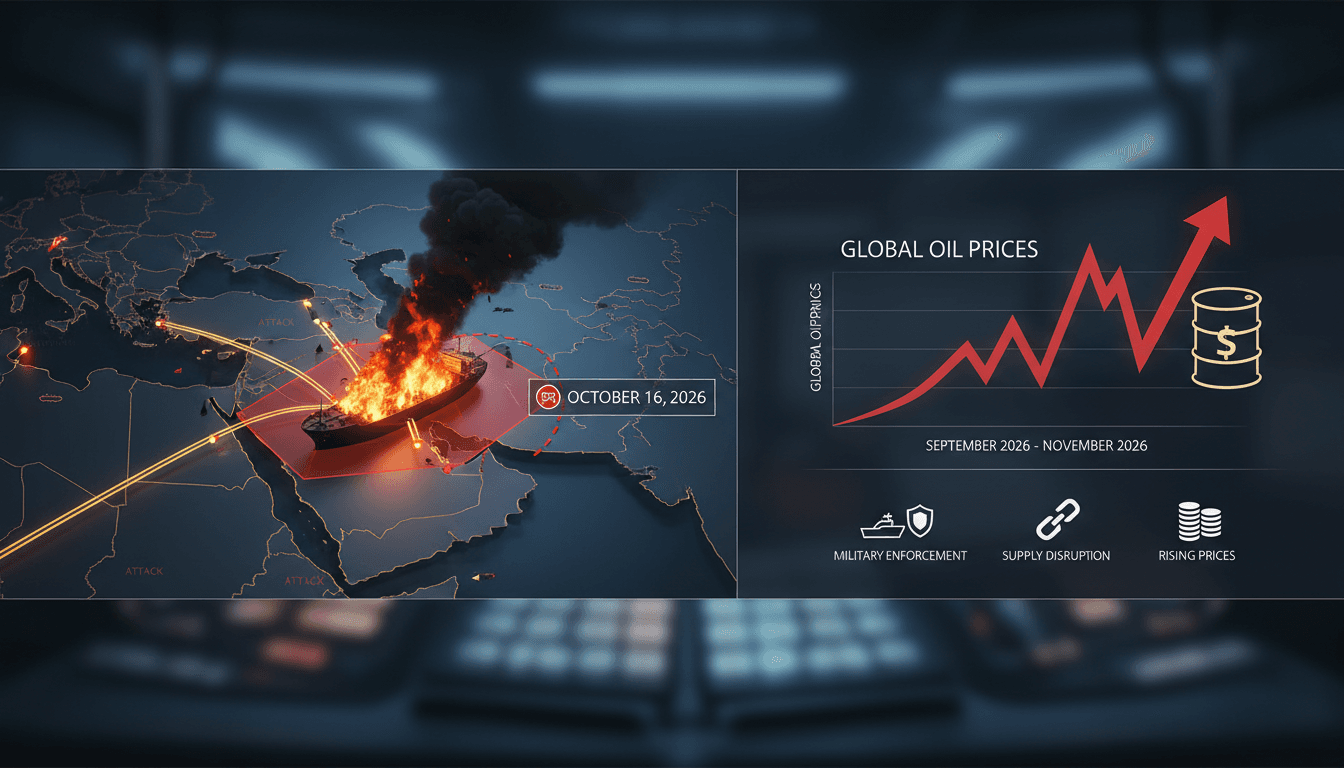
Why it matters
The Strait of Hormuz is a critical chokepoint for global oil shipments, and disruptions here can lead to significant price fluctuations.
What happened (in 30 seconds)
- Iran's navy reported an unidentified oil tanker caught fire in the eastern Strait of Hormuz after disabling its tracking systems.
- The incident occurred in a restricted zone declared by Iran amid ongoing tensions with the U.S., following a series of attacks on commercial shipping.
- No independent verification of the vessel's identity, crew status, or cause of the fire is available as of now.
The context you actually need
- The U.S.-Iran conflict escalated in February 2026, leading to increased military tensions and maritime security risks in the region.
- Iran declared the waters leading to the Strait of Hormuz a prohibited zone in September 2026, requiring vessels to obtain permission for transit.
- Over 20 vessels have reportedly been attacked in October 2026 alone, raising alarms about maritime safety and oil supply stability.
What's really happening
The recent fire on the oil tanker in the eastern Strait of Hormuz is part of a broader pattern of escalating maritime conflicts in the region. Following the U.S. and Israeli airstrikes in February 2026, Iran has adopted a more aggressive stance towards foreign vessels, particularly those perceived to be violating its declared territorial waters. The Strait of Hormuz, through which approximately 20% of the world's oil passes, has become a focal point for these tensions.
Iran's navy detected the tanker ablaze after it switched off its tracking systems, a move that suggests an intention to evade detection. This incident follows a similar fire on another tanker just a day prior, indicating a troubling trend of maritime incidents in the area. The Iranian Revolutionary Guard Corps (IRGC) has framed these occurrences as enforcement actions against violations of its maritime boundaries, asserting control over the waters.
The implications of these incidents extend beyond immediate maritime safety concerns. With oil prices already volatile, the fire has contributed to Brent crude breaching the $100 per barrel mark. This price surge is a direct response to fears of supply disruptions, as shipping traffic through the Strait has decreased amid rising attacks. The economic ramifications are significant, affecting not only oil-dependent economies but also global markets that rely on stable energy prices.
Moreover, the lack of independent verification regarding the identity of the tanker and the circumstances surrounding the fire raises questions about the reliability of information coming from the region. As tensions continue to escalate, the potential for miscommunication or miscalculation increases, which could lead to further military confrontations.
In summary, the fire in the Strait of Hormuz is not an isolated incident but rather a symptom of a larger geopolitical struggle that has profound implications for global oil markets and maritime security.
Who feels it first (and how)
- Oil traders: Immediate fluctuations in oil prices affect trading strategies and profit margins.
- Shipping companies: Increased insurance costs and rerouting due to safety concerns impact operational expenses.
- Consumers: Rising fuel prices translate to higher costs for transportation and goods.
- Governments: Nations reliant on oil imports face economic pressure and potential public unrest due to rising energy costs.
What to watch next
- Oil price trends: Monitor Brent crude prices for signs of sustained volatility, which could indicate ongoing instability in the region.
- Shipping traffic reports: Keep an eye on maritime traffic through the Strait of Hormuz for changes in patterns that may signal increased risks or military actions.
- Geopolitical developments: Watch for diplomatic efforts or military escalations between the U.S. and Iran that could further impact maritime security.
The Strait of Hormuz is a critical route for global oil shipments, and tensions are escalating.
Oil prices will remain volatile as incidents in the region continue to unfold.
The long-term impact on global oil supply chains and maritime security remains uncertain.
Frequently Asked Questions
- Why it matters?
- The Strait of Hormuz is a critical chokepoint for global oil shipments, and disruptions here can lead to significant price fluctuations.
- What happened (in 30 seconds)?
- Iran's navy reported an unidentified oil tanker caught fire in the eastern Strait of Hormuz after disabling its tracking systems. The incident occurred in a restricted zone declared by Iran amid ongoing tensions with the U.S., following a series of attacks on commercial shipping. No independent verification of the vessel's identity, crew status, or cause of the fire is available as of now.
- What's really happening?
- The recent fire on the oil tanker in the eastern Strait of Hormuz is part of a broader pattern of escalating maritime conflicts in the region. Following the U.S. and Israeli airstrikes in February 2026, Iran has adopted a more aggressive stance towards foreign vessels, particularly those perceived to be violating its declared territorial waters. The Strait of Hormuz, through which approximately 20% of the world's oil passes, has become a focal point for these tensions. Iran's navy detected the
- Who feels it first (and how)?
- Oil traders: Immediate fluctuations in oil prices affect trading strategies and profit margins. Shipping companies: Increased insurance costs and rerouting due to safety concerns impact operational expenses. Consumers: Rising fuel prices translate to higher costs for transportation and goods. Governments: Nations reliant on oil imports face economic pressure and potential public unrest due to rising energy costs.
- What to watch next?
- Oil price trends: Monitor Brent crude prices for signs of sustained volatility, which could indicate ongoing instability in the region. Shipping traffic reports: Keep an eye on maritime traffic through the Strait of Hormuz for changes in patterns that may signal increased risks or military actions. Geopolitical developments: Watch for diplomatic efforts or military escalations between the U.S. and Iran that could further impact maritime security.
English-language reporting on Saudi politics, policy, and society.
"Saudi Gazette reflects mainstream Saudi institutional perspectives."
— A47 Editor
Iran says oil tanker catches fire in Strait of Hormuz
An oil tanker has caught fire in the eastern section of the Strait of Hormuz, as reported by Iranian authorities. This incident marks the second such occurrence in 24 hours, with claims that the vessel disabled its tracking systems while attempting t...
RT is a Russian state-funded network covering global events from a Russian perspective.
"RT is widely criticized for promoting pro-Kremlin narratives and is considered by many to be a state propaganda outlet."
— A47 Editor
Container ship sinks after hitting mine in Strait of Hormuz (VIDEOS)
A container ship sank in the Strait of Hormuz after striking a mine, coinciding with heightened tensions in the region as the U.S. released footage of an attack on an alleged Iranian spy vessel. This incident underscores the escalating maritime threa...
Global markets, investing, and macroeconomics from a premier financial newsroom.
"Bloomberg is respected for in-depth financial reporting and data-driven analysis."
— A47 Editor
Container Ship Sinks in Strait of Hormuz as Attacks Ramp Up
A cargo ship sank in the Strait of Hormuz following a strike that ignited a fire, prompting the evacuation of crew members, as reported by the Maritime and Port Authority of Singapore. This incident underscores the escalating military tensions in the...
Regional coverage and analysis focused on politics, diplomacy, and business across the Middle East.
"Al-Monitor is known for analytical reporting on Middle East politics and policy developments."
— A47 Editor
Two ships sink near Hormuz after being hit by projectiles amid surge in attacks
In the past 24 hours, two vessels—a container ship and a dry bulk carrier—sank near the Strait of Hormuz after being struck by projectiles, marking a significant escalation in maritime attacks in the region. This surge in violence coincides with Iran...
International coverage from The Guardian's global desks.
"The Guardian is known for its progressive editorial stance and in-depth analysis."
— A47 Editor
Two container ships sink near strait of Hormuz amid surge in Iranian attacks
Two container ships have sunk near the Strait of Hormuz after being struck by missiles, marking a significant escalation in Iranian attacks on maritime vessels amid rising tensions linked to the ongoing US-Israel conflict with Iran. This incident ref...
Global political, business, and cultural coverage from WSJ international desks.
"The Wall Street Journal offers extensive international reporting with a reputation for financial insight and a center-right editorial stance."
— A47 Editor
Two Cargo Ships Sink Near Strait of Hormuz, as Iranian Attacks Increase
Two cargo ships have sunk near the Strait of Hormuz amid escalating Iranian attacks, coinciding with increased U.S. military efforts to secure oil transport through this critical maritime corridor. The incidents highlight the rising tensions in the r...
English-language reporting on Saudi politics, policy, and society.
"Saudi Gazette reflects mainstream Saudi institutional perspectives."
— A47 Editor
Container ship sinks near Hormuz after being hit by unknown projectile
A Singapore-flagged container ship, GFS Pride, has sunk near the Strait of Hormuz after being struck by an unknown projectile, leading to a fire onboard. All 21 crew members were safely evacuated. This incident marks the second vessel sinking since t...