
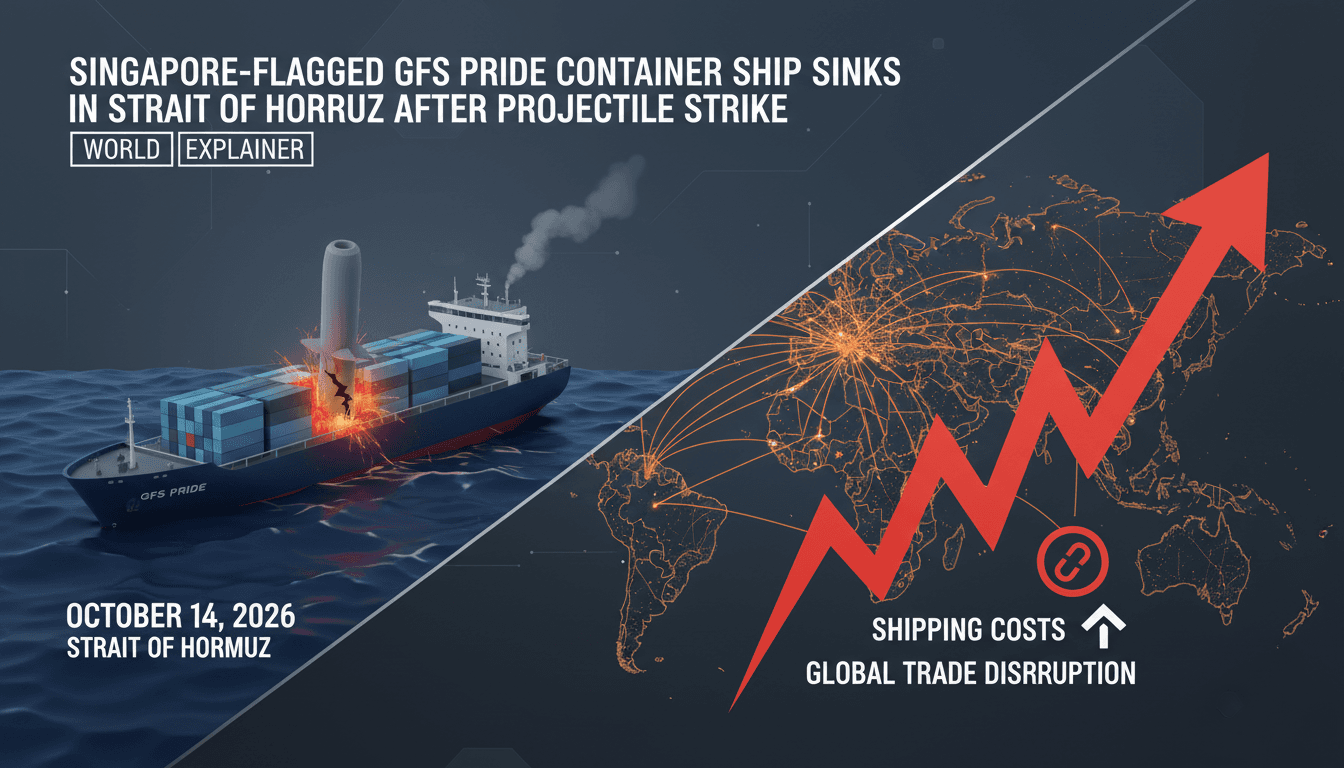
Singapore-Flagged GFS Pride Container Ship Sinks in Strait of Hormuz After Projectile Strike
Why it matters
The sinking of the GFS Pride highlights escalating risks in a critical maritime corridor, impacting global trade and energy prices.
What happened (in 30 seconds)
- The GFS Pride sank in the Strait of Hormuz on October 14, 2026, after being struck by projectiles the previous day.
- All 21 crew members were evacuated safely, with no injuries reported, while a second vessel, GFS Giselle, sustained damage but reached safety.
- Iranian authorities claimed the ship hit a naval mine, but maritime agencies attributed the incident to projectiles amid rising tensions in the US-Iran conflict.
The context you actually need
- The Strait of Hormuz is a vital chokepoint for global oil shipments, with about 20% of the world's oil passing through it.
- The US-Iran conflict, which escalated in February 2026, has led to increased attacks on commercial shipping, with over 20 vessels targeted in October alone.
- Insurance premiums for shipping in the region are rising, affecting logistics and trade routes critical to economies like Dubai's.
What's really happening
The sinking of the GFS Pride is not just an isolated maritime incident; it reflects a broader trend of escalating hostilities in the Strait of Hormuz, a crucial artery for global oil and trade. Since the onset of the US-Iran conflict in February 2026, Iran has intensified its military actions against commercial shipping, particularly in response to US sanctions and port blockades. This has created a precarious environment for vessels transiting the area, leading to increased risks and costs for shipping companies.
The GFS Pride's sinking marks the third commercial vessel lost since the conflict began, underscoring the severity of the situation. The Iranian Revolutionary Guard Corps (IRGC) has claimed that the ship struck a naval mine, a narrative that diverges from maritime monitoring agencies' reports attributing the damage to projectiles. This discrepancy highlights the fog of war and the challenges in verifying incidents in conflict zones.
As attacks on shipping escalate, the implications for global trade are significant. Shipping companies are facing higher insurance premiums due to the increased risk, which will likely be passed on to consumers in the form of higher prices for goods. The logistics sector, particularly in regions like Dubai that rely heavily on maritime trade, is already feeling the pinch. Increased shipping costs can lead to higher fuel prices and ultimately affect the cost of living for residents.
Moreover, the geopolitical landscape is shifting as nations reassess their maritime security strategies. The UK Maritime Trade Operations (UKMTO) has issued updated warnings, indicating that the situation is being closely monitored but without immediate military intervention. This cautious approach suggests that while the risk of further escalations remains, there is also a desire to avoid a broader conflict that could disrupt global oil supplies even more severely.
In summary, the sinking of the GFS Pride is a symptom of a larger geopolitical struggle that is reshaping maritime trade dynamics. As tensions continue to rise, the ripple effects will be felt across various sectors, particularly in logistics and energy, leading to increased costs and potential disruptions for consumers.
Who feels it first (and how)
- Shipping companies: Facing higher insurance costs and potential operational disruptions.
- Logistics firms: Experiencing delays and increased shipping rates, impacting supply chains.
- Consumers: Likely to see rising prices for goods and fuel as costs are passed down.
- Energy sector: Oil prices may spike due to reduced shipping capacity and increased risk.
- Dubai residents: Directly affected by higher costs of living due to increased shipping expenses.
What to watch next
- Shipping insurance rates: Monitor changes in premiums as they reflect the perceived risk in the region.
- Global oil prices: Watch for fluctuations as disruptions in the Strait of Hormuz could impact supply.
- Geopolitical developments: Keep an eye on diplomatic efforts or military escalations that could further affect maritime security.
The GFS Pride sank after being struck by projectiles; all crew members were evacuated safely.
Shipping costs will rise as insurance premiums increase and operational risks grow.
The potential for further military escalation in the region and its impact on global trade.
Frequently Asked Questions
- Why it matters?
- The sinking of the GFS Pride highlights escalating risks in a critical maritime corridor, impacting global trade and energy prices.
- What happened (in 30 seconds)?
- The GFS Pride sank in the Strait of Hormuz on October 14, 2026, after being struck by projectiles the previous day. All 21 crew members were evacuated safely, with no injuries reported, while a second vessel, GFS Giselle, sustained damage but reached safety. Iranian authorities claimed the ship hit a naval mine, but maritime agencies attributed the incident to projectiles amid rising tensions in the US-Iran conflict.
- What's really happening?
- The sinking of the GFS Pride is not just an isolated maritime incident; it reflects a broader trend of escalating hostilities in the Strait of Hormuz, a crucial artery for global oil and trade. Since the onset of the US-Iran conflict in February 2026, Iran has intensified its military actions against commercial shipping, particularly in response to US sanctions and port blockades. This has created a precarious environment for vessels transiting the area, leading to increased risks and costs for
- Who feels it first (and how)?
- Shipping companies: Facing higher insurance costs and potential operational disruptions. Logistics firms: Experiencing delays and increased shipping rates, impacting supply chains. Consumers: Likely to see rising prices for goods and fuel as costs are passed down. Energy sector: Oil prices may spike due to reduced shipping capacity and increased risk. Dubai residents: Directly affected by higher costs of living due to increased shipping expenses.
- What to watch next?
- Shipping insurance rates: Monitor changes in premiums as they reflect the perceived risk in the region. Global oil prices: Watch for fluctuations as disruptions in the Strait of Hormuz could impact supply. Geopolitical developments: Keep an eye on diplomatic efforts or military escalations that could further affect maritime security.
Global markets, investing, and macroeconomics from a premier financial newsroom.
"Bloomberg is respected for in-depth financial reporting and data-driven analysis."
— A47 Editor
Container Ship Sinks in Strait of Hormuz as Attacks Ramp Up
A cargo ship sank in the Strait of Hormuz following a strike that ignited a fire, prompting the evacuation of crew members, as reported by the Maritime and Port Authority of Singapore. This incident underscores the escalating military tensions in the...
International coverage of politics, culture, and current affairs.
"BBC News is widely regarded as a reputable international news organization, known for its impartial tone and public service mandate."
— A47 Editor
Container ship hit by projectile sinks in Strait of Hormuz, Singapore says
The Singapore-flagged container ship GFS Pride sank in the Strait of Hormuz after being struck by a projectile on Tuesday, prompting the successful evacuation of all 21 crew members. Maritime authorities confirmed the incident, which raises concerns ...
English-language reporting on Saudi politics, policy, and society.
"Saudi Gazette reflects mainstream Saudi institutional perspectives."
— A47 Editor
Container ship sinks near Hormuz after being hit by unknown projectile
A Singapore-flagged container ship, GFS Pride, has sunk near the Strait of Hormuz after being struck by an unknown projectile, leading to a fire onboard. All 21 crew members were safely evacuated. This incident marks the second vessel sinking since t...