
Houthis Surround Taiz City as Saudi-Backed Forces Launch Counteroffensive in Yemen
Why it matters
The ongoing conflict in Yemen threatens stability in the Red Sea region, a critical artery for global shipping and energy exports.
What happened (in 30 seconds)
- Houthis encircled Taiz city by cutting off key supply routes and seizing strategic districts, escalating the conflict.
- Saudi-backed Yemeni forces launched Operation Dawn of Yemen to reclaim Houthi-held territories, supported by a significant air campaign.
- Retaliatory strikes from Houthis targeted Saudi infrastructure, including missile attacks on Riyadh airport and oil facilities.
The context you actually need
- The Yemen conflict began in 2014 when Houthis seized control of Sanaa, prompting a Saudi-led intervention to support the government.
- A 2022 truce collapsed, leading to renewed Houthi advances along the Red Sea coast, including strategic ports near the Bab al-Mandab Strait.
- Taiz city is a critical location for both sides, serving as a gateway for supplies and military operations, making its control vital for the Yemeni government.
What's really happening
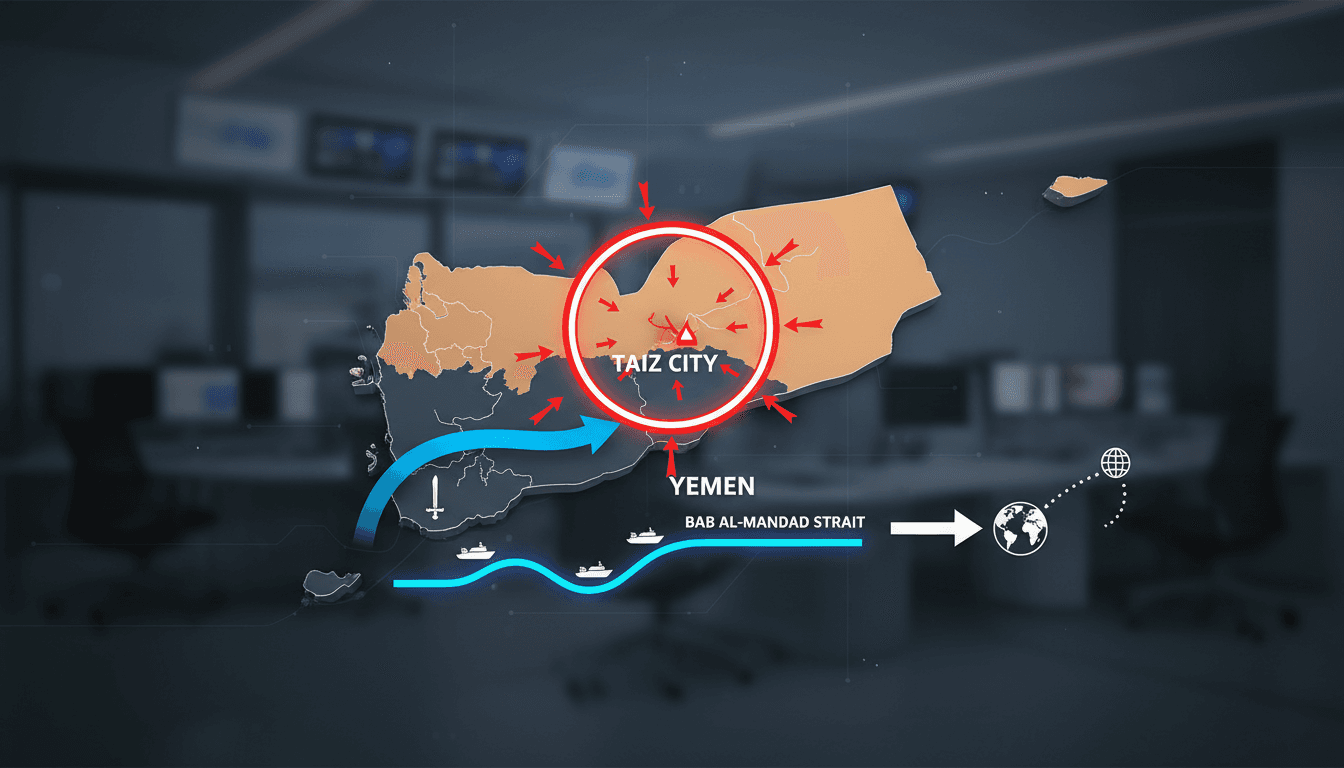
In early October 2026, the Houthis made significant territorial gains by effectively encircling Taiz city, a strategic stronghold for the Yemeni government. They achieved this by cutting the main Taiz-Aden road and capturing key areas such as al-Safiya and al-Turba. This encirclement not only disrupts government supply lines but also heightens the urgency for a counteroffensive. In response, the Yemeni presidential council announced Operation Dawn of Yemen, aiming to reclaim all Houthi-held territories.
Saudi-backed forces, bolstered by approximately 100 coalition aircraft, initiated a series of airstrikes targeting Houthi positions along the Red Sea coast, particularly in the Dhubab district near the Bab al-Mandab Strait. This area is crucial for global shipping, making the conflict's escalation particularly concerning for international trade. The Saudi-led coalition claims to have destroyed Houthi weapons depots, but the Houthis have retaliated with missile and drone strikes on Saudi targets, including Riyadh airport and oil facilities, dismissing government advances as ineffective.
The fighting has resulted in significant casualties, with dozens reported dead in Taiz province alone. The situation is fluid, with ongoing clashes and a humanitarian crisis exacerbated by the siege. The Houthis' ability to maintain pressure on Taiz while launching retaliatory strikes indicates a strategic advantage, complicating the Saudi-led coalition's efforts to stabilize the region.
As the conflict escalates, the implications extend beyond Yemen. The Red Sea is a vital shipping route, and disruptions here could lead to increased shipping insurance premiums and potential delays in energy exports from the UAE. This could indirectly affect consumers and businesses in Dubai, where elevated fuel costs and travel advisories may arise from the ongoing hostilities.
Who feels it first (and how)
- Shipping companies: Increased insurance costs and potential route disruptions.
- Energy exporters: Possible delays and heightened security measures affecting oil and gas shipments.
- Tourism sectors in the UAE: Travel advisories may deter visitors, impacting local businesses.
- Local civilians in Taiz: Facing immediate threats from the ongoing military encirclement and humanitarian crises.
What to watch next
- Houthi military capabilities: Monitor their ability to sustain pressure on Taiz and launch strikes on Saudi targets, which could escalate the conflict further.
- Saudi coalition response: Watch for changes in military strategy or increased international support, which could shift the balance of power.
- Global shipping rates: Keep an eye on fluctuations in shipping costs and insurance premiums, which may reflect the conflict's impact on trade routes.
The Houthis have encircled Taiz city and are actively engaging in military operations.
Continued military escalation from both sides, with potential for broader regional implications.
The long-term outcomes of Operation Dawn of Yemen and its effectiveness in reclaiming territory.
Frequently Asked Questions
- Why it matters?
- The ongoing conflict in Yemen threatens stability in the Red Sea region, a critical artery for global shipping and energy exports.
- What happened (in 30 seconds)?
- Houthis encircled Taiz city by cutting off key supply routes and seizing strategic districts, escalating the conflict. Saudi-backed Yemeni forces launched Operation Dawn of Yemen to reclaim Houthi-held territories, supported by a significant air campaign. Retaliatory strikes from Houthis targeted Saudi infrastructure, including missile attacks on Riyadh airport and oil facilities.
- What's really happening?
- In early October 2026, the Houthis made significant territorial gains by effectively encircling Taiz city, a strategic stronghold for the Yemeni government. They achieved this by cutting the main Taiz-Aden road and capturing key areas such as al-Safiya and al-Turba. This encirclement not only disrupts government supply lines but also heightens the urgency for a counteroffensive. In response, the Yemeni presidential council announced Operation Dawn of Yemen, aiming to reclaim all Houthi-held terr
- Who feels it first (and how)?
- Shipping companies: Increased insurance costs and potential route disruptions. Energy exporters: Possible delays and heightened security measures affecting oil and gas shipments. Tourism sectors in the UAE: Travel advisories may deter visitors, impacting local businesses. Local civilians in Taiz: Facing immediate threats from the ongoing military encirclement and humanitarian crises.
- What to watch next?
- Houthi military capabilities: Monitor their ability to sustain pressure on Taiz and launch strikes on Saudi targets, which could escalate the conflict further. Saudi coalition response: Watch for changes in military strategy or increased international support, which could shift the balance of power. Global shipping rates: Keep an eye on fluctuations in shipping costs and insurance premiums, which may reflect the conflict's impact on trade routes.
Editor-curated FT homepage stories spanning markets, business, world, and opinion.
"The Financial Times is a globally respected business publication with a centrist/center-left tone and strong markets focus."
— A47 Editor
Houthis encircle new target in conflict with Saudi-backed forces
Iran-backed Houthi rebels have encircled Taiz, one of Yemen's largest cities, intensifying the ongoing conflict with Saudi-backed forces. This escalation follows a series of recent military actions, including missile strikes on Saudi infrastructure a...
Macro commentary, policy analysis, growth/inflation themes, and global outlooks.
"Contextual macro coverage that complements day-to-day market headlines."
— A47 Editor
Iran war: Missiles target Saudi oil hub as Yemen conflict escalates
Recent missile strikes have targeted Saudi Arabia's oil infrastructure, escalating the ongoing conflict involving Iran-backed Houthi rebels in Yemen. This attack is part of a broader pattern of violence that has intensified in recent weeks, with sign...
Regional coverage and analysis focused on politics, diplomacy, and business across the Middle East.
"Al-Monitor is known for analytical reporting on Middle East politics and policy developments."
— A47 Editor
In Yemen's besieged Taiz, families take shelter as Houthis close in
In Taiz, Yemen, families like that of Ali Hassan are seeking refuge in schools as Houthi forces tighten their siege on the city, intensifying the ongoing conflict with Saudi-backed government troops. The situation has forced many residents to flee mu...