
DRC Ebola Death Toll Passes 5,000 as Bundibugyo Outbreak Spreads Across Eight Provinces and Neighboring States
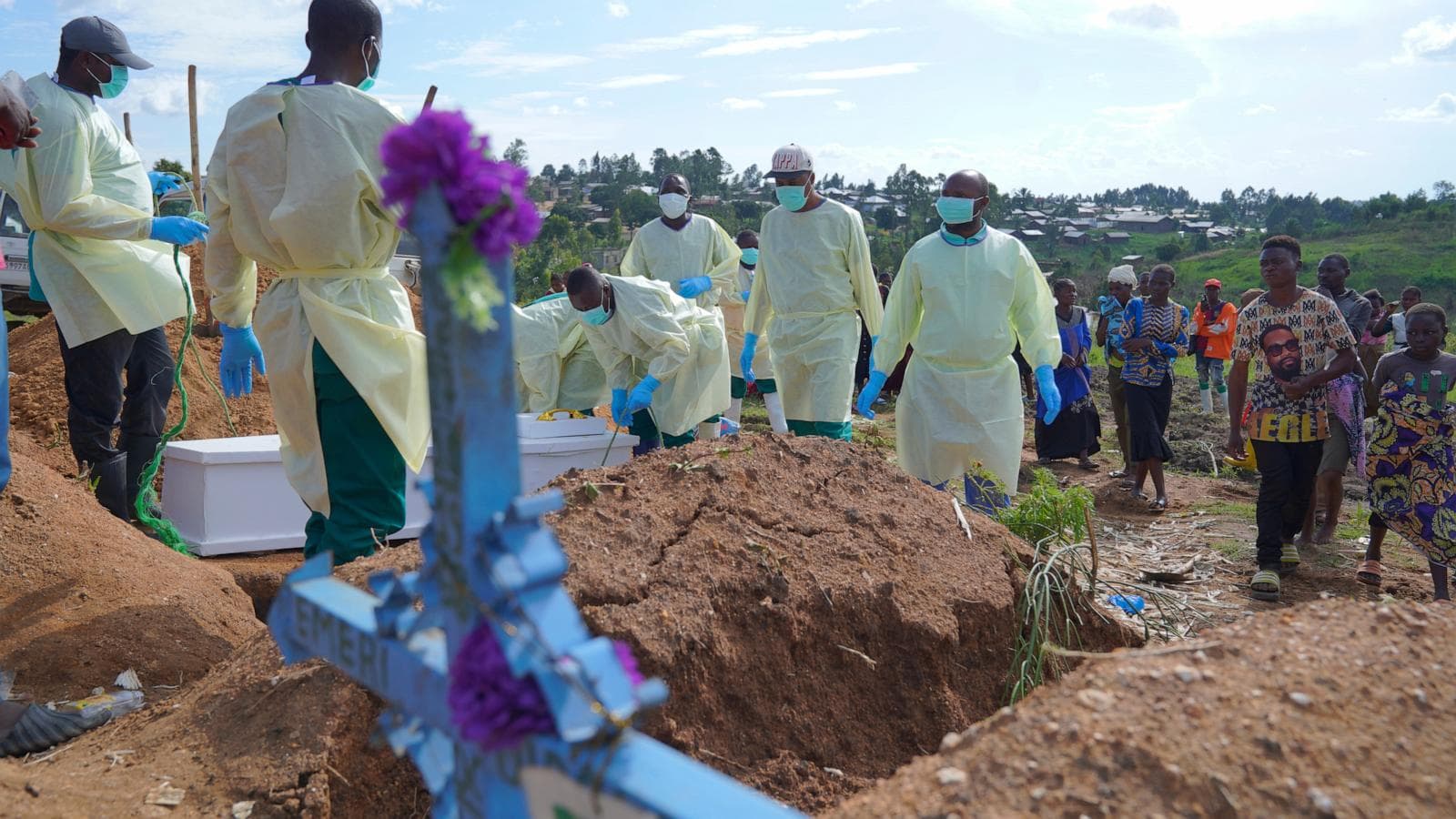
Why it matters
The expansion of an outbreak with a 48.6% fatality rate into four nations exposes systemic vulnerabilities in global epidemiological containment and African regional border corridors.
What happened (in 30 seconds)
- Casualties cross 5,000: The Democratic Republic of the Congo confirmed 5,026 deaths from 10,351 cases of the Bundibugyo Ebola strain between mid-May and October 31, 2026.
- Geographic spread accelerates: The virus has reached 67 health zones across eight Congolese provinces, with confirmed infections emerging across borders in Uganda, Kenya, and Nigeria.
- Containment systems fracture: Approximately 80% of new infections occur outside traced contact chains, while one-third of all fatalities occur outside designated clinical facilities.
The context you actually need
- A strain without countermeasures: The Bundibugyo strain driving this outbreak possesses no approved commercial vaccines or designated therapeutic treatments, unlike the Zaire strain.
- Structural instability blocks access: Insecurity linked to active armed groups, including the M23 and the Allied Democratic Forces, restricts healthcare access across epicenters in Ituri and North Kivu.
- Health labor stoppage: Unpaid wage disputes have triggered local health worker strikes, directly degrading operational capacity at isolation wards and field clinics.
What's really happening
The operational failure to contain the current Ebola virus disease outbreak in eastern Democratic Republic of the Congo stems from a breakdown in the structural incentives required for classic epidemic suppression. Successful epidemiological management relies on rapid case detection, unbroken contact tracing, and immediate clinical isolation. When any of these mechanisms fail, viral transmission scales exponentially rather than linearly.
In this outbreak, the epidemiological feedback loop has decoupled. The reporting that 80% of confirmed cases arise outside documented contact lists confirms that public health authorities are chasing transmissions rather than anticipating them. Because approximately one-third of infected individuals die within their communities rather than inside isolation units, informal transmission vectors remain active. Community mistrust, manifested through attacks on personnel and medical installations, directly incentivizes individuals to conceal symptomatic relatives, which delays clinical intervention.
Simultaneously, the economic alignment of front-line responders has broken down. Healthcare workers operating in high-exposure environments face severe personal risk. When public systems fail to disburse agreed wages, labor strikes follow. The resulting personnel shortfalls degrade clinical throughput, leaving specialized treatment units understaffed. This operational vacuum increases community reliance on home care, expanding the surface area for transmission.
Geopolitical realities further compromise field containment. The active presence of non-state armed groups, specifically M23 and the Allied Democratic Forces across North Kivu and Ituri, establishes physical exclusion zones. Epidemiological teams cannot safely enter these contested territories to run contact mapping or quarantine protocols. The inability to establish consistent observation perimeters allows the virus to move unmonitored along regional transport arteries.
Because the Bundibugyo strain lacks approved vaccine countermeasures, containment depends entirely on non-pharmaceutical interventions: rapid testing, rigorous isolation, and disciplined contact monitoring. The convergence of an active security crisis, institutional wage arrears, and missing medical countermeasures has transformed a localized outbreak into a multi-provincial, cross-border event affecting transit corridors into Uganda, Kenya, and Nigeria.
Who feels it first (and how)
- Front-line clinical workers in eastern DRC: Local staff face high occupational exposure to viral transmission alongside operational disruption from unpaid wage disputes.
- Cross-border logistics operators: Transport companies moving cargo along transit routes connecting DRC, Uganda, and Kenya face increased screening friction, delays, and border health checks.
- Extractive sector operations in North Kivu and Ituri: Mining and resource exploration firms encounter operational disruptions due to restricted personnel movement and local security constraints.
- Regional public health systems in East Africa: Healthcare authorities in Uganda, Kenya, and Nigeria must redirect municipal budgets and diagnostic capacity to monitor potential transmission chains.
What to watch next
- Cross-border containment data: Watch whether confirmed case counts in Uganda, Kenya, and Nigeria remain isolated importations or develop sustained local community transmission clusters.
- Health worker labor negotiations: Monitor whether the Congolese Ministry of Health settles outstanding wage arrears, which is required to end clinical strikes and restore isolation center capacity.
- Regional transport protocols: Track whether neighboring central and east African jurisdictions introduce mandatory quarantine mandates or trade transit restrictions along primary commercial borders.
As of October 31, 2026, the outbreak has generated 10,351 confirmed cases, 5,026 deaths (a 48.6% fatality rate), and 2,788 recoveries across eight Congolese provinces, with imported cases documented in Uganda, Kenya, and Nigeria.
The absence of approved vaccines or targeted therapies for the Bundibugyo strain means regional caseloads will continue climbing until basic contact tracing and isolation capacity are restored.
It remains undetermined whether regional health authorities can halt transmission chains before major East African urban transit hubs experience sustained community-level spread.
Frequently Asked Questions
- Why it matters?
- The expansion of an outbreak with a 48.6% fatality rate into four nations exposes systemic vulnerabilities in global epidemiological containment and African regional border corridors.
- What happened (in 30 seconds)?
- Casualties cross 5,000: The Democratic Republic of the Congo confirmed 5,026 deaths from 10,351 cases of the Bundibugyo Ebola strain between mid-May and October 31, 2026. Geographic spread accelerates: The virus has reached 67 health zones across eight Congolese provinces, with confirmed infections emerging across borders in Uganda, Kenya, and Nigeria. Containment systems fracture: Approximately 80% of new infections occur outside traced contact chains, while one-third of all fatalities occur ou
- What's really happening?
- The operational failure to contain the current Ebola virus disease outbreak in eastern Democratic Republic of the Congo stems from a breakdown in the structural incentives required for classic epidemic suppression. Successful epidemiological management relies on rapid case detection, unbroken contact tracing, and immediate clinical isolation. When any of these mechanisms fail, viral transmission scales exponentially rather than linearly. In this outbreak, the epidemiological feedback loop has
- Who feels it first (and how)?
- Front-line clinical workers in eastern DRC: Local staff face high occupational exposure to viral transmission alongside operational disruption from unpaid wage disputes. Cross-border logistics operators: Transport companies moving cargo along transit routes connecting DRC, Uganda, and Kenya face increased screening friction, delays, and border health checks. Extractive sector operations in North Kivu and Ituri: Mining and resource exploration firms encounter operational disruptions due to restri
- What to watch next?
- Cross-border containment data: Watch whether confirmed case counts in Uganda, Kenya, and Nigeria remain isolated importations or develop sustained local community transmission clusters. Health worker labor negotiations: Monitor whether the Congolese Ministry of Health settles outstanding wage arrears, which is required to end clinical strikes and restore isolation center capacity. Regional transport protocols: Track whether neighboring central and east African jurisdictions introduce mandatory q
International coverage of politics, culture, and current affairs.
"BBC News is widely regarded as a reputable international news organization, known for its impartial tone and public service mandate."
— A47 Editor
More than 5,000 die from Ebola in DR Congo's deadliest outbreak
The Democratic Republic of Congo's Ebola outbreak has become its deadliest on record, with government data showing more than 5,000 deaths and over 10,000 people infected with the rare virus, according to BBC News. Reports indicate there are no approv...
English-language reporting on Saudi politics, policy, and society.
"Saudi Gazette reflects mainstream Saudi institutional perspectives."
— A47 Editor
Ebola death toll in DR Congo surpasses 5,000 as outbreak spreads across eight provinces
Ebola deaths in the Democratic Republic of Congo have surpassed 5,000, with 10,351 cumulative cases reported by the Health Ministry since the outbreak was declared in mid-May, spreading across eight provinces in what is the country's largest and dead...
Medical headlines, wellness tips, and public health guidance.
"ABC News delivers broad national coverage with a mainstream editorial stance, focusing on accessibility and balanced reporting."
— A47 Editor
Congo's Ebola deaths top 5,000 as fear of continent-wide spread mounts
Congo's Ebola outbreak has surpassed 5,000 deaths, according to ABC News, as the disease continues to spread and fears of a continent-wide epidemic grow. Health authorities describe the outbreak as among the fastest-growing on record.
Comprehensive coverage of Middle Eastern and global issues.
"Al Jazeera is a prominent voice from the Global South, especially the Middle East, with an emphasis on underreported stories."
— A47 Editor
Ebola death toll in DR Congo passes 5,000
Ebola deaths in the Democratic Republic of Congo have passed 5,000, according to Al Jazeera, as authorities struggle to control an outbreak for which no approved treatments or vaccines exist.
Global news coverage with extensive reporting on Middle Eastern conflicts and geopolitics.
"Al Jazeera is a Qatar-based broadcaster known for wide regional coverage and alternative perspectives."
— A47 Editor
Ebola death toll in DR Congo passes 5,000
Ebola deaths in the Democratic Republic of Congo have passed 5,000, according to Al Jazeera, as authorities struggle to control an outbreak for which no approved treatments or vaccines exist.
International news, politics, and culture.
"Sky News is a UK-based 24-hour channel known for fast-breaking news and political coverage."
— A47 Editor
Ebola outbreak kills more than 5,000 people in Democratic Republic of Congo
Ebola deaths in the Democratic Republic of Congo (DRC) have surpassed 5,000, according to government data, with cases recorded in eight of the country's 26 provinces. The base report, published by Sky News citing Reuters, frames the outbreak as a sev...
Medical headlines, wellness tips, and public health guidance.
"ABC News delivers broad national coverage with a mainstream editorial stance, focusing on accessibility and balanced reporting."
— A47 Editor
Experts warn of wider spread as Ebola outbreak reaches plateau
Congo's Ebola outbreak passed 10,000 confirmed cases, a grim milestone that has raised questions about whether health authorities are losing their ability to contain the virus, with experts warning of wider spread even as the outbreak appears to reac...