
Ebola Bundibugyo Outbreak in DRC Surpasses 10000 Confirmed Cases as Weekly Incidence Plateaus at High Transmission Levels
Why it matters
The stabilization of transmission at 400 to 500 cases per week signals an entrenched public health emergency that strains continental containment infrastructure without triggering the immediate, total shutdowns of earlier epidemics.
What happened (in 30 seconds)
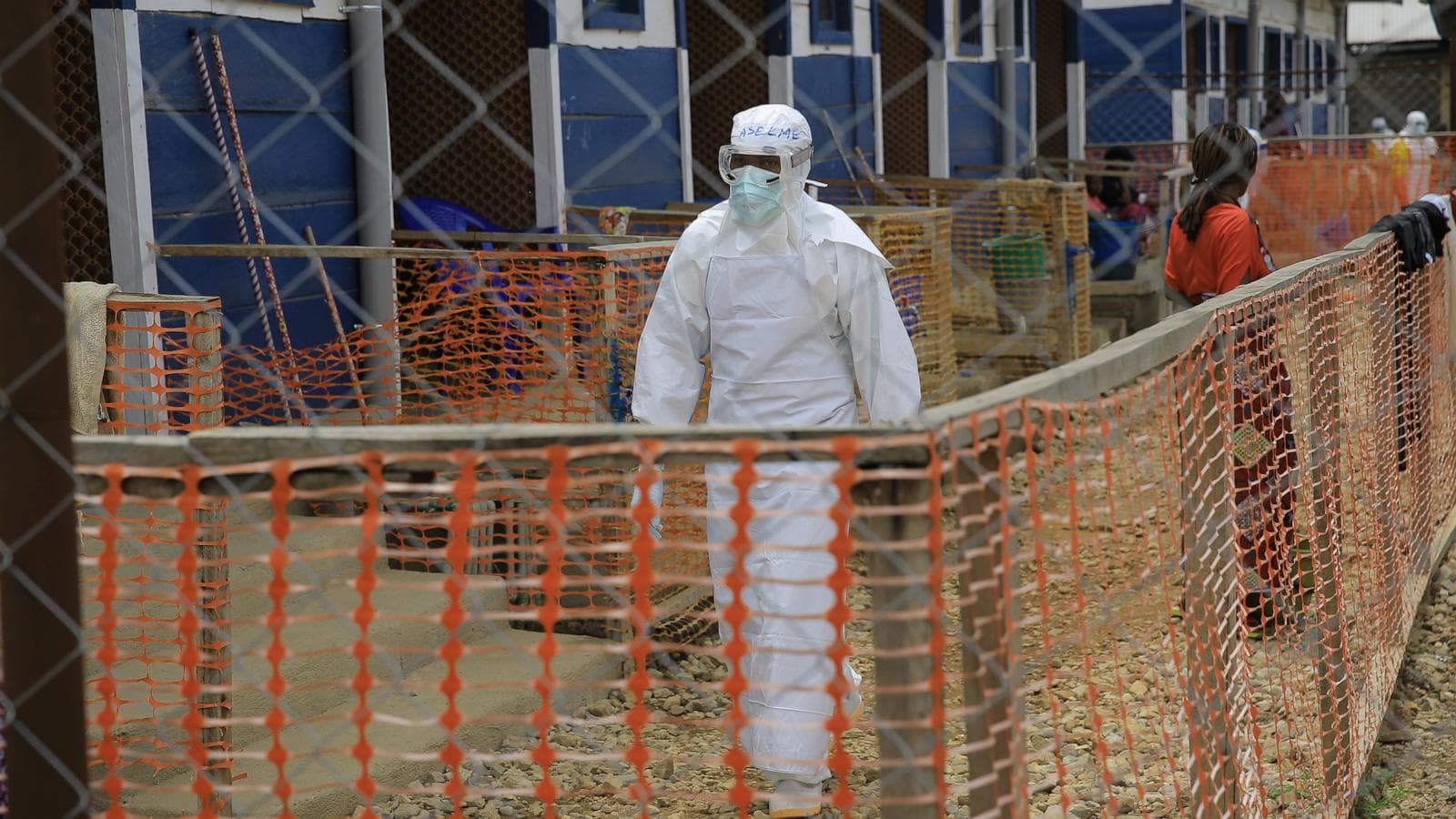
- A critical case threshold was crossed: Confirmed cases of the Bundibugyo Ebola virus strain reached 10,000 in the Democratic Republic of Congo in late October 2026, resulting in nearly 5,000 fatalities.
- Transmission settled into a high plateau: Rather than growing exponentially or receding under current interventions, new case counts have flattened at 400 to 500 infections per week.
- Cross-border spillovers were detected: While primary transmission remains in the DRC, secondary cases have been documented across borders in Kenya, Nigeria, and Uganda, alongside isolated travel-related detections in France.
The context you actually need
- This is the DRC's 17th outbreak, but its first of this scale: It represents the largest outbreak in the nation's history and the second-largest overall after the 2014–2016 West Africa epidemic.
- Diagnostic blind spots delayed the initial response: Because early laboratory screenings prioritized the more common Zaire strain, the Bundibugyo strain spread undetected for months before an official declaration in May 2026.
- No commercial countermeasures existed at onset: Unlike the Zaire strain, the Bundibugyo virus began circulating without an approved vaccine or targeted therapeutic, eliminating the standard ring-vaccination strategy used in previous years.
What's really happening
The operational challenge of the current outbreak is driven by structural disconnects rather than pure viral kinetics. A weekly plateau of 400 to 500 cases may appear to indicate stabilization, but epidemiologically, it reveals a system operating at capacity limits. With fewer than 25% of new cases traceable to known contacts, more than three-quarters of transmission chains are moving outside formal monitoring systems.
This dynamic is sustained by an alignment of operational headwinds: ongoing armed conflict in eastern DRC, community mistrust, health system gaps, and a marked reduction in external aid budgets. In earlier outbreaks caused by the Zaire strain, response teams deployed established vaccines to establish biological barriers around confirmed cases. With the Bundibugyo strain lacking an approved prophylactic or clinical treatment at the time of declaration, containment relies entirely on non-pharmaceutical interventions: rapid isolation, safe burials, community engagement, and manual contact tracing.
When contact tracing captures under a quarter of real-time exposures, manual ring fencing breaks down. The virus instead seeds quietly through domestic transport networks, eventually crossing borders into regional hubs including Kenya, Nigeria, and Uganda.
At the international level, political incentives point away from unilateral trade or flight bans. African health ministers participating in continental summits have advocated keeping borders open with enhanced screening rather than imposing hard border closures. Shutting national borders historically incentivizes informal crossings, which further blinds surveillance teams to regional caseloads.
Concurrently, international capital for biosecurity has tightened, requiring organizations like the Africa CDC and the World Health Organization to prioritize containment within constrained resource envelopes. Researchers from Emory University and the University of North Carolina project ongoing community transmission through the end of 2026. Consequently, the baseline expectation for commercial operators in East and Central Africa is not a sudden cessation of commerce, but an extended environment of elevated port-of-entry friction, mandatory medical screenings, and ongoing reputational sensitivity. High-resource international nodes, such as Dubai or European hubs, possess isolated clinical capacities capable of intercepting sporadic imported cases without local transmission. The long-term exposure remains focused on supply chain reliability and regulatory overhead across regional trade corridors.
Who feels it first (and how)
- Central and East African logistics and aviation operators: Air and overland carriers must navigate enhanced passenger screening protocols, documentation checks, and localized cargo delays across DRC border corridors.
- Humanitarian and healthcare personnel in high-transmission zones: Local medical teams face acute resource constraints, high infection risks, and security friction in areas with active community mistrust.
- Global biopharma and trial investigators: Research consortia accelerating Bundibugyo candidate vaccines face accelerated timelines to deliver candidate approvals by 2027.
- International business travelers transiting regional hubs: Passengers moving through Nairobi, Entebbe, or regional transit nodes encounter sporadic quarantine checks and secondary screening measures.
What to watch next
- Contact tracing capture rates: If the proportion of newly confirmed cases originating from established contact lists rises significantly above 25%, it will signal that surveillance teams are regaining visibility over transmission chains.
- Cross-border secondary cluster size: Secondary spread within Kenya, Nigeria, or Uganda remaining limited to localized contacts indicates that national screening cordons are preventing sustained independent urban transmission.
- 2027 vaccine deployment schedules: Regulatory progress and field trial milestones for Bundibugyo-specific candidates will dictate whether health authorities can transition from non-pharmaceutical containment back to ring vaccination.
The Bundibugyo outbreak has caused nearly 5,000 deaths across more than 10,000 confirmed cases, stabilizing at 400 to 500 new cases per week with under 25% contact-tracing linkage.
Transmission will continue at elevated rates through the end of 2026, maintaining pressure on African cross-border entry points and local healthcare facilities.
Whether candidate Bundibugyo vaccines will clear regulatory hurdles and enter production fast enough in 2027 to extinguish active transmission chains.
Frequently Asked Questions
- Why it matters?
- The stabilization of transmission at 400 to 500 cases per week signals an entrenched public health emergency that strains continental containment infrastructure without triggering the immediate, total shutdowns of earlier epidemics.
- What happened (in 30 seconds)?
- A critical case threshold was crossed: Confirmed cases of the Bundibugyo Ebola virus strain reached 10,000 in the Democratic Republic of Congo in late October 2026, resulting in nearly 5,000 fatalities. Transmission settled into a high plateau: Rather than growing exponentially or receding under current interventions, new case counts have flattened at 400 to 500 infections per week. Cross-border spillovers were detected: While primary transmission remains in the DRC, secondary cases have been do
- What's really happening?
- The operational challenge of the current outbreak is driven by structural disconnects rather than pure viral kinetics. A weekly plateau of 400 to 500 cases may appear to indicate stabilization, but epidemiologically, it reveals a system operating at capacity limits. With fewer than 25% of new cases traceable to known contacts, more than three-quarters of transmission chains are moving outside formal monitoring systems. This dynamic is sustained by an alignment of operational headwinds: ongoing
- Who feels it first (and how)?
- Central and East African logistics and aviation operators: Air and overland carriers must navigate enhanced passenger screening protocols, documentation checks, and localized cargo delays across DRC border corridors. Humanitarian and healthcare personnel in high-transmission zones: Local medical teams face acute resource constraints, high infection risks, and security friction in areas with active community mistrust. Global biopharma and trial investigators: Research consortia accelerating Bundi
- What to watch next?
- Contact tracing capture rates: If the proportion of newly confirmed cases originating from established contact lists rises significantly above 25%, it will signal that surveillance teams are regaining visibility over transmission chains. Cross-border secondary cluster size: Secondary spread within Kenya, Nigeria, or Uganda remaining limited to localized contacts indicates that national screening cordons are preventing sustained independent urban transmission. 2027 vaccine deployment schedules: R
International news, politics, and culture.
"Sky News is a UK-based 24-hour channel known for fast-breaking news and political coverage."
— A47 Editor
Ebola outbreak kills more than 5,000 people in Democratic Republic of Congo
Ebola deaths in the Democratic Republic of Congo (DRC) have surpassed 5,000, according to government data, with cases recorded in eight of the country's 26 provinces. The base report, published by Sky News citing Reuters, frames the outbreak as a sev...
Medical headlines, wellness tips, and public health guidance.
"ABC News delivers broad national coverage with a mainstream editorial stance, focusing on accessibility and balanced reporting."
— A47 Editor
Experts warn of wider spread as Ebola outbreak reaches plateau
Congo's Ebola outbreak passed 10,000 confirmed cases, a grim milestone that has raised questions about whether health authorities are losing their ability to contain the virus, with experts warning of wider spread even as the outbreak appears to reac...
Corporate leadership, finance, technology, and market trends.
"Fortune covers financial trends, leadership, and innovation with a pragmatic editorial approach."
— A47 Editor
‘Every life saved is worth celebrating’: Congo suffers over 10,000 cases of the fastest-growing and farthest-reaching Ebola outbreak in history
Congo has recorded more than 10,000 cases of Ebola in what is described as the fastest-growing and farthest-reaching outbreak of the disease on record, according to a Fortune report. Officials and aid observers have pointed to weak surveillance as a ...