
Increase in oil and gas tanker traffic through the Strait of Hormuz following US-Iran agreement
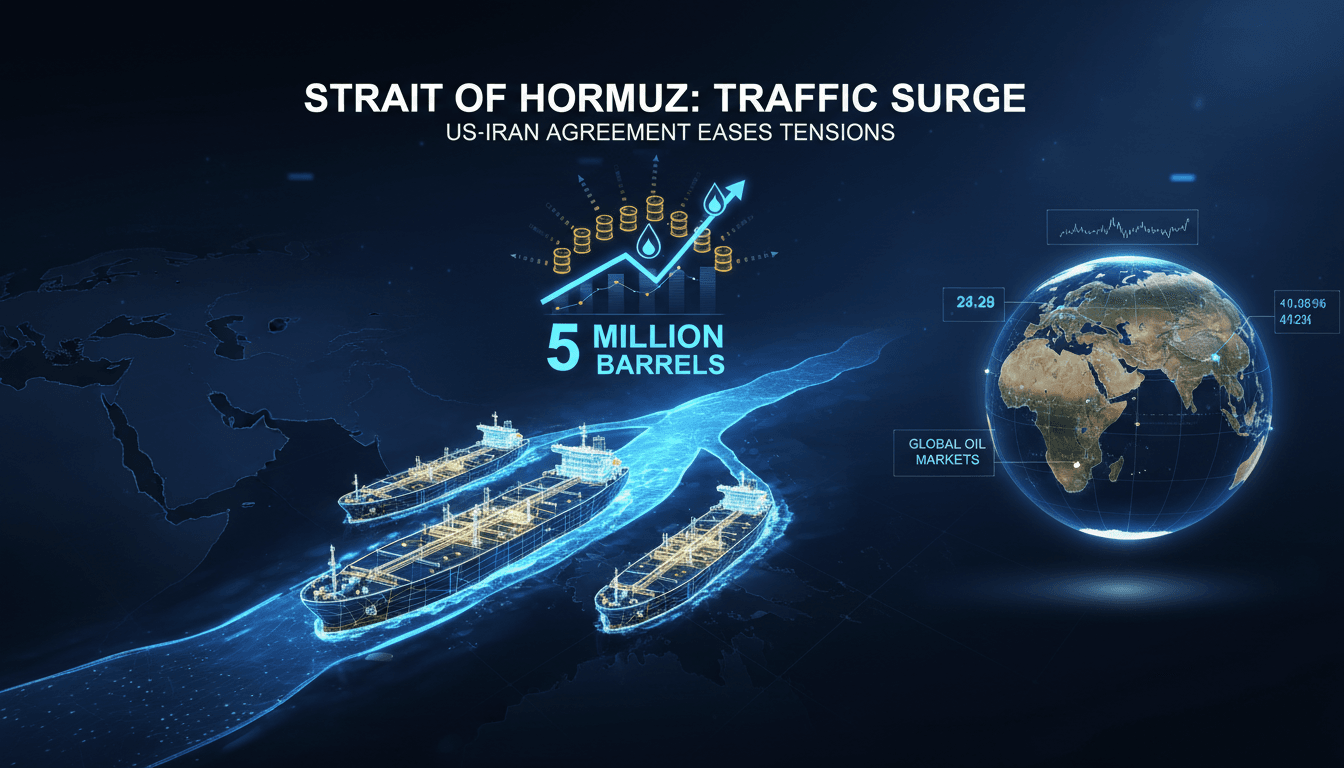
Here's what it means for you.
The recent increase in oil and gas tanker traffic through the Strait of Hormuz signals a potential shift in the geopolitical landscape, influenced by a temporary agreement between the U.S. and Iran. This development may lead to a more stable shipping environment, impacting global oil markets and energy supply chains. Stakeholders in the energy sector should remain vigilant as these changes could affect pricing and availability. As tensions ease, the normalization of shipping operations could foster greater economic cooperation in the region. This situation warrants close monitoring, as fluctuations in oil prices may arise from increased tanker activity.
What happened
Three oil tankers successfully crossed the Strait of Hormuz, transporting approximately 5 million barrels of oil. This significant movement of vessels is a direct result of a temporary agreement between the United States and Iran, which has eased regional tensions. The successful passage of these tankers marks a notable moment in the ongoing dynamics of maritime operations in this critical chokepoint.
The Korean tanker 'VL Breeze' carried 2 million barrels of Qatari condensate and UAE crude, while the Liberian-flagged 'Blata Carrier' transported an equal volume of Saudi crude. Additionally, seven gas carriers linked to Qatar have recently entered the strait, indicating a surge in shipping activity.
The Context
The Strait of Hormuz is a vital chokepoint for global oil shipments, making any changes in shipping dynamics particularly significant. The recent agreement between the U.S. and Iran has influenced shipping activities, allowing for a greater number of vessels to navigate this crucial waterway. The increase in gas carriers entering the strait is the highest since the onset of the conflict, highlighting a potential shift in regional stability.
This development not only facilitates the movement of critical energy supplies but also reflects a broader geopolitical landscape that may be evolving. Stakeholders in the energy sector, including producers and consumers, will need to assess the implications of these changes on their operations and strategies.
Takeaway
The increase in tanker traffic through the Strait of Hormuz may signal a gradual normalization of shipping operations in the region. As shipping activity rises, it will be essential to monitor further developments in U.S.-Iran relations and their impact on maritime operations. Fluctuations in oil prices are likely as the volume of tanker traffic increases, which could affect global markets.
In the coming weeks, stakeholders should keep a close eye on geopolitical tensions and their potential effects on shipping routes and energy supplies. The situation remains fluid, and any shifts could have significant implications for the global oil landscape.
Sports reporting with a focus on Saudi and regional competitions.
"Okaz sports coverage is broad and audience-friendly, with strong attention to Saudi teams and leagues."
— A47 Editor
5 ملايين برميل نفط تعبر مضيق هرمز إلى الأسواق العالمية
Three oil tankers successfully crossed the Strait of Hormuz today, transporting approximately 5 million barrels of crude oil and condensates to Asian and regional markets, following a temporary agreement between the United States and Iran. The South ...
Pan-Arab news coverage spanning politics, business, sports, and regional affairs.
"Asharq Al-Awsat reflects a broad Arab editorial perspective with strong attention to regional geopolitics."
— A47 Editor
7 ناقلات غاز فارغة مرتبطة بقطر تدخل مضيق هرمز
On Tuesday, two giant tankers that had been stranded crossed the Strait of Hormuz, while seven liquefied natural gas carriers linked to Qatar entered the strait. This movement of vessels highlights ongoing maritime activity in a critical shipping rou...
Pan-Arab news coverage spanning politics, business, sports, and regional affairs.
"Asharq Al-Awsat reflects a broad Arab editorial perspective with strong attention to regional geopolitics."
— A47 Editor
تزايد عبور الناقلات لمضيق هرمز تدريجياً دون تغير ملموس في الأسعار
The movement of oil tankers through the Strait of Hormuz has gradually increased, as reported on Monday, despite ongoing uncertainty surrounding the outcomes of U.S.-Iran negotiations, which have kept war risk premiums elevated.