
Putin Welcomes Rare Call from Finnish and Norwegian Leaders as Nordic-Russian Channel Reopens Ahead of Abu Dhabi Talks
Why it matters
The resumption of bilateral communication between border-state leadership and Moscow provides the operational diplomatic runway for scheduled multilateral talks in Abu Dhabi, directly affecting long-term global energy corridors and regional sanctions compliance frameworks.
What happened (in 30 seconds)
* A rare diplomatic opening: On October 27, 2026, Finnish President Alexander Stubb and Norwegian Prime Minister Jonas Gahr Støre held an unannounced 90-minute telephone discussion with Russian President Vladimir Putin, marking the first direct leadership dialogue between Moscow and European capitals aligned with Ukraine since 2023. * Public reception from Moscow: At an October 29, 2026 press conference following a Russia-Africa summit, Putin publicly welcomed the engagement, stating that Moscow favors normalizing ties on bilateral or EU-wide levels with actors seeking structured solutions rather than strategic confrontation. * Pre-negotiation positioning: The Nordic leaders spoke in their national capacities following an October 20 meeting with Ukrainian President Volodymyr Zelensky in Oslo, using the call to transmit preliminary terms ahead of planned United States-mediated discussions hosted in Abu Dhabi.
The context you actually need
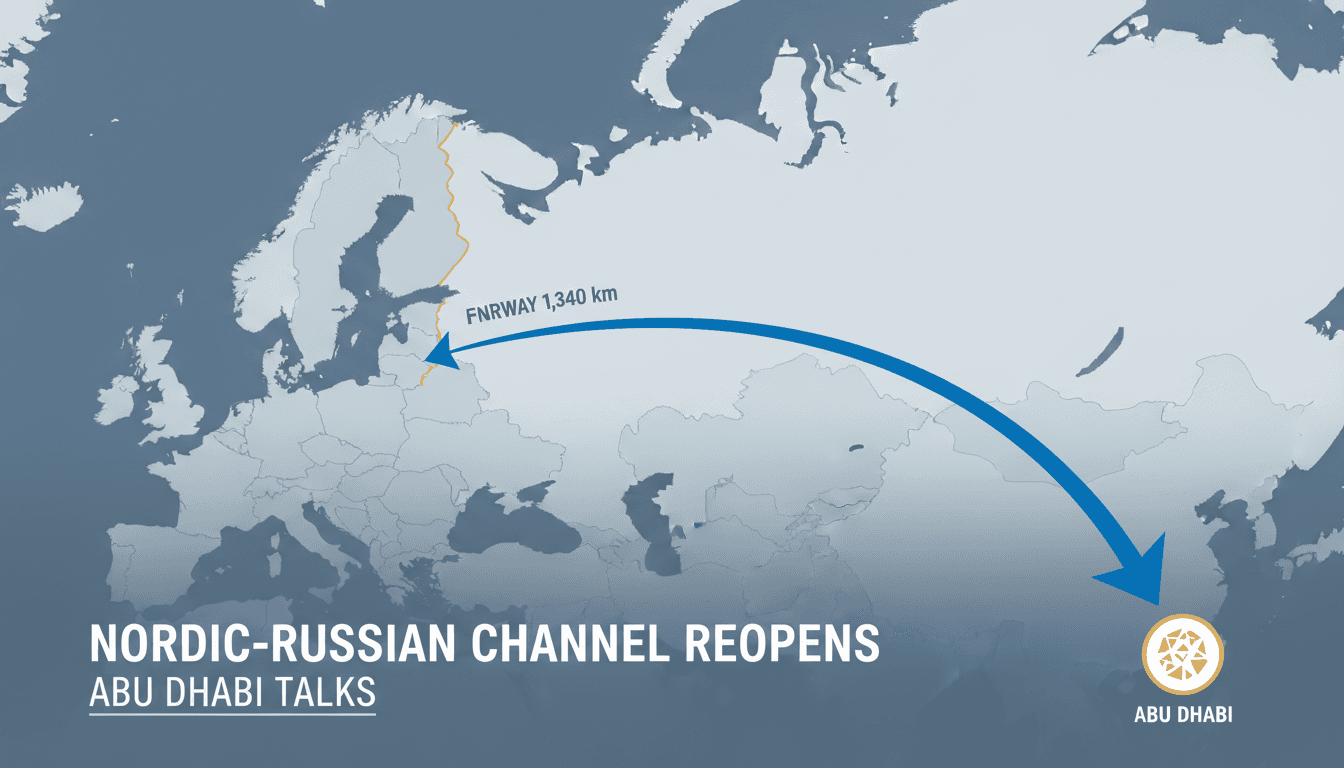
* Geographic exposure drives engagement: Finland manages a 1,340 km shared land border with Russia, creating immediate territorial and border-management exposure that fundamentally distinguishes Nordic policy calculations from Western European states located further from the frontier. * Intra-European policy division: Danish Prime Minister Mette Frederiksen openly criticized the dialogue as uncoordinated, drawing public alignment from Swedish and Polish officials who questioned Moscow's diplomatic intent, while Ukrainian officials registered formal gratitude for the outreach. * The Gulf diplomatic corridor: The conversation directly bridges European security positioning with scheduled diplomacy in the United Arab Emirates, leveraging Gulf-based mediation platforms that previously demonstrated utility in cross-border energy logistics and commercial mediation.
What's really happening
The 90-minute phone call between Helsinki, Oslo, and Moscow reveals how frontline geography reshapes strategic incentives when broader multilateral policy reaches an impasse. While broader Western European policy has largely preserved an arm's-length protocol toward direct Kremlin interaction since February 2022, border-adjacent nations face structural security costs that compound each month the conflict persists. For Finland, managing a 1,340 km border means that national defense budgets, border surveillance investments, and transit adjustments carry tangible domestic fiscal trade-offs. Norway faces parallel calculations across Arctic energy assets, maritime boundaries, and infrastructure security in the high north.
The core mechanism at play is preliminary diplomatic channel-testing. Rather than seeking an immediate, binding bilateral treaty—an outcome precluded by collective security commitments—Stubb and Støre operated as an exploratory bridge. Their prior coordination with Ukrainian President Volodymyr Zelensky in Oslo on October 20 established the operational boundaries of the dialogue, ensuring that core Ukrainian prerequisites remained integrated into the exchange. By speaking explicitly in their national capacities, the Nordic leaders lowered institutional stakes, allowing both sides to gauge negotiating flexibility without committing the European Union or NATO to a formal stance.
From the Russian vantage point, the incentive structure is clear. Engaging directly with Helsinki and Oslo allows Moscow to counter diplomatic isolation while signaling to the Global South that active bilateral dialogue with European states remains viable. Putin’s characterization of the call during the October 29 post-summit press conference highlights an effort to distinguish pragmatic, regionally exposed leaders from broader collective coalitions.
Crucially, this diplomatic sequence is calibrated toward Abu Dhabi. By floating terms and assessing Moscow's core arguments—which consumed significant portions of the 90-minute discussion regarding historical identity and conflict root causes—the Nordic leaders established a functional baseline for US-mediated talks in the UAE. Abu Dhabi’s hosting of these negotiations underlines how the geographic axis of European dispute resolution has shifted eastward, relying on Gulf platforms that maintain neutral trade relationships and verified logistics links across global energy corridors.
Who feels it first (and how)
* Energy trading desks in Dubai and Rotterdam: Shifting timelines for diplomatic mediation in Abu Dhabi alter forward-pricing volatility across crude and diesel benchmarks, especially where past supply adjustments have dictated regional spreads. * Maritime logistics operators in the Baltic and Arctic: Operators managing northern shipping lanes and infrastructure gain a leading indicator on the trajectory of regional maritime protocols and maritime insurance risk premiums. * Cross-border sanctions compliance officers: Multinational trade hubs face emerging operational complexities as individual European states test bilateral diplomatic parameters ahead of consolidated European Union or G7 regulatory updates.
What to watch next
* Abu Dhabi mediation logistics: Formal announcements regarding the exact dates, diplomatic representation levels, and agenda constraints of the US-mediated talks will reveal whether the Nordic channel generated substantive common ground. * Nordic-Baltic coordination meetings: Follow-up sessions between Finnish, Norwegian, Danish, Swedish, and Polish security ministers will determine whether Stubb and Støre’s approach deepens political fractures across the European perimeter or forms a coordinated framework. * Follow-up bilateral contact cadence: The execution of agreed follow-up communications between Moscow, Helsinki, and Oslo will confirm whether this outreach establishes a durable backchannel or remains an isolated diplomatic sequence.
Finnish President Alexander Stubb and Norwegian Prime Minister Jonas Gahr Støre held a 90-minute call with Vladimir Putin on October 27, 2026, following prior discussions with Volodymyr Zelensky, which Putin publicly praised on October 29; Danish leadership formally criticized the exchange as uncoordinated.
The outreach was deliberately timed to set negotiating baselines and verify security red lines before US-mediated talks convene in Abu Dhabi.
Whether the Nordic leaders extracted actionable operational concessions from Moscow regarding territorial terms, or whether the exchange will prompt wider Western European capitals to initiate parallel bilateral contacts.
Frequently Asked Questions
- Why it matters?
- The resumption of bilateral communication between border-state leadership and Moscow provides the operational diplomatic runway for scheduled multilateral talks in Abu Dhabi, directly affecting long-term global energy corridors and regional sanctions compliance frameworks.
- What happened (in 30 seconds)?
- A rare diplomatic opening: On October 27, 2026, Finnish President Alexander Stubb and Norwegian Prime Minister Jonas Gahr Støre held an unannounced 90-minute telephone discussion with Russian President Vladimir Putin, marking the first direct leadership dialogue between Moscow and European capitals aligned with Ukraine since 2023. Public reception from Moscow: At an October 29, 2026 press conference following a Russia-Africa summit, Putin publicly welcomed the engagement, stating that Moscow fav
- What's really happening?
- The 90-minute phone call between Helsinki, Oslo, and Moscow reveals how frontline geography reshapes strategic incentives when broader multilateral policy reaches an impasse. While broader Western European policy has largely preserved an arm's-length protocol toward direct Kremlin interaction since February 2022, border-adjacent nations face structural security costs that compound each month the conflict persists. For Finland, managing a 1,340 km border means that national defense budgets, borde
- Who feels it first (and how)?
- Energy trading desks in Dubai and Rotterdam: Shifting timelines for diplomatic mediation in Abu Dhabi alter forward-pricing volatility across crude and diesel benchmarks, especially where past supply adjustments have dictated regional spreads. Maritime logistics operators in the Baltic and Arctic: Operators managing northern shipping lanes and infrastructure gain a leading indicator on the trajectory of regional maritime protocols and maritime insurance risk premiums. Cross-border sanctions comp
- What to watch next?
- Abu Dhabi mediation logistics: Formal announcements regarding the exact dates, diplomatic representation levels, and agenda constraints of the US-mediated talks will reveal whether the Nordic channel generated substantive common ground. Nordic-Baltic coordination meetings: Follow-up sessions between Finnish, Norwegian, Danish, Swedish, and Polish security ministers will determine whether Stubb and Støre’s approach deepens political fractures across the European perimeter or forms a coordinated f
Domestic Russian news, politics, and society.
"RT is widely criticized for promoting pro-Kremlin narratives and is considered by many to be a state propaganda outlet."
— A47 Editor
Putin explains why he welcomed rare call from Nordic leaders
Russian President Vladimir Putin defended the decision by Finnish and Norwegian leaders to contact him, saying Russia supports efforts to restore dialogue, according to RT. The contact came as Finnish President Alexander Stubb and Norwegian Prime Min...
Top international stories selected by The Guardian editors.
"The Guardian is known for its progressive editorial stance and in-depth analysis."
— A47 Editor
Pragmatic or pointless? Europe’s rift over whether to pick up the phone to Putin
Finland and Norway held a roughly 90-minute phone call with Russian President Vladimir Putin, prompting an unusual public rebuke from neighbouring Denmark and Sweden. The call, involving Finnish President Alexander Stubb and Norwegian Prime Minister ...
Global news coverage with extensive reporting on Middle Eastern conflicts and geopolitics.
"Al Jazeera is a Qatar-based broadcaster known for wide regional coverage and alternative perspectives."
— A47 Editor
Norway and Finland hold rare phone call with Putin: What that means
Norway and Finland held a rare phone call with Russian President Vladimir Putin, aimed at influencing US-brokered talks in Abu Dhabi to end the war in Ukraine. The Nordic leaders, Finnish President Alexander Stubb and Norwegian Prime Minister Jonas G...
Comprehensive coverage of Middle Eastern and global issues.
"Al Jazeera is a prominent voice from the Global South, especially the Middle East, with an emphasis on underreported stories."
— A47 Editor
Norway and Finland hold rare phone call with Putin: What that means
Norway and Finland held a rare phone call with Russian President Vladimir Putin, aimed at influencing US-brokered talks in Abu Dhabi to end the war in Ukraine. The Nordic leaders, Finnish President Alexander Stubb and Norwegian Prime Minister Jonas G...