
Two High-Speed Trains Collide Near Toledo Spain Killing 68 on Madrid-Seville Line
Why it matters
The failure of high-density signaling architecture on a premier European transport corridor disrupts business travel networks and forces an immediate operational reassessment of automated failsafes across liberalized passenger rail sectors.
What happened (in 30 seconds)
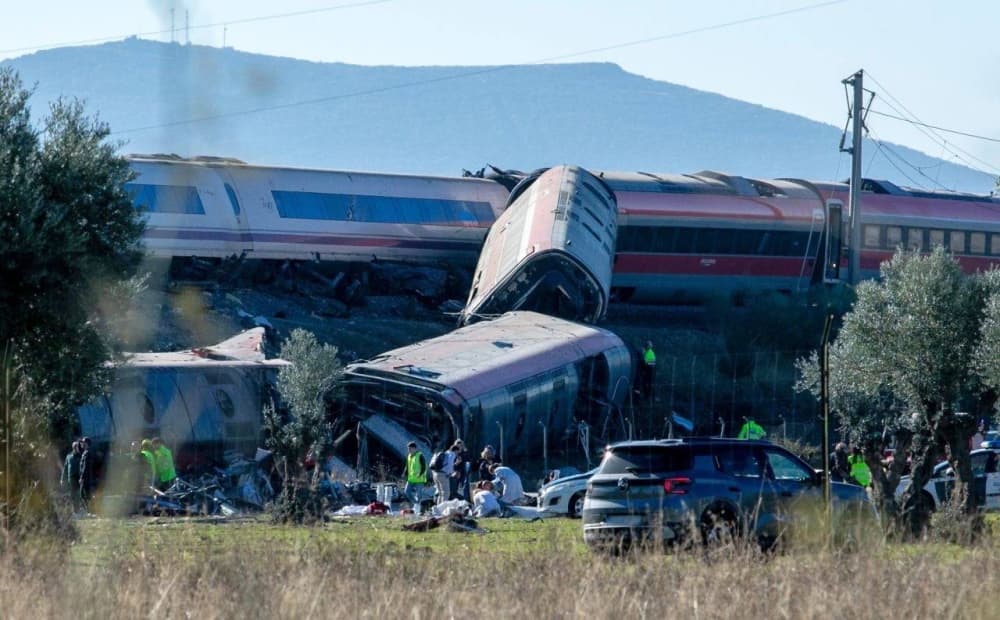
- A fatal high-speed collision occurred south of Madrid: On the morning of October 28, 2026, a Renfe high-speed train collided with the rear of a stationary Iryo train near Urda in Toledo province, roughly 130 to 150 kilometers south of the capital.
- The human toll stands at dozens killed: The impact caused carriages to derail and breach an embankment, resulting in 68 confirmed deaths and more than 100 injuries.
- A critical override bypassed a red signal: The collision occurred after an LZB train management safety system failure halted regional traffic, followed by a control center instruction authorizing the Renfe train to proceed into an occupied block.
The context you actually need
- This is the corridor's second disaster in 10 months: The Madrid-Seville route previously recorded 46 fatalities in January 2026, concentrating acute technical scrutiny on the signaling safeguards of this infrastructure segment.
- Private and state operators share the physical tracks: The incident involved both state-owned operator Renfe and private competitor Iryo, testing coordination protocols within Spain’s deregulated multi-operator rail framework.
- Corridor operations are completely frozen: Spanish authorities suspended all passenger runs along the Madrid-Seville high-speed line and linked routes, declaring three days of national mourning while safety audits take place.
What's really happening
The disaster near Urda reveals the structural friction between fail-safe technical architecture and manual operational incentives. At its core, high-speed rail capacity depends on continuous automated train protection systems—in this case, the LZB cab-signaling and train management mechanism. These setups enforce safety by keeping virtual space between high-speed trainsets. When a system glitch hits an LZB sector, the baseline programming triggers a fail-safe: signals turn red, lines drop speed limits, and trains halt to clear potential collision zones. This designed intervention stopped the Iryo train on the tracks.
Operational risk shifts dramatically when automation fails and control shifts back to human dispatchers. In high-density rail corridors where state operators share lines with private carriers, line capacity creates constant pressure to keep traffic moving. Dispatchers manage track slot allocations, operational delays, and cascading gridlocks behind stopped services. When the control room authorized the Renfe train to advance despite the active red signal, manual intervention bypassed the primary safety system. Human error overrode the mechanical fail-safe, sending high-speed traffic straight into an occupied block.
This mechanism highlights a vulnerability within complex transport networks: manual bypass protocols often lack the rigid confirmation checks designed into automated signaling. High-speed trains moving at track speed require kilometers of clear line to decelerate safely under service braking. Without LZB continuous supervision monitoring train separation, a train crew operating under dispatcher override relies purely on manual visibility and intermittent communications—parameters incompatible with high-speed stopping distances.
The structural impact reaches beyond one regional route. Spain’s deregulated rail market depends entirely on absolute interoperability between public track management, state operators, and private enterprises. When manual override procedures break down, the cost equation changes across the whole logistics ecosystem. Rail operators face severe infrastructure suspensions, insurance liabilities, and asset write-downs. At the same time, safety regulators must audit whether rapid-throughput operational guidelines on multi-operator high-speed lines have compromised the absolute primacy of automated fail-safes.
Who feels it first (and how)
- Business travelers and corporate mobility teams: Regional corporate transit between Madrid, Seville, and Andalusia faces indefinite ground-travel halts, pushing immediate demand onto regional air corridors and highways.
- Rail infrastructure operators and private concessionaires: Operating entities Renfe and Iryo face immediate fleet audits, regulatory scrutiny, and route revenue freezes while network authorities inspect signaling protocols.
- Transport safety compliance executives: Fleet managers and cross-border transport planners must evaluate dispatch manual-override protocols to safeguard operations against single-point human dispatch failures.
What to watch next
- Signaling audit findings on the Madrid-Seville line: Watch for the official technical investigation report from transport authorities isolating the dispatch-to-cab communication record, which will determine if control software failed to display track occupancy.
- Route restoration and capacity caps: Track the timeline for resuming Madrid-Seville high-speed services, especially whether regulators impose temporary speed reductions or enforce wider train separation margins that cut corridor throughput.
- Standardized multi-operator safety mandates: Monitor whether European transport authorities introduce secondary authorization requirements before any manual override of active red signals can take effect across shared commercial rail corridors.
A Renfe train rear-ended a stationary Iryo train near Urda on October 28, 2026, causing derailment, 68 confirmed fatalities, and over 100 injuries following an LZB system disruption and an override authorization.
Transport regulators will mandate more restrictive operational protocols for manual dispatcher authorizations, directly reducing high-speed corridor line capacity while software reviews proceed.
The exact communication exchange between the central control dispatch office and the Renfe train driver immediately before movement into the occupied block remains under active regulatory investigation.
Frequently Asked Questions
- Why it matters?
- The failure of high-density signaling architecture on a premier European transport corridor disrupts business travel networks and forces an immediate operational reassessment of automated failsafes across liberalized passenger rail sectors.
- What happened (in 30 seconds)?
- A fatal high-speed collision occurred south of Madrid: On the morning of October 28, 2026, a Renfe high-speed train collided with the rear of a stationary Iryo train near Urda in Toledo province, roughly 130 to 150 kilometers south of the capital. The human toll stands at dozens killed: The impact caused carriages to derail and breach an embankment, resulting in 68 confirmed deaths and more than 100 injuries. A critical override bypassed a red signal: The collision occurred after an LZB train ma
- What's really happening?
- The disaster near Urda reveals the structural friction between fail-safe technical architecture and manual operational incentives. At its core, high-speed rail capacity depends on continuous automated train protection systems—in this case, the LZB cab-signaling and train management mechanism. These setups enforce safety by keeping virtual space between high-speed trainsets. When a system glitch hits an LZB sector, the baseline programming triggers a fail-safe: signals turn red, lines drop speed
- Who feels it first (and how)?
- Business travelers and corporate mobility teams: Regional corporate transit between Madrid, Seville, and Andalusia faces indefinite ground-travel halts, pushing immediate demand onto regional air corridors and highways. Rail infrastructure operators and private concessionaires: Operating entities Renfe and Iryo face immediate fleet audits, regulatory scrutiny, and route revenue freezes while network authorities inspect signaling protocols. Transport safety compliance executives: Fleet managers a
- What to watch next?
- Signaling audit findings on the Madrid-Seville line: Watch for the official technical investigation report from transport authorities isolating the dispatch-to-cab communication record, which will determine if control software failed to display track occupancy. Route restoration and capacity caps: Track the timeline for resuming Madrid-Seville high-speed services, especially whether regulators impose temporary speed reductions or enforce wider train separation margins that cut corridor throughpu
Arabic-language political and world news coverage for UAE readers.
"Emarat Al Youm world coverage usually presents international developments through a UAE and Arab audience lens."
— A47 Editor
وزير النقل الإسباني يكشف عن سبب حادث تصادم القطارين وزير النقل الإسباني يكشف عن سبب حادث تصادم القطارين
Spain's Transport Minister Óscar Puente announced on Wednesday the cause of a train collision in Spain that killed at least 64 people, according to Emarat Al Youm, which reported the development on 28 October 2026.
Arabic-language political and world news coverage for UAE readers.
"Emarat Al Youm world coverage usually presents international developments through a UAE and Arab audience lens."
— A47 Editor
عشرات القتلى والمصابين في حادث تصادم قطارين في إسبانيا عشرات القتلى والمصابين في حادث تصادم قطارين في إسبانيا
At least 68 people were killed and dozens more injured in a collision between two high-speed trains in Spain on Wednesday, according to a preliminary toll that is expected to rise, as reported by Emarat Al Youm.
Coverage of political affairs and regional developments from a Saudi perspective.
"Al Watan political coverage typically follows a mainstream Saudi framing of regional and national issues."
— A47 Editor
تصادم قطارين في إسبانيا: الحصيلة ترتفع إلى 64 قتيلاً
A head-on rear-end collision between two high-speed trains in Toledo province, south of Madrid, has left at least 64 people dead and 159 injured, 12 of them in critical condition in intensive care. A state-run Renfe train struck from behind a slower ...
Pan-Arab political news and analysis.
"Al-Quds Al-Arabi is a London-based Arabic newspaper known for political coverage."
— A47 Editor
مقتل 46 شخصا إثر اصطدام قطارين في منطقة توليدو الإسبانية
Reports by Spanish media, cited by Al-Quds Al-Arabi on Wednesday, state that the death toll from a collision between two high-speed trains between Madrid and the Andalusia region has risen to 46. The accident occurred in the Toledo area of Spain, acc...
Jordanian news and regional updates.
"Roya News is a Jordanian outlet focused on breaking news and local affairs."
— A47 Editor
كارثة قطارات في إسبانيا: مقتل 46 شخصا على الأقل في تصادم قطارين سريعين قرب طليطلة في إسبانيا
Spanish media and emergency services in the Castilla-La Mancha region reported a serious train collision involving two high-speed trains near Toledo, Spain, with at least 46 people killed. The report was published by Royanews on October 28, 2026.
Arabic-language coverage of international news and geopolitics.
"RT Arabic is a Russian state-funded outlet often criticized for promoting Kremlin-aligned narratives."
— A47 Editor
إسبانيا.. 46 قتيلا حصيلة قتلى حادث اصطدام قطارين قرب مدريد
Spanish media reported that the initial death toll from a train collision in the Toledo area near Madrid has reached 46 people, according to the base article. The incident involved two trains colliding in the region, and the figure is described as pr...