
Control Center Authorization Error Preceded Fatal High-Speed Train Collision Near Urda Spain
Why it matters
The breakdown reveals operational vulnerabilities when high-density transport networks transition abruptly from automated safety layers to manual human dispatch protocols.
What happened (in 30 seconds)
- A signaling failure forced manual control: At approximately 8:30 a.m. on October 28, 2026, a computer malfunction disabled the automatic train protection system on Spain's Madrid-Seville high-speed line, shifting traffic management to manual oversight at the Madrid Atocha control center.
- An authorization error occurred: At 8:36 a.m., dispatchers cleared a Renfe-operated AVE train to proceed at normal speed under backup signaling without verifying track clearance, despite a stationary Iryo train being halted 25 km ahead due to a restart failure.
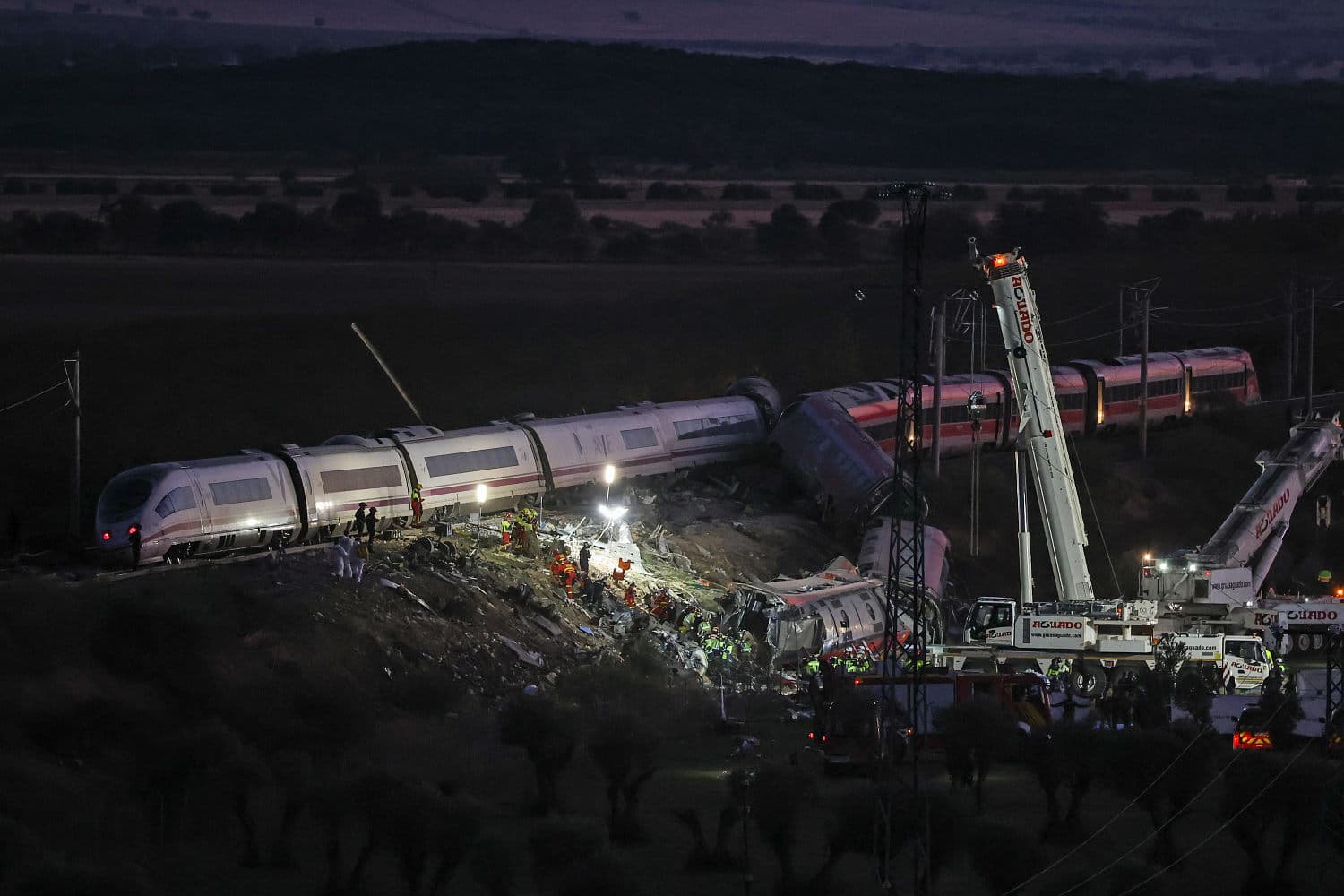
- A fatal collision resulted: The Renfe train struck the rear of the stationary Iryo train at approximately 8:53 a.m. near Urda station, resulting in at least 69 fatalities and dozens of injuries.
The context you actually need
- Europe's largest high-speed rail network: Spain operates Europe's most extensive high-speed rail grid, relying heavily on automated train protection to maintain safe operational separation at elevated transit speeds.
- Repeated line disruption: This crash marks the second fatal high-speed collision occurring on the Madrid-Seville rail corridor within the 2026 calendar year.
- Acknowledged protocol breach: Official audio records confirmed that the control center failed to halt the approaching Renfe train after the Iryo driver reported the immobilized restart failure seven minutes after initial movement clearance.
What's really happening
The incident at Urda exposes the structural friction that occurs when modern, high-frequency transit infrastructure defaults to legacy human operating procedures. Modern high-speed corridors are engineered around automated train protection architectures. These systems continuously compute dynamic braking curves, signal aspects, and inter-train headways, removing the reliance on human line-of-sight and verbal confirmation.
When the computer malfunction disabled automatic signaling at 8:30 a.m. on October 28, the Madrid-Seville corridor lost the primary layer that prevents multiple trains from occupying identical signaling blocks. Operational responsibility shifted instantly to human dispatchers at the Madrid Atocha control center. In this fallback mode, train separation depends entirely on verbal authorizations, real-time positional reporting from train operators, and strict manual verification of track clear status before movement authorities are issued.
The failure mechanism operated across three distinct operational gaps: authorization without verification, missed situational reporting, and latency in corrective dispatch. At 8:36 a.m., dispatchers authorized the Renfe AVE service to resume normal operating speed under backup protocols without confirming that the sector ahead was clear. The preceding Iryo service was already positioned roughly 25 km ahead and remained immobilized on the tracks due to technical difficulties restarting its propulsion systems.
Although the Iryo operator transmitted notification of this restart failure back to central dispatch seven minutes later, the system failed to execute a secondary, emergency intervention. The critical command to rescind the Renfe train’s normal-speed authorization was not issued before the closing distance dissolved. Traveling at normal line speeds under degraded signaling, the approaching train lacked the automated braking interventions that normally override driver inputs. Transport Minister Óscar Puente subsequently confirmed that clearing a high-speed service to resume normal line velocity under unverified manual backup conditions represented a direct violation of established safety protocols.
The incentives within dense passenger rail corridors often prioritize schedule recovery and throughput restoration following unexpected network delays. However, operating high-velocity equipment under manual dispatch without fail-safe verification loops eliminates the safety margins that modern automated signaling was designed to establish.
Who feels it first (and how)
- High-speed rail travelers along the Madrid-Seville corridor: Passengers face immediate service cancellations, emergency schedule reconfigurations, and travel disruptions during active line recovery operations.
- Train dispatchers and central control operators: Operating staff encounter tightened regulatory scrutiny, stricter operational compliance checks, and emergency procedural overhauls regarding manual degraded-mode clearances.
- Rail operator executives and compliance officers at Renfe and Iryo: Operational leadership must manage incident liability, review interoperability communication protocols, and address regulatory inquiries concerning multi-operator coordination.
- Emergency and municipal response teams in Toledo province: Local emergency personnel, regional medical facilities, and military logistics units absorb the frontline operational demands of disaster recovery and site investigation.
What to watch next
- Release of formal judicial and agency investigation findings: Detailed reviews of the Atocha control center voice recordings and data logs will identify why communication between the Iryo notification and the Renfe train was delayed.
- Implementation of interim speed caps on backup signaling corridors: Regulators may mandate strict speed reductions whenever automated train protection goes offline to ensure manual stopping distances are preserved.
- Revisions to multi-operator dispatch coordination standards: Standard operating procedures governing how private operators (such as Iryo) and national carriers (such as Renfe) interact with the central infrastructure dispatcher will likely undergo structural standardization.
At least 69 people died when a Renfe AVE train struck a stationary Iryo train near Urda on October 28, 2026, following a signaling system computer failure and a control center authorization error.
Spanish rail authorities will impose immediate operational restrictions and mandatory speed reductions for trains operating under manual signaling fallbacks across the national high-speed network.
The technical root cause that caused the initial 8:30 a.m. computer malfunction disabling the automatic train protection system has not been publicly determined.
Frequently Asked Questions
- Why it matters?
- The breakdown reveals operational vulnerabilities when high-density transport networks transition abruptly from automated safety layers to manual human dispatch protocols.
- What happened (in 30 seconds)?
- A signaling failure forced manual control: At approximately 8:30 a.m. on October 28, 2026, a computer malfunction disabled the automatic train protection system on Spain's Madrid-Seville high-speed line, shifting traffic management to manual oversight at the Madrid Atocha control center. An authorization error occurred: At 8:36 a.m., dispatchers cleared a Renfe-operated AVE train to proceed at normal speed under backup signaling without verifying track clearance, despite a stationary Iryo train
- What's really happening?
- The incident at Urda exposes the structural friction that occurs when modern, high-frequency transit infrastructure defaults to legacy human operating procedures. Modern high-speed corridors are engineered around automated train protection architectures. These systems continuously compute dynamic braking curves, signal aspects, and inter-train headways, removing the reliance on human line-of-sight and verbal confirmation. When the computer malfunction disabled automatic signaling at 8:30 a.m.
- Who feels it first (and how)?
- High-speed rail travelers along the Madrid-Seville corridor: Passengers face immediate service cancellations, emergency schedule reconfigurations, and travel disruptions during active line recovery operations. Train dispatchers and central control operators: Operating staff encounter tightened regulatory scrutiny, stricter operational compliance checks, and emergency procedural overhauls regarding manual degraded-mode clearances. Rail operator executives and compliance officers at Renfe and Iryo
- What to watch next?
- Release of formal judicial and agency investigation findings: Detailed reviews of the Atocha control center voice recordings and data logs will identify why communication between the Iryo notification and the Renfe train was delayed. Implementation of interim speed caps on backup signaling corridors: Regulators may mandate strict speed reductions whenever automated train protection goes offline to ensure manual stopping distances are preserved. Revisions to multi-operator dispatch coordination s
News and current affairs from across Europe.
"The Guardian is known for its progressive editorial stance and in-depth analysis."
— A47 Editor
How the deadly train crash in Spain unfolded – explainer
On Wednesday, October 28, 2026, a high-speed train collided with the rear of another train that had stopped on the Madrid-Seville line near Urda in Toledo province, central Spain, after a signalling failure had halted both services. Renfe's AVE train...
International coverage of politics, culture, and current affairs.
"BBC News is widely regarded as a reputable international news organization, known for its impartial tone and public service mandate."
— A47 Editor
Watch: What leaked audio reveals about Spain train crash
Audio recordings published from the Spanish high-speed rail crash reportedly show exchanges between train operators and drivers moments before the collision near Toledo on Wednesday, October 28, 2026. The leaked tapes appear to show one train was giv...
National headlines across the United States including breaking stories and societal issues.
"NBC News is a mainstream media outlet known for comprehensive national and international news coverage with a centrist to slightly left-leaning editorial tone."
— A47 Editor
Audio recordings reveal decisions made moments before deadly train crash in Spain
Two high-speed trains collided in Toledo province, central Spain, on October 28, 2026, when a RENFE train struck the rear of a stopped IRYO train on the Madrid-Seville line, derailing several carriages. Initial reports of at least 10 dead rose to at ...
Comprehensive coverage of global events, politics, and international issues.
"NBC News is a mainstream outlet known for comprehensive national and international coverage with a centrist to slightly left-leaning editorial tone."
— A47 Editor
Audio recordings reveal decisions made moments before deadly train crash in Spain
Two high-speed trains collided in Toledo province, central Spain, on October 28, 2026, when a RENFE train struck the rear of a stopped IRYO train on the Madrid-Seville line, derailing several carriages. Initial reports of at least 10 dead rose to at ...
News and current affairs from across Europe.
"The Guardian is known for its progressive editorial stance and in-depth analysis."
— A47 Editor
Survivors shell-shocked after deadly Spain train crash - The Latest
Spain began three days of mourning after a high-speed train collision on the Madrid-Seville line near Urda in Toledo province killed at least 68 to 69 people and injured more than 100, with emergency services still searching the wreckage and relative...
News and current affairs from across Europe.
"The Guardian is known for its progressive editorial stance and in-depth analysis."
— A47 Editor
Shock and anger in Spain after deadly train crash – The Latest
Spain began three days of mourning after a high-speed train collision on the Madrid-Seville line near Urda in Toledo province killed at least 68 to 69 people and injured more than 100, with the death toll expected to rise as emergency services contin...
International coverage from The Guardian's global desks.
"The Guardian is known for its progressive editorial stance and in-depth analysis."
— A47 Editor
How did the Spain train crash happen and what will investigators be asking?
On Wednesday, October 28, 2026, two high-speed trains collided on the Madrid-Seville line near Toledo, central Spain, after a signalling failure had halted both services. Renfe's AVE train was told by controllers to restart and struck the rear of the...
International coverage of politics, culture, and current affairs.
"BBC News is widely regarded as a reputable international news organization, known for its impartial tone and public service mandate."
— A47 Editor
Audio reveals exchanges between Spain train operators and drivers moments before deadly crash
Audio recordings published from the Spanish high-speed rail crash reportedly show exchanges between train operators and drivers moments before the collision near Toledo on Wednesday, October 28, 2026. The leaked tapes appear to show one high-speed tr...
Comprehensive coverage of Middle Eastern and global issues.
"Al Jazeera is a prominent voice from the Global South, especially the Middle East, with an emphasis on underreported stories."
— A47 Editor
What we know about Spain’s second high-speed rail tragedy this year
Spain's high-speed rail network was thrown into mourning after a Renfe high-speed train struck the rear of a stopped Iryo train on the Madrid-Seville line near Urda in Toledo province on Wednesday, October 28, 2026, derailing carriages. Reported deat...
Global news coverage with extensive reporting on Middle Eastern conflicts and geopolitics.
"Al Jazeera is a Qatar-based broadcaster known for wide regional coverage and alternative perspectives."
— A47 Editor
What we know about Spain’s second high-speed rail tragedy this year
Spain's high-speed rail network was thrown into mourning after a Renfe high-speed train struck the rear of a stopped Iryo train on the Madrid-Seville line near Urda in Toledo province on Wednesday, October 28, 2026, derailing carriages. Reported deat...
Global coverage of politics, crises, and international affairs.
"HuffPost provides progressive-oriented reporting on international developments, often focusing on humanitarian and social justice issues."
— A47 Editor
Spain Reckons With Second Deadly Train Crash Of The Year Ahead Of National Election
A high-speed Renfe train struck the rear of a stopped Iryo train on the Madrid-Seville line near Urda in Toledo province, central Spain, on Wednesday, October 28, 2026, derailing several carriages. Reports indicate at least 68 to 69 people were kille...
International coverage of politics, culture, and current affairs.
"BBC News is widely regarded as a reputable international news organization, known for its impartial tone and public service mandate."
— A47 Editor
What we know so far about deadly Spain train crash
On Wednesday, October 28, 2026, two high-speed trains collided on the Madrid-Seville line in Toledo province, central Spain, south of Madrid, with one train striking the rear of another that had stopped and several carriages derailing. More than 500 ...
International news coverage curated for readers in the UAE and Gulf region.
"Emirates 24|7 world coverage presents global developments through a UAE-facing and Gulf-relevant editorial lens."
— A47 Editor
Spain train crash: At least 68 dead after high-speed trains collide south of Madrid
At least 68 people died when a Renfe high-speed express collided with a stationary train near Urda, south of Madrid, prompting rescuers to search mangled carriages for more bodies. Transport Minister Oscar Puente said the train was authorised to proc...
International stories from NPR’s global desk.
"NPR is an American public media organization known for thoughtful reporting and a slightly left-leaning editorial tone."
— A47 Editor
Spain reckons with 2nd deadly train crash of the year ahead of national election
On Wednesday, October 28, 2026, a high-speed train struck the rear of another train that had stopped on the Madrid-Seville line in Toledo province, central Spain, derailing several carriages. Reports indicate at least 68 people were killed and more t...