
Iran Claims Fourth Oil Tanker Struck by Naval Mine in Strait of Hormuz as Disputed Incidents Mount
Why it matters
The Strait of Hormuz carries roughly 20 percent of global petroleum liquids, meaning any structural enforcement or contested risk in this waterway directly influences crude pricing, maritime security margins, and container route planning.
What happened (in 30 seconds)
- Fourth tanker reported struck: On October 31, 2026, Iranian military sources reported that a fourth crude carrier was damaged by a naval mine after transiting an unauthorized route east of the strait.
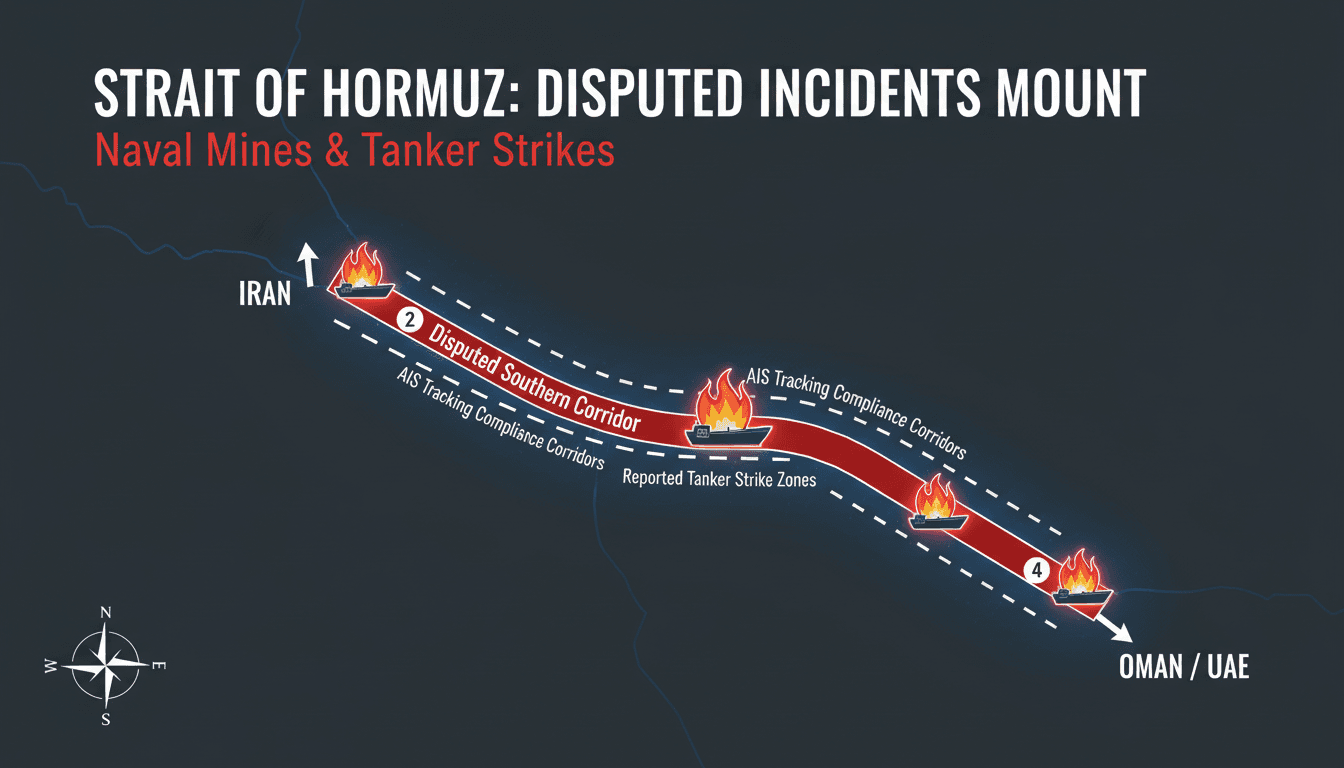
- Back-to-back maritime explosions: The announcement follows an IRGC Navy report stating three commercial tankers caught fire within a 24-hour window along prohibited southern passages near Omani waters.
- Narratives directly conflict: U.S. Central Command rejected the mine assertions, stating international shipping lanes remain cleared while attributing tanker damages to alternative military strikes or drones.
The context you actually need
- Strict maritime protocols: Since regional conflict escalated on February 28, 2026, Tehran has enforced designated maritime corridors, demanding active AIS transponders and barring unauthorized southern corridors.
- Chokepoint concentration: Handling approximately one-fifth of global oil movements, even localized verification disputes in the Strait of Hormuz spark immediate volatility across energy benchmarks and vessel underwriting.
- Active surveillance counterclaims: Western forces maintain de-mining and clearance operations across international lanes, establishing conflicting operational real-world data points for commercial shipowners deciding whether to transit.
What's really happening
The operational friction in the Strait of Hormuz reflects an incentive-driven enforcement battle over who controls navigation terms through the world's most critical energy artery. When regional conflict altered transit dynamics on February 28, 2026, maritime tracking requirements transitioned from routine administrative oversight into a hard security lever.
By announcing that four supertankers—including a vessel carrying over two million barrels of crude—sustained mine strikes within 48 hours for disabling transponders and using restricted southern channels, Iranian authorities are signaling an operational red line. The enforcement mechanism is straightforward: compliance with designated navigation corridors and active transponders is treated as mandatory, linking maritime access directly to geopolitical positioning. When commercial operators enter restricted corridors or disable Automatic Identification Systems (AIS) to obscure their movements, they encounter immediate physical risk, whether from unmapped minefields or targeted defensive enforcement.
Conversely, the response from U.S. Central Command highlights a divergent operational objective: keeping international sea lanes open and maintaining investor confidence in commercial passage. By disputing the mine narrative and characterizing the damage as the result of projectiles or drones, Western forces aim to prevent panic-driven rerouting and excessive underwriting adjustments. If commercial insurers believe waterborne mines are drifting or actively deployed across primary routes, war-risk premiums surge instantly, rendering transit economically prohibitive regardless of physical vessel damage.
For commercial vessel operators, this narrative split creates a compounding compliance dilemma. Adhering strictly to Iranian tracking demands exposes operations to external counter-enforcement or regulatory penalties, while ignoring them risks catastrophic physical damage in contested zones. Meanwhile, emergency responses—including Omani naval rescue missions for impacted crews—demonstrate that physical disruptions are actively occurring, regardless of the disputed munitions responsible.
The structural result is an asymmetric tax on Gulf trade. Tankers are forced into narrow, highly visible corridors where compliance is monitored in real time. For trade corridors connecting through hubs like Dubai's Jebel Ali, the friction is already real: increased transit times, higher security compliance mandates, elevated maritime insurance rates, and heightened vulnerability to unexpected supply pinches.
Who feels it first (and how)
- Commercial Fleet Underwriters: Marine insurers face immediate pressure to reassess Gulf war-risk surcharges as disputed explosive incidents multiply along primary lanes.
- Regional Energy Traders: Sourcing desks must price in transit delays and coordinate compliance verifications for crude tankers moving through contested Omani and Iranian approaches.
- Logistics Hub Operators in Dubai: Freight managers at regional distribution nodes face higher landed container costs and schedule realignments without immediate disruption to inland metropolitan operations.
- Commercial Tanker Crews: Mariners operating near restricted southern corridors confront direct physical risk and potential mid-voyage emergency extractions.
What to watch next
- Independent UKMTO Incident Verifications: Watch for technical confirmation from UK maritime bodies regarding explosive residue or hull breach patterns, which will determine if underwriters trigger broader route bans.
- AIS Compliance Rates in the Southern Corridor: Monitoring whether commercial tonnage systematically stops deactivating transponders will show whether commercial shipping concedes to local navigation rules.
- Jebel Ali Port Inbound Schedules: Track whether international feeder services and supertanker congestion lengthen turnaround times at key regional terminals.
Four tanker incidents were reported damaged by Iranian military branches between October 29 and October 31, 2026; Omani forces assisted in crew rescues; U.S. CENTCOM denies the presence of mines in cleared lanes.
Maritime insurance premiums for transiting the Strait of Hormuz will climb as underwriters price in contested munitions risks.
The exact identities of the targeted tankers, total cargo damage, and whether the physical breaches originated from moored naval mines, drones, or anti-ship munitions.
Frequently Asked Questions
- Why it matters?
- The Strait of Hormuz carries roughly 20 percent of global petroleum liquids, meaning any structural enforcement or contested risk in this waterway directly influences crude pricing, maritime security margins, and container route planning.
- What happened (in 30 seconds)?
- Fourth tanker reported struck: On October 31, 2026, Iranian military sources reported that a fourth crude carrier was damaged by a naval mine after transiting an unauthorized route east of the strait. Back-to-back maritime explosions: The announcement follows an IRGC Navy report stating three commercial tankers caught fire within a 24-hour window along prohibited southern passages near Omani waters. Narratives directly conflict: U.S. Central Command rejected the mine assertions, stating internat
- What's really happening?
- The operational friction in the Strait of Hormuz reflects an incentive-driven enforcement battle over who controls navigation terms through the world's most critical energy artery. When regional conflict altered transit dynamics on February 28, 2026, maritime tracking requirements transitioned from routine administrative oversight into a hard security lever. By announcing that four supertankers—including a vessel carrying over two million barrels of crude—sustained mine strikes within 48 hours
- Who feels it first (and how)?
- Commercial Fleet Underwriters: Marine insurers face immediate pressure to reassess Gulf war-risk surcharges as disputed explosive incidents multiply along primary lanes. Regional Energy Traders: Sourcing desks must price in transit delays and coordinate compliance verifications for crude tankers moving through contested Omani and Iranian approaches. Logistics Hub Operators in Dubai: Freight managers at regional distribution nodes face higher landed container costs and schedule realignments witho
- What to watch next?
- Independent UKMTO Incident Verifications: Watch for technical confirmation from UK maritime bodies regarding explosive residue or hull breach patterns, which will determine if underwriters trigger broader route bans. AIS Compliance Rates in the Southern Corridor: Monitoring whether commercial tonnage systematically stops deactivating transponders will show whether commercial shipping concedes to local navigation rules. Jebel Ali Port Inbound Schedules: Track whether international feeder services
Jordanian news and regional updates.
"Roya News is a Jordanian outlet focused on breaking news and local affairs."
— A47 Editor
إيران تعلن إصابة ناقلة نفط رابعة بلغم بحري في مضيق هرمز
Iran's Revolutionary Guard naval force announced on Friday that a fourth oil tanker was struck by a naval mine in the Strait of Hormuz, the strategic waterway through which a large share of global seaborne oil passes.
Arabic-language coverage of international news and geopolitics.
"RT Arabic is a Russian state-funded outlet often criticized for promoting Kremlin-aligned narratives."
— A47 Editor
الحرس الثوري الإيراني: انفجار واحتراق 3 ناقلات نفط أثناء عبورها مضيق هرمز
Iran's Islamic Revolutionary Guard Corps said on Friday that three oil tankers exploded and caught fire while transiting the Strait of Hormuz via an unauthorized route, according to a report by RT Arabic published on October 30, 2026.
Arabic-language coverage of international news and geopolitics.
"RT Arabic is a Russian state-funded outlet often criticized for promoting Kremlin-aligned narratives."
— A47 Editor
الحرس الثوري: انفجار 3 ناقلات نفط
The Islamic Revolutionary Guard Corps Navy announced that three oil tankers exploded after striking naval mines, according to RT Arabic's report, which also said a US-made MQ-1 drone monitoring Iranian air defenses was shot down.
Arabic-language coverage of international news and geopolitics.
"RT Arabic is a Russian state-funded outlet often criticized for promoting Kremlin-aligned narratives."
— A47 Editor
بحرية الجيش الإيراني: ناقلة نفط مخالفة تعرضت لأضرار عقب اصطدامها بألغام بحرية
The naval forces of Iran's army announced on Thursday evening that an oil tanker was damaged after striking naval mines while transiting through an unauthorized route, according to the report published by RT Arabic.
Arabic-language coverage of international news and geopolitics.
"RT Arabic is a Russian state-funded outlet often criticized for promoting Kremlin-aligned narratives."
— A47 Editor
الحرس الثوري الإيراني: انفجارات وحرائق بـ3 ناقلات نفط مخالفة بعد اصطدامها بألغام جنوب مضيق هرمز
Iran's Islamic Revolutionary Guard Corps announced that explosions and fires broke out on three non-compliant oil tankers after they struck mines south of the Strait of Hormuz, according to RT Arabic's report on the incident.